LED street lighting business: a new direction for street light manufactures

Recently, LED street lighting business has become a new direction for street light manufactures in China. LED street lights are quite different from traditional street lights: point light sources, high power consumption; Narrow beam output. These require more sophisticated designs for LED street lamps. It is a systematic process. In order to designer LED street lamps with higher performances, designers should make a study of street lighting standards and photo-mixing principles for traditional street lights, taking full advantage of LED street lamps: point light sources, controllable beam angle and long life cold light sources.
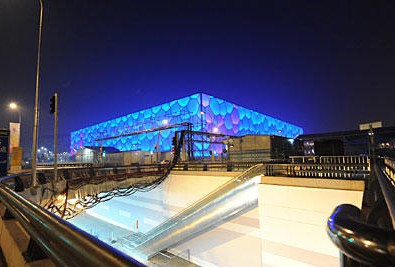
 

Recently, LED street lighting business has become a new direction for street light manufactures in China.


Choosing suitable LED light sources is the key to the entire designs, since they will directly impact LEDs’ performances, costs and working lives. Some LED street light manufacturers use single LED moudle with a power consumption of 10W. In fact, this design is unreasonable and has many defects: harder in photo-mixing; more glares; more difficult in heat radiation, etc. Some manufacturers tried to use the combination of several LED modules (with 3W-5W for each). This design also has defects: insufficient lighting effect and heat radiation problems. Above all, high power (10W) LED is more reasonable. With current high power LED technology, 10W LED street lamps have better lighting effect.


There are two main colors in street lighting: yellow light and white light. Basically, high pressure sodium lamps (HPSL) emit yellow rays. HPSL is the mainstream street lighting technique in China, due to its energy-saving property and strong fog- penetrability. However, yellow light has its own defects: low CRI. Under sodium lights, objects will be coated by yellow lights, which is a distortion. White light is closed to natural light, having much better CRI compare with yellow light. Metal halide lamps were used in the early stage of white-ray LED street lighting industry. Metal halide lamps have better CRI, but also very weak fog- penetrability and short service lives. They did not wide spread at that then. Then LED manufacturers concentrated on a newborn lighting technique: LED, and joint into LED street lighting business one after another. The normally used color temperature of LED street lamps is around 3500K (cool white). LED street lamps have higher CRI, better lighting effect, better fog- penetrability, and can work for a long time. It is impossible to prevent LED street lamps to be the mainstream products in street lighting business. Soon, traditional street lamps will be replaced by them completely.
How to improve CRI of LEDs? (3)

Theoretically, white rays can be obtained by combining three primary colors in a certain ratio (red : green : blue = 3:6:1). This technology can be used in LED display but not in LED lighting products, since it is based on the premise that we have seen the object. Objects can be seen by us due to the light reflected from them. During this process, lights will be absorbed by objects. Therefore, white rays generated by the combination of three primary colors have innate defects: objects absorb red rays, blue rays and green rays at different levels. Even they have been mixed exactly in ratio to create purely white rays, after reflecting, they cannot maintain the original ratio, leading to a distortion. That means, lit by LED lamps, objects will look different from looking them in the sun. CRI of LEDs reduces. However, it is not to say that this kind of technique is infeasible. The photo-mixing operation should be taken within LED lamps (before sending out) to improve the CRI of LEDs.


Three primary color LED photo-mixing technology is much mature currently. There are two different ways for photo-mixing: on the surface of LED chips; on the surface of lamp covers. Both of them have disadvantages. The former: distances between LED chips are too far for photo-mixing, causing inevitable distortions. The latter: this method will cause light attenuation. Although this type of LED lamps has a higher CRI, lights sent out by them are no longer white rays if captured by our eyes directly.


In recent years, many studies for three primary colors LED photo-mixing technology are focus on these two problems. Studies demonstrate that with the decrease of distances between LED lights, light mixing distances exponentially reduced. With the increase of color-scattered agent’s concentration, the light mixing effect will be increased. The balance point between LEDs’ distances (reduce) and color-scattered agent’s concentration (increase) will be the optimal value. With such solution, it is possible for photo-mixing LEDs to be white lighting sources one day.


This technology can be used in LED display but not in LED lighting, since it is based on the premise that we have seen the object.


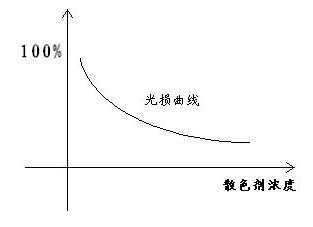
Feature above depicts relation between light intensity and concentration of color-scattered agent. From it we can see that light attenuation is proportional to color-scattered agent’s concentration. Currently, transparent glue has a light attenuation of 5%, while glue with color-scattered agent has a light attenuation of 12%. With current technology, this problem will not be solve in short term.

How to improve CRI of LEDs? (2)

In the previous section, we discussed about the impact of temperature on fluorescent powder. With the increase of temperature, activities of fluorescent powder will decrease. At the same time, temperature will also affect the wavelength of light. Feature below illustrates the relation between temperature and the wavelength. We can see that with the increase of temperature, the wavelength of light emitted though fluorescent powder will red shift. In other words, CRI for LEDs of led lights will be improved (more red rays). It is contradictory to the previous statement: CRI for LEDs will decrease as temperature increases. As a matter of fact, the red shift of fluorescent powder is negligible compare with the degeneration of fluorescent powder. Overall, when temperature drops the CRI for LEDs is actually decreases.


In the previous section, we discussed about the impact of temperature on fluorescent powder. With the increase of temperature, activities of fluorescent powder will decrease.


According to above analysis, there are three solutions: reduce PN junction temperatures; improve the adaptability of fluorescent powder in high temperatures; use color compensation technology (use red led street light or amber LEDs to compensate the CRI for LEDs);


The most effective solution in reducing PN junction temperatures is to design new LED packaging methods with better heat radiating performances. This is one of our development directions that can have Chinese LED industry to make significant progress in intellectual property in the near future. Since LED is a type of low-voltage electronic products, there are not many strict requirements on electrical safety. Thus a lot of heat radiating materials can be used as LED bases. But Chinese LED flood lights  manufacturers have not taken enough research on this part, leading to some foreign intellectual property disputes. Improving the adaptability of fluorescent powder in high temperatures is main research area in international LED technology. Chinese current technique in this respect is relatively weak and cannot break through this bottleneck in the short term. The color compensation technique can improve CRI for LEDs though making up the deficient colors. Theoretically, this solution is feasible. But in real life, there are many restrictions in color mixing technique, with no practical value.


Except for the above three solutions, scientists are trying hard to find other methods which can improve the degeneration of fluorescent powder. CRI problem is the main obstacle for LED lamps to replace traditional lamps completely. It is significant to improve CRI for LEDs.

How to improve CRI of LEDs? (1)

With the development of LED products technique, LED lamps have been widely accepted all over the world. In lighting industry, color rendering index (CRI) is an important parameters. Most lighting standards have strict requests for CRI of LEDs. Currently, the immature LED CRI technique obstructs white LED lamps to be the mainstream in the lighting market.

With the development of LED technique, LED lamps have been widely accepted all over the world. In lighting industry, color rendering index (CRI) is an important parameters.

Natural light is a kind of polychromatic light (a continuous distribution in light spectrum). LED white light is closed to natural light (has a wide continuous distribution in spectrum), laying a theoretical foundation for its color rendering capacity. The currently used white LED Lights chips are blue-ray LEDs coated with fluorescent powder. This technique was invented by Nichia Corp, an imitation of the traditional design concept and fluorescent lamps. However, this technique has innate defects: lack of blue-green rays and red rays and too much blue rays and yellow rays. This gives birth to a distorted CIR for LEDs. For some color, like blue and yellow, white LED rays will “exaggerate” them, making objects with these color look brighter than normal. On the other hand, for some red-colored objects, like apple, meat, white LED Tubes rays will make them look dimmer. These are actually distortions. Designers are striving to improve this white-ray LED technique to have a more real natural light.


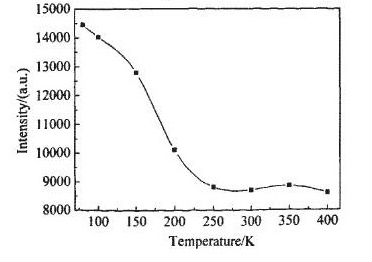
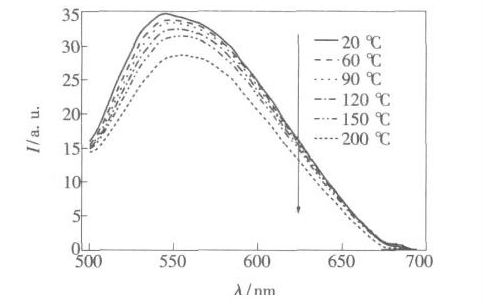
Theoretically, white rays generated though blue-ray LED Street Light chips combined with fluorescent powder are really closed to natural light. But practice is different from theory. This difference is mainly caused by heat. Heat can impact an obvious effect on fluorescent powder. As we all know, high power LEDs will continuously generate heat during the work, meanwhile cooling sections will radiation this heat constantly. And equilibrium happens when LED high bay lamps work in stable situations. The higher the final temperature, the great the influence on fluorescent powder. Feature below illustrates the relation between light intensities and temperatures. Clearly, light intensity will drop with the increase of temperature. In other words, the light emitting capacity of fluorescent powder drops as temperature increases. The best working temperature for fluorescent powder is around 40 oC. When temperature reaches up to 120 oC, fluorescent powder will lose its capacity completely, which means there will no light sent out by LED lamps.

Light attenuation of white LED lamps (4)

Packaging technique:

In the process of package, every step may cause an effect on the performance of LED street light chips. In which bonders and bonding wires (empty solders) are most likely to raise resistances and thermal resistances. If bonders are too tick, or with air bubble, impurities, virtual sticky in them, the resistance and heat resistance also will be increased. However, since the degeneration of fluorescent powder is too obvious. The influence from this kind of packaging defects can be ignored.


In the process of package, every step may cause an effect on the performance of LED chips. In which bonders and bonding wires (empty solders) are most likely to raise resistances and thermal resistances.


Light attenuation caused by misuses:

  1. Improper power suppliers. This situation may happen when users are not familiar with electric parameters of white LED lamps. Improper power suppliers will cause LED chips working outside the ASO, and consequently light attenuation. Surrounding temperature is measured when LED chips are working in stable conditions. For example, a piece of LED high bay lamp has been installed in the middle of a room, wait until it is in the stable condition, measure the internal temperature of the lamp (near LED chips) rather than the room temperature. If the surrounding temperature exceeds a threshold, lamp will be degenerated or even damaged.
  2. Insufficient cooling methods: the radiation of heat requires enough area for contact surfaces. Some people prefer to add copper blocks on PCBs or aluminum plates, which is meaningless. It cannot solve the heat problem but raise the cost and heavy of products. Most heat generated by PCBs or aluminum plates will be gathered in these copper blocks. When they reach the peak of their thermal capacity, no more heat will be absorbed. Using thermal capacities of materials to help radiate heat cannot solve this problem thoroughly. It can only cool the device for a short time. Designers should not choose auxiliary cooling materials according to their thermal capacities but their specific heat capacities. Water has powerful specific heat capacities, which is widely used cooling materials. The specific heat capacity is only half of aluminum. However, neither copper blocks nor aluminum blocks are unsuitable for white LED lamps. The best way is natural cooling. Natural cooling relies on the area of radiators’ surface not the volume. If these heat generated by white LED lamps can be radiated in time, the light attenuation phenomenon will be slowed down effectively.