How to choose suitable LED power suppliers?

The load characteristics of LED determine that only power suppliers with higher reliability can be used. Within a certain section, increasing the external voltage will cause an exponentially increased current. When LED Lights work in the normal condition, subtle changes in voltage will cause widely vibrations in current. Thus most switching power suppliers are no longer suitable for LED applications. Because the output of switching power suppliers is not a constant value. However, how to choose right LED power suppliers for LED applications?
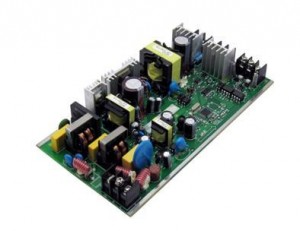
The load characteristics of LED determine that only power suppliers with higher reliability can be used.

LED is very sensitive for input voltage. The normal working voltage for LEDs is around 3.0V-3.6V (different power has different input voltage). A slightly fluctuation in input voltage will lead to a violent change in current, consequently causing a violent power output. If the vibration exceeds a certain threshold, accidents may happen. Experiments proved that adding voltage suppressing components (TVR, TVS) in circuits is useless.


Reliability and efficiency are constrained by each other. Power suppliers with higher efficiency must have a lower reliability, vice versa. In order to reduce the influence of output voltage to input voltage, electrical energy must go though several transformations. For example, the reliability of BUCK circuit is not very high. But BUCK-BOOST circuit has much better reliability than BUCK circuit. This has been proved. Known by those who had electricity background, when the switch of BUCK circuit is turned on, LED HIGH BAY loads and inductances are cascaded in the circuit under 300V external voltage. BUCK-BOOST circuit separately charge inductances firstly. When the BUCK-BOOST circuit is switched off, then inductances in BUCK circuit will transmit electrical energy to LEDs. The difference between them is BUCK circuit will work directly under 300V voltage in a period of time while LEDs in BUCK-BOOST circuit will not be explored under such high voltage. Thus the later has a much better reliability than the former. And relatively, BUCK-BOOST circuit actually has two electrical transmission sections: from power supplier to inductances and then from inductances to LEDs while BUCK circuit need only one step to charge LED STREET LIGHTS. In the aspect of efficiency, BUCK circuit has a better performance.


Thus currently used LED power suppliers are followed such law: isolated circuit has a better reliability than non-isolated circuit. Low voltage circuit has a better reliability than high voltage circuit.
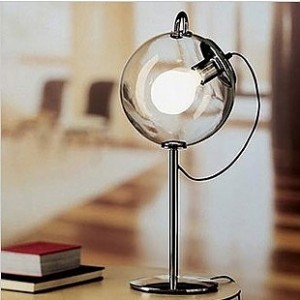
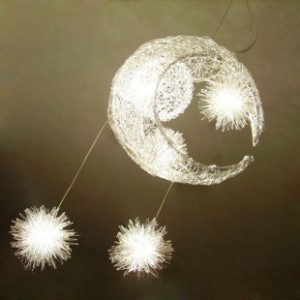
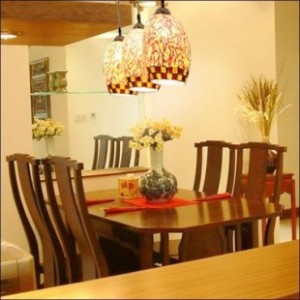
Subject to the core technology, indoor LED lighting products hardly to go further (3)

This type of government leading developing mode has been questioned by many experts and insiders. They generally thought that the excessive government support will give birth to the dependency of domestic LED manufacturers. They will be keen to project biddings rather than promote innovations in products and market. In fact, this tendency is obvious. Many LED manufacturers would like to apply projects under explicit state policies to enjoy the subsidies. In Mr. Wu’s opinion, LED high bay lighting is a big direction. But in most conditions, local governments became more and more utilitarian. “lighting is easy, maintain the lighting is not so easy.”

 This type of government leading developing mode has been questioned by many experts and insiders.

Fallen upstream.

“In LED lighting area, we should be alert every moment. Otherwise, the government subsidies will be in foreign companies’ back pocket.” One office from material section of MIIT said to reporters. In his point of view, there are two main reasons for the government substantial supports in this field: 1. The urgent needs for energy saving; 2. The huge economic potential in global LED lighting market. However, Chinese manufactures are in the lowest position of the entire industrial chain, especially for indoor LED lighting products. Normally, LED industry chain can be divided into three parts: upstream, midstream and downstream. Upstream is chip manufacture, epitaxy manufacture and equipment manufacture. Midstream is chip package. Downstream is LED street light applications manufacture. Upstream LED chip manufacture has been monopolized by Cree, Philipslumileds and Nichia. And chips for LED low-end products have also been controlled by chip manufacturers from Taiwan. Currently, the cost of LED chip is occupied more than 60% of the entire LED lamp cost. When domestic LED companies successfully listed, they had to face up the fact that developing upstream market, inventing their own LED chips. In accordance to the national regulations, large LED enterprises should bear responsibility of independent innovations of LED core technologies. Whether these listing LED enterprises can hold seats in LED upstream market is still anyone’s guess.


At present, our manufacturers of indoor LED lighting products are concentrated on midstream and downstream. LED package and LED applications manufacture have relatively low-barrier, leading to the fierce competitions from domestic LED company. Profit is increasing reduced. Nowadays, most sophisticated LED chip technology is held in the hand of foreign companies. This technologies are protected by patent right. Domestic manufacturers have to pay for them. “We have become workers for foreign companies.”


Subject to the core technology, indoor LED lighting products hardly to go further (2)

However, crises of energy-saving lamps have become chances for LEDs. It is a controversial topic that whether indoor LED lighting products can finally replace energy-saving lamps. The industry is generally of the view that LED lights and energy-saving lights are two independent products within two distinguished stages of lighting development. They may coexist for a long time. Hong Wu, chairman of Shanghai Lighting Society indicated that energy-saving lamps will not be replaced by LED in next three years. “In 2011, we estimate that this process will cost us at least 10 years, now it seems not.” Mr. Wu also said that if judged by the strict international LED standards, most of the LED lamps currently on the market are unqualified, especially for indoor LED lighting products.

 However, crises of energy-saving lamps have become chances for LEDs. It is a controversial topic that whether indoor LED lighting products can finally replace energy-saving lamps.

Restrictions from core LED chip technologies reduce the quality of domestic LED products, which has become an obvious weakness of Chinese LED manufacture. Cooling problem of high LED lighting products and more reliable and more efficient fluorescent powder are two main technical difficulties for international LED lighting industry. According to the current technology level of China, replacing energy-saving lamps (less than 10W) by LED lighting techniques should have no problem. But for energy-saving lamps with power consumptions more than 10W, LED shows its incapability.


LED is an artificial spawning baby. The main factor of artificial spawn is government support policies rather than materials. The State Council executive meeting held on 16th May determined the implementation of encourage consumption policies of energy-saving household electrical appliances. Central government funding for these subsidies will total 26.5 billion yuan, in which 2.2 billion yuan are for promotion of LED and energy-saving lighting products. This is the third favor from central government to LED industry this year. In one of previous documents indicated that Chinese government will spend nearly 40 billion yuan on purchasing LED street lights and provide 30% subsidies for providers. At local level, Pearl River Delta, Yangtze River Delta and Fujian Province have become the LED investment hot spots. Local governments issued all kinds of incentives to LED industries. As the largest LED manufacturing base, Guangdong was typically cared for by local government.


Subject to the core technology, indoor LED lighting products hardly to go further (1)

Since the beginning of the year, LED lighting products have become the new darling for policy and fund. Support policies and subsidy programs keep emerging. LED lighting business started to revive from the global economic depression. However, behind the seeming recovery, LED lighting industry still has many cannot-be-ignored problems: lacking of upstream chip technologies, domestic LED lights manufacturers either fluctuate in low profit downstream or produce low quality LED chips. Therefore, indoor LED lighting products can hardly go further. Some LED companies only rely on support policies, impeding the market adaptability.


According to the industrial measure criterion, only when the market penetration of one product reaches 10%, it can be defined as the “take off” of this product. Presently, the penetration of LED high bay lighting products in Chinese market is only 2%. Lacking of core technology yet being artificial spawned raised concerns about LED lighting industry.

Since the beginning of the year, LED lighting products have become the new darling for policy and fund.

Subject to the core technology:

“Traditional energy-saving lamps will be replaced by LED lighting techniques finally. Either in energy saving aspect or in environment aspect, LED street light is better. The shapely raised rare earth prices in 2011 sped up this process.” Said Bujun Cai, assistant manager of WinNews Technology Co., Ltd. LED lighting industry is growing, but we cannot judge just from currently intense investment. Both LED lighting technology and widely used energy-saving lamps are national promoted energy-saving products, aiming to completely replace traditional filament lamps. In 2011 Chinese government released the first filament-lamp-replacing blueprint to ban the sale and import of ordinary filament lamps with power consumptions more than 100W. This plan will be implemented from 1st October, 2012. In the second step, filament lamps with power consumptions more than 15W will be banned to sale and import from 1st October, 2016. But the government tends to promote indoor LED lighting products as equivalent techniques.


The price increase of RE materials in 2011 caused the government’s tendency to LED. Both LED lighting technique and energy-saving lamps need to use RE (rare earth) phosphor materials, but the consumption of RE materials of the former is only 1/1000 of the later. Hit by skyrocketing RE materials prices, many energy-saving lighting manufacturers were forced to close. On the other hand, this price-raising storm also led to the sharply quality reduction of energy-saving products. Unqualified rate is closed to 50%.


Five Problems of LED lighting lamp industry (2)

Right now, nearly 80% LED projects are used in public works. Applying LED technique in civilian projects still need the support of government. After ten years development, LED lighting lamp industry met with its first bottleneck. LED manufacturers thus desired to be involved in more civilian projects. Since LED lamps are normally more expansive than traditional lights, it is hard to be accepted by ordinary families. Due to the low demand of residential LED lighting products and also the low profit of low power LED lamps, manufacturers have no interest in this area. “LED is a more sophisticated lighting technology, consuming less energy, more environment friendly. Government should expand it to people.” Said Fangwei Huang, chairman of Shanghai Lighting Association. Marketing manager of ChangLight Qiang Liu also expressed his opinion “In past five years, we put most of our energy and money in high power LED area. We tried hard to win biddings of public projects, since only in this way we can earn money. Relatively, we are weak in residential LED area. We thought this part is unworthy of attention as the low profit. Now we knew that we were totally wrong. We did not spend enough energy and money in this area. We are lack of technique, which is rather crucial. Besides, we have not established a complete set of distribution channels. Now we have to face up the fierce competitions from overseas ravels, we are vulnerable. ” Within ten years development, LED lighting technique cannot be wide spread as traditional energy-saving lamps in residential lighting area. Government can promote this new technology to people though civilian works. That is the reason why LED merchants called for the support of government.

Right now, nearly 80% LED projects are used in public works. Applying LED technique in civilian projects still need the support of government.

Bottleneck in technology and equipment. In the field of LED technology and epitaxy equipments, there is obvious bottleneck in domestic LED lighting lamp industry. Independent innovations and patents are concentrated on LED packaging area. In other crucial LED technology fields, like white LED, cooling design for high power LED applications, degeneration problem of fluorescent powder, were monopolized by LED giants from America, Europe and Japan.


Lack of an indentified price standard. Domestic LED manufacturers are generally small sized, resources separated. Most high power LED chips still rely on imports. Lacking of independent LED chip patents increases the cost of small sized LED manufacturers. Thus, it is very hard for them to work out an identified price list for their products.


tri band led grow light for track lights led

As we all know, the single LED high bay is low power in tri band led grow light track lights led. In order to obtain high-power, multiple parallel, for example, automobile taillights, single high-power LEDs are very expensive.

tri band led grow light for track lights led

One drawback is that the “spot”, the white tri band led grow light manufacturing defects in workmanship coupled with the errors of the reflector or lens, likely to cause a yellow circle. The disadvantage or weakness of the current semiconductor lighting in the following two aspects:

1, high prices of high power LED Lights At present, the market price of the 1 watt power white LED is about ten times than the price of traditional light sources.

2, high-power LED applications, light efficiency is low In the commercialization of more than 3 watts power light emitting diode light emitting efficiency is low, lower than the luminous efficiency of more than 100 lumens per watt high intensity discharge lamps, also lower than the rare earth tricolor fluorescent in more than 60 lumens per watt. If we talking about semiconductor lighting energy saving, energy saving, in fact, just set up within the small power range, the current technology and existing efficient light source high-power lighting does not save much power semiconductor light source, but the initial investment costs high. Another problem is the luminous efficiency is low the shift of the input energy into heat energy, tri band led grow light LED cold light source is just the light itself is not burning the body, but the resistance heat generated by the large current in a semiconductor material, or make LED STREET LIGHT produce a higher temperature of track lights led, produced by the semiconductor materials, light emitting diodes is not high temperature, overheating will make life significantly reduce the radiator to increase the volume of the lamps, the semiconductor light source, small size, light weight advantage disappear.

Based on the above analysis can be seen in terms of luminous efficiency and the price level, the semiconductor light sources in the short term really is not easy to enter the field of general lighting to replace conventional light sources. However, in the current state, the development of semiconductor lighting industry and avoid weaknesses in the dominant direction of positive development, promote technological progress and the maturity of the production process, the semiconductor lighting era  track lights led to come early.