
LED exported to Japan needs circular PSE Certificate

Japan has become one of our most important overseas markets. However, Japanese market is not as good as our expected. LEDs(LED Lights) exported to Japan need circular PSE Certificate, which is the second doorsill after LED patents. According to the new policy proclaimed on 1st July 2011, every LED lighting product sold in Japanese market should have circular PSE Certificate. This article will give a small talk about the application scope of regulated LED lamps, test basis, main point of the standard and of course, coping strategies.
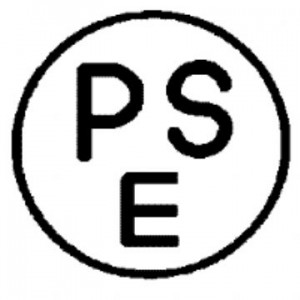
Japan has become one of our most important overseas markets. However, Japanese market is not as good as our expected.

PSE is the short term for Product Safety of Electrical Appliance & Materials Law (PSEAM Law), which is the compulsory standard for electrical appliances on the market. According to Electrical Appliance and Material Safety Law of Japan, electrical appliances can be dived into two parts: specified products and non-specified products. Specified products on Japanese market must go through an independent third-party certification body authorized by the Japanese government and mark diamond PSE labels. Non-specified products must provide legitimate self-testing reports and self-declarations and mark rounded PSE labels before promoted in the market.


There are totally 457 types of products been included in the scope of PSEAM Law. LED lamps have been classified as non-specified products and should have rounded PSE labels. LED Bulbs with one mental head, 100V-300V, 50Hz/60Hz, with a power consumption larger than or equal to 1W. Other LED lamps with one mental head, 100V-300V, 50Hz/60Hz, with a power consumption larger than or equal to 1W (except for LED Explosion Proof Lights).


In order to help the majority of LED lighting manufacturers and exporters to crack the technical barrier, a special PSE working group has been set up in 2011. After one year of study, this working group has basically digested the PSE standard and can provide professional tests for LED bulbs and LED lamps which are destined for the Japanese market. In accordance with the government regulation, products exported to Japan should pass the relevant technique standard of CQC and accept a series of tests prepared for PSE Certificate, even obtain the final certification before export. It made a large and active contribution to the Sino-Japanese trade.

 

ESD: a cannot-be-ignored factor for LED lighting manufacturers

ESD (Electro-Static discharge) is a common damage for electronic components. Although circuits for LED lighting technique is relatively simple than more advanced intelligent electrical apparatus, there are still many electronic components used in LED Lights circuit PCBs, which are rather vulnerable to ESD. Most of time, these damages are irretrievable, leading to the failure and worse scrap. ESD problem is gaining extensive attention from LED lighting manufacturers.

ESD (Electro-Static discharge) is a common damage for electronic components.

ESD leads to an instant current/voltage surge, which is the instant release of the pre-stored electronic energy by energy storing elements. There are two different energy releases: 1. Predictable energy release through controlled switching effect; 2. Unpredictable energy release through random export.


As we mentioned before, ESD can bring huge damages to electronic circuits. ESD is generally caused by friction between two different substances (charges accumulate on the surface). ESD larger than 15000V can be sensed by our bodies, normally in the form of pricking. Thousands of ESD happened in our daily lives, almost every of them can cause damages to our LED lighting products. How can LED lighting manufacturers block these external killers became a primary consideration.


Understanding the transmission of ESD can help us solve this problem. ESD can be transmitted though the air (induction discharge) and conduction. Technicians usually use shielding to prevent air induction discharge ESD and use absorbing to prevent conducting ESD.


The most effective method to keep LED lighting applications from ESD is restricting ESD trigger voltage, making it in the safe range of LED Panel working voltage. SPA can avoid the shock brought by ESD. Firstly, using diodes to absorb the instant current; secondly, current induction; in the last step, Zener diodes will be used to restrict the current level.


Intelligent LED lighting products need to realize sensitive human-machine interactions, including short-term control and information feedback. All these relays on chip set and interfaces, which are typically vulnerable to ESD and needs more effective ESD protective measurers.


The maximum capacitance and ESD level need special attention during the process. LED lighting manufacturers should provide anti-static workbenches for their workers, letting them accept specialized training in ESD aspect.