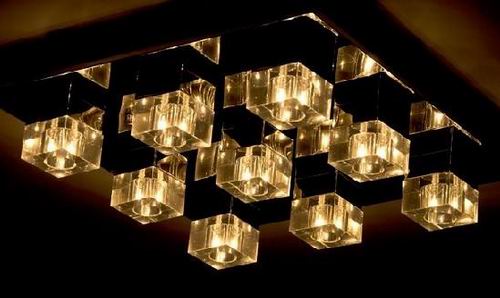
Vietnam LED market has great potential

Ho Chi Minh City has recently issued an investment certification to Kim Dinh (Vietnam) and Fawoo Technology (Korea), allowing them to establish LED lights (for residential and industrial purpose) production base in the High-Tech Park. This was a first co-operation between Kim Dinh and Fawoo Technology and cost them about 1.23 million dollars. They believed that Vietnam LED market has great potential.


SHTP indicated that this joint venture belonged to new energy industry, in line with the new energy industry development policy issued by Vietnamese government. In the beginning of 2011, SHTP accepted 4 new energy investments (7.76 million dollars in total), including HPT, Amvi biotech, and Vietnam Oil and Gas RD led street lights Centre.
Ho Chi Minh City has recently issued an investment certification to Kim Dinh (Vietnam) and Fawoo Technology (Korea), allowing them to establish LED (for residential and industrial purpose) production base in the High-Tech Park.

Ho Chi Minh City now has nearly 110,000 public lighting bulbs and around 110,000 bulbs for residential use. From the very beginning of 2011, Vietnamese government started to replace all old traditional public lighting instruments and installed new electronic ballasts, which can save more energy. Even so, Vietnamese government still paid an electric bill of 120 billion VND (Vietnamese Dong) and another 25 billion VND for maintenance fees. Government decided when VEEPL finished at the end of 2011, Vietnam Ministry of Industry and Commerce will continue to implement plan to replace core wire bulbs with high-performance lamps (this plan is also funded by GEF). It is expected that after 2014, the utilization of LED lamps in Vietnam will be more than 50%. Economic experts felt confident about Vietnam LED market.


Urbanization, urban infrastructure, rapid construction and development prompted a huge demand of lighting products. Vietnam’s urbanization rate was expected to increase from 27% to 45.2% by 2020. The implementation of urbanization and the rapid development of economy have greatly stimulated the demand for lighting products, both indoors and outdoors. Vietnam lighting market has entered a golden age.


In the next 10 years, Vietnam will invest over 60 billion U.S. dollars in the construction of roads, airports, ports and other public transport network. The Vietnamese Government has approved an urban renewal plan. By 2020, the total investment amount will reach up to 90 billion dollars in reconstruction of old urban. Also, in commercial areas, in hotel/resort industry and leisure entertainment, the Vietnamese Government prepared development plans.


All signs pointed out that in the next decade, Vietnam LED market will explode.


All LED are a minimum impact on the environment of energy efficient lighting

The new report of US Department of Energy(DOE) points out that LED lighting is significant in that incandescent bulb compared to the lower impact on the environment and the slight super-fluorescent lamps(CFLs). LED manufacturing and utility”in this report compare the life cycle of these three different bulbs including production, operation and eliminated. This report is a comprehensive study and analysis of three different bulb products: assembly, transportation and elimination on the energy and the environment. This is also the first open discussion of the report of all LED production process to support the Department of Energy to protect the public air and water, and to improve the competitiveness of US clean energy, and to assist the family and line number to save the costs of energy bills.

All LED are a minimum impact on the environment of energy efficient lighting

This is the second report of the Department of Energy assessment compared with the traditional light bulbs. The life cycle cost of environmental resources.

This report follows the previous report, which is published in February 2012″ “Review of the Life cycle Energy Consumption of Incandescent, Compact Fluorescent and LED Lamps” conclusions, and compare three different lighting sources wide-ranging implications on the environment.

The report points that the traditional fluorescent lamps(CFLs) and all LED lights are very similar in terms of energy consumption, both energy consumption are less than incandescent bulbs, and consumed compared to manufacturing and transportation, running most of the life cycle-energy. Because of the high efficiency of the running, consuming 12.5 watts of electricity and can be achieved and CFLs (15 watts) and incandescent bulbs (60 watts), the efficacy. 15 test report 14 shows the LED bulbs are three lighting among the most environmentally friendly lamps.

In addition to the dominant disposal, all aspects of testing existed. Compared to  LED bulbs, the impact on CFLs is larger than environment. The landfill would be after the LED inside the aluminum alloy material precipitation will cause great harm, The DOE report noted that, based on short-term improvement impact in the next five years,all LED on the environment impact of today is quite small.

When market-oriented wants to save money for the customers and company, the incandescent light bulb change to use to save energy in lighting. We can estimate that LED lights and CFLs impact on the environment reduce today’s 3 to 10 times.

International LED enterprises intend to build their factories in China

Since China’s accession into WTO, foreign investment transformed from exemplary joins into strategic development in many industries, including LED lighting industry.


Firstly, we need to comprehend the purposes of these international LED enterprises’ continuous establishing factories in Mainland. Obviously, cost will be the most essential reason. Because of the tremendous manpower advantage, China has always been the favorite in manufacturing industry all over the world. As a manufacturing, LED lights need much more manpower compared with other industries. Although the invention of automatic production line may reduce pressure to some degree, the entire production process still required a large amount of human label. Cheap Chinese labor kept these international LED enterprises low costs. Besides, foreign investors also took the complete and convenient transportation system into account. Another reason is the market advantage. There is no doubt that China will become the biggest market for LED lighting industry in the future. Building production base in Mainland can speed up the feedback between customers and manufacturers, which is really essential to establish the brand influence.

Since China’s accession into WTO, foreign investment transformed from exemplary joins into strategic development in many industries, including LED lighting industry.

Secondly, we need to analyze the merits and demerits of domestic and international LED tubes manufacturers. Generally, international LED enterprises are more powerful in research and development area. More than 80% LED chips came from foreign LED companies in spite that more than 80% LED lighting factories are in China. Obviously, foreign companies have advanced technology while our domestic companies only can provide label.


Once we figure these problems out, comprehensively understanding the not-really-complicated lines under the superficial phenomenon, we could easily come up with solutions. However, the premise is we know which way is right to follow.


Unboubtly, technology improvement is the primary step. In order to increase the international competitions, we should have our own LED chips. Fortunately, China’s top 5 LED enterprises have transmitted their attention on this part, starting their research and development in intelligent LED lighting products area and LED chips area. Our LED manufacturers also need to put a premium on management to improve products qualities. Surely we must clear that simply competing in low-quality application market will keep our competitiveness in low levels. As a matter of fact, most of our LED lighting products are much cheaper than foreign products, but still lacking of popularity in high-end markets. These are problems cannot be solved only relied on low prices.