Taiwan’s LED industry wants to use the London Olympics to reverse the downturn

From early May, Taiwan media has been flooded with various reports of the continuous depressed state of Taiwan’s LED industry. Lacking for funds and core technology, facing a saturated and highly competitive market at home, all kinds of problems exerted negative influences on local LED lights manufacturing. With the approaching of the London Olympic Games, some experts considered this as a good opportunity to turn the situation around. Many manufacturers also prepared to grab the chance to create a re-booming.
 

Taiwan’s LED industry wants to use the Olympics to reverse the downturn


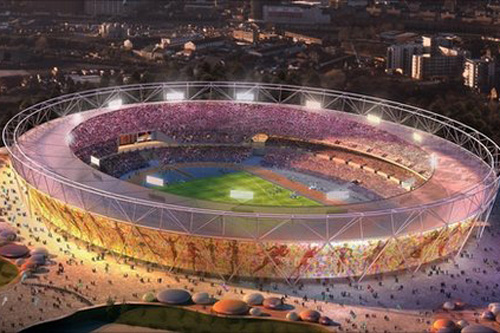
It is reported that the London Olympics will apply mobile devices to live matches. Meanwhile, solar LED street lighting products will be used on roads nearby competition venues. During the preparation time, the UK Government has purchased a large number of solar LED street lighting products from Taiwan and China. The exportation of LED lights in Taiwan has increased by nearly 10% in the past two years. The average growth rate of solar LED street lights is around 35%.


As the largest LED manufacturer and exporter in Taiwan, EveryLight suggested that Taiwan’s LED industry was under pressure for a long time. “The local market is actually saturated. You can hardly expect a re-booming. The only way out is transferring our sight from local market to the international market. China is a primary consideration. Mainland has the largest market and LED manufacturing. We are also looking for other breakthrough, and the London Olympic Games will be a good opportunity for us. ” According to their explains, the major competitors of EveryLight is Seoul Semiconductor (also a large LED manufacturer from Korea), Lumen-Max (another LED giant in Taiwan) and other LED producers in Mainland.


Some other LED producers still treated China as the largest and the most important market for them. “In LED lighting area, although we have some clients from North America and Europe, but China is still the most important one. We have no willing to move targets recently.”


Similarly, LED chip market also suffered fierce competitions. Many local LED chip manufacturers are looking for good chances to shift their focus to other markets. Overall, Taiwan’s LED industry is in a downturn condition. It is suggested that how to turn the table will be a long-term and not-easy issue.

Two major causes of the high price of small LED lights

So far, LED lighting technology still hardly accepted by ordinary people. In fact, LED lights have huge potential in domestic indoor lighting market. But as a result of the high prices, LED lights only have small progresses in this area. Relatively, LED high-power LED lamps had much better performance on the market. The energy-saving and environmental friendly advantages can be more showed up among high-power/large LED lamps. Thus the spread of these lamps are far more rapid than low-power/small LED lights.


So far, LED lighting technology still hardly accepted by ordinary people. In fact, LED lights have huge potential in domestic indoor lighting market.


In recent years, many LED manufacturers started to convert their energy and time on large LED lighting applications, such like LED High Bay Lights, LED Street Lights. High costs, fierce competitions and limited demands led a much slower development to small LED lights. “We are so willing to accept new lighting technology. The working principles of LED sounds pretty good, but they are too expensive, either. If the current price can reduce by 1/3, I’m going to replace all lights in my house by LED lights.” said one of consumers during the 2012 International LED Fair held in Guangzhou.


Why they coasts so much? Here we will give out two major causes of the high price of small LED lights.


Lacking of core technology. Core chip technologies belong to the upstream of LED lighting industry. Unfortunately, more than 85% LED chip technologies are under the control of overseas competitors. Although we have occupied more than 50% manufacturing value in LED lighting products, we earned the least among them. With the continuous improvement of producing technique, it was estimated that the cost of LED chips will be reduced by 20% per year. LED chips cost is the main part (around 60%) of LED lamp costs. If LED chip costs can maintain this dropping trend, by 2015, LED light prices can reach a similar level with energy-saving lights.


Cooling problems. Most domestic LED lighting producers tend to limit the cooling section costs within 5%. In order to achieve this goal, there are two points need to be noticed: 1. The short the path, the better the cooling effects. Here path means heat conducting path, including aluminum layers, heat sinks and cooling fins. 2. Thermal resistance. Multi-cooling-path is necessary for most LED lighting applications.


Once the high price of small LED lights problem has been solved, LED indoors lighting market could rapid developed.

LRC published a research report for LED airfield lighting

The Lighting Research Center (LRC) of Renss ELaer Poly Technical Institute has recently published a research report for LED airfield lighting, indicating that airport lighting should select suitable LED lighting products according to their specific conditions.

The Lighting Research Center (LRC) of Renss ELaer Poly Technical Institute has recently published a research report for LED airfield lighting, indicating that airport lighting should select suitable LED lighting products according to their specific conditions.

“Issues with use of LED airfield lighting:ACRP synthesis 35” was published by LRC of of Renss ELaer Poly Technical Institute, which suggested that as the most environmental friendly and energy saving lighting technology on the earth, LED lights is so to say the best lighting equipments for air ports. Replacing traditional airfield lighting technology with LED applications can firstly reduce the costs (maintenance costs primarily) dramatically. Traditional airfield lighting systems are generally based on filament lamps.


Transportation Research Board (TRB) of National Academies and Airport Cooperative Research Program (ACPR, which is also one of the main sponsors of this project) published this report together.


LRC had a long-term co-operation with FAA. Using solid lighting technology was recently put forward between them. Dr. John Bullough, the senior fellow of LRC and also the author of this report explained that “Obviously, LED airfield lighting can save more money for airports. But filament lamps have been on service for a long time. Almost every airport power supplying system in the world is based on filament lighting technology. Applying LED airfield lighting is not as simple as we though, we may probably have to replace the entire power system as well. ” Flat lands can let LED lighting products perform better, having higher penetration.


In the early stage of LED airport lighting industry, there are some “Compatibility Problems” between solid lighting system and airports. These problems have been gradually resolved during a two-year development. This report was based on a large amount of data from the detailed examines of more than 20 air ports all over the world. This report pointed out that despite the high cost of preparation, these cost will be compensate within a few years after installation LED lamps. Upgrade electricity infrastructure can improve the energy-saving capacity and the reliability of the entire airfield lighting system. In accordance with LRC, FAA is currently on a new research report for basic airfield lighting infrastructure.


LED bulbs will become cheaper than traditional filament bulbs?

With the rapid development of LED lights and continuous dropping of cost, prices for LED lights kept on reducing as well. Do you know how to choose the most suitable LED lighting products for your living places?

With the rapid development of LED lights and continuous dropping of cost, prices for LED lights kept on reducing as well.

With the enhancement of environmental protection awareness and the increase of living standard, more and more consumers are inclined to buy green and health-harmless products. In the lighting area, they would like to prefer more energy-saving and healthier lighting products. As if to respond the requests of customers, LED technology was developed during this period of time. LED lighting products can save more energy, have higher lighting efficiencies and longer service lives, the wide spreading of which has become a trend. This new born technology has many disadvantages, either. The expensive selling prices of indoors LED lighting products (such as LED bulbs) made them hardly be accepted by ordinary people. However, things are moving into the right direction. With the constant increase of production and continuous decrease of cost, experts estimated that by 2015, production cost of LED bulbs will drop to around 1.5USD.


Unlike traditional filament bulbs, LED bulbs are constituted by LED chip modules, LED components, cooling sections, metal covers, etc.. It is rather difficult to restrict the budget under a reasonable level. Currently, the cost ratio of these three main parts is about 1:1:1. It is expected that by 2015, the costs of LED products will be reduced to 1/5.


Currently, the average selling price for first-line brand LED bulbs (like Phillips, OSRAM) is about 90 yuan, while the average price for three-line bulbs is around 40 yuan. Compare with first-line energy-saving lamps on the market, which normally costs 10 yuan, LED bulbs are far more expensive. During the interview, some customers expressed their desire to replace filament bulbs with LED lamps. If the price can be drop to the current energy-saving lamps’ level, there will be no need to take any more considerations.


LEDs’ light emitting principles and internal structures determined that they can be made in alternative modes, like dimmable, RBG, or even intelligent. Designers indicated that dimmable LED bulbs can automatically adjust the color and brightness of light, which cannot be realized by any other traditional lamps. In additional, LED lamps with embedded CU also provide users a wireless remote control.