rgb led tape light and timer

For the first time the input voltage VS D1 will enable the storage capacitor C1 is charged until its voltage slightly lower than the VS. Initially, the transistor Q2 in a closed state, IC1’s reset input is high, the output (OUTPUT) is high, so the current through R1 to C2 charging.

During this time, R4 pull the discharge side (DISCHARGE) turns on transistor Q1, the current in the inductor L1 IL began to slash increases. Q1 is saturated, so the D3 and the LED lights in reverse bias state.

When the C2 voltage more than IC1 pin 6 threshold voltage (THRESHOLD), output (OUTPUT) and the discharge side (DISCHARGE) goes low, Q1 is cutoff. Back electromotive force generated across the L1, instantly elevated to the VA of the LED anode voltage, VA, is greater than the VS, the LED is lit. At this time, the diode D3 is forward biased state, and pull IC1’s input voltage V + until more than VS ~~ 4V.

Then, C2, once the rapid discharge through the transistor D2 and resistor R2, ready for the next cycle. If the proper choice of the resistance of R5 and R6, Q2 turns on the LED reset input at the same time. L1 stored energy is depleted, the LED and transistor D3 re-enter the reverse bias state, the VA is reduced to a lower level. Q2 is turned off immediately, and allow the the IC1 start another cycle, C2 begins again charging through R1. The process is repeated thousands of times per second, so the LED can be lit continuously.

This circuit uses three “tricks” to optimize performance. Transistor D3, since the gain can increase the input voltage of the timer, and even in VS drops below 1V, the circuit can also continue to work properly. In addition, through R4 Q1 enhance the base gate drive.
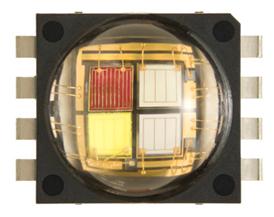
rgb led tape light and timer

Second, through Q2 feedback to ensure that the L1 energy is exhausted, new cycle can begin, so to maximize the average LED current.

Q1 is not the timer output side, but driven by a timer drain discharge terminal, the base drive does not depend on the performance of the 555 timer output terminal current source.

Transistor Q1 must be low in saturated type, the driving time for tON: tON = K × R1 × C2,

Where K is a constant determined by the actual use of the 555 timer type.

LED grow lights peak current is approximately equal to the maximum induced current IL (MAX): IL (MAX) = [(VS-VCE (SAT)) / L1] × tON Q1’s saturation voltage is low, for example, is lower than 50mV, then the VCE (SAT) can be neglected, the above equation simplified to: IL (MAX) = (VS/L1) × tON

Therefore, for a specific VS values, select R1, C2 and L1 values ​​can be IL (MAX), the maximum, which does not exceed the peak current rating of the LED to achieve maximum brightness.

Must be the appropriate choice of resistor R5 and R6, to ensure that VA = Q2 is turned off (in the case of incentives for the first time), the LED forward bias (VA> VS) conduction. Q2 itself must be a high current gain of small signal devices.

In order to achieve high efficiency, low voltage operation mode, you must use the CMOS timer, such as Intersil’s ICM7555 or TI’s TLC555. These types of timers are running under a 2.0V low voltage special features. In addition, their internal discharge transistor to pin 7 of voltage down to 100mV or even lower, to ensure that Q1 is completely turned off.
In a test circuit, IC1 TLC555, Q1 = ZTX649, Q2 = BC546, L1 = 100 μH, R5 = 56 kΩ, R6 = 10kΩ, that the circuit in the VS is equal to the low voltage of 1.0V to start. This circuit can Lumileds (www.lumileds.com) white LED to the best brightness.

The rise time of the transistor Q1 (tON) about 20 μs, making about 300 mA VS = 1.5 V when the peak inductor current. But to change the value of C2, R1, C2 of R1, L1 can change the peak inductor current, the ICM7555 also achieve the same performance, the minimum turn-on voltage will be slightly higher than 1.2V.

This circuit is ideal for a single LED application, because even if the input voltage drops below 1.0 V, it can make the LED flood lights to maintain sufficient brightness. Of course, two or more LEDs in series with its brightness will be reduced accordingly.
round led panel light and convertor design

Many of today’s portable consumer electronic products has a display screen, such as mobile phones, PDAs, and MP3 player, the type and size of the screen is usually determined according to the application, but the design engineer must be responsible for its design of power supply and backlight circuit. The white LED backlight program to select the most commonly used by the portable consumer electronics products.

round led panel light and convertor design

The main objective is to drive white LED lights to produce the forward current through the device, which can be a constant voltage source or constant current source to achieve.  However, this method has its shortcomings, the ballast resistor will limit the current through the nonlinear VI curve of the white LED steady flow capacity of this method is very poor; In addition, as long as the applied voltage or white LED forward voltage ( VF) any changes in the white LED current will change. Rated forward voltage of 3.6 V, a 20mA current through the white LED in Figure 1, if the temperature or process changes this voltage into 4.0V (still in the normal 3V to 4V tolerance range), the forward current will drop to 14mA; In other words, the forward voltage change of 11%, the forward current is 30% of the significant changes. Extreme changes of this white LED current will affect the display brightness, which is unacceptable in many applications.


Ideal for white LED down lights drive mode using a constant current source, it can avoid the white LED forward voltage change caused by the current change constant forward current can be controlled, can provide a constant display brightness can be controlled. Constant current source is very simple controller without the power output regulator, but as shown in Figure 2, the direct voltage across the resistor for current sensing regulator, the white LED current from the power to determine the value of the reference voltage supply and current sensing resistor value. Most monitors require more than one white LED designers the flexibility to drive multiple white LEDs, they should be all white LED in series, to ensure that each white LED current is the same. To promote white LEDs in parallel, each white LED must be a ballast resistor in series to avoid differences between the current through them, but these resistors will waste power and reduce the circuit efficiency.


Inductive drive and charge pump drive


IC designed to drive white LED provides a constant current, most of which is inductive or charge pump-based solutions, both solutions have their own advantages and disadvantages. The switched capacitor charge pump solutions, or solution, the use of discrete capacitors to the power from the input sent to the output side, the whole process without using any inductors, it is a popular solution. The small size of the charge pump power supply, the design is also very simple, select the components usually just pick and choose the appropriate capacitors according to component specifications. The charge pump solutions, the main drawback is that it can only provide limited output voltage range, the vast majority of the conversion ratio of the charge pump IC can only reach up to twice the input voltage, which means that the output voltage can not be higher than twice the input voltage If you want to use a charge pump to drive more than one white LED, you must use the parallel drive way. When only the output voltage regulated charge pump to drive multiple white LED ballast resistor must be used to prevent the current uneven distribution of these resistors will reduce battery life.


Inductive solutions for small size, high efficiency, providing longer battery life for the vast majority of consumer products. This article will prove that the designer can adjust the inductance converter efficiency in order to achieve an optimal balance between size and efficiency. As most of the inductive solutions are based on the boost converte, up to drive six or seven white LEDs in series, this practice has its merits, because many of the display’s built-in white LED are used series model; even if no built-in white LED grow lights display screen, most engineers will be connected in series. The backlight driver and the white LED is usually in a different circuit board must be power from a circuit board connected to a circuit board. Drive five parallel white LED totaling six pin connector, the drive to five white LEDs connected in series requires only two pins.

s11 led bulb and power switch

Automotive lighting assembly suppliers are considering the use of LED lights devices with high-intensity discharge (HID) lighting competition. First, the LED device driver circuit complexity of the HID lamp. HID lamps require high voltage ballast circuit starts an arc in the HID lamp, and in the Kai-arc needs to adjust its voltage output to maintain constant power supply HID lamps. From the electromagnetic compatibility (EMC) point of view, these high-voltage circuits are prone to noise, further hampered the technology for use in the automotive sector. Finally, the cost of the LED devices continued to decline, to make this technology more and more attractive for cost-sensitive automotive market.

s11 led bulb and power switch

A typical LED headlamp application requirements to provide more than about 25 watts of power to the LED array. One of the advantages of the LED components is high efficiency, drive electronic components should also improve efficiency, to give full play to the advantages of LED street lights technology. Consider some kind of switching power supply (SMPS) to achieve this goal (see Figure 1). But most of the SMPS design goal is to adjust the voltage rather than current.
For this application, select the buck topology. Limit of the input voltage (VBATT = 9 V min.) And the array of forward voltage drop (2xVF = 8.0 V, VFMAX = 4 V IF = 350 mA) to determine the expectations of a buck topology to meet these requirements, it is reasonable to . The method of driving the LED is switch / voltage stability, and then flows through the LED current adjusted by pulse width modulation. In the path of the LED and switch, you need a current limiting resistor in series in order to avoid too much current flows through the potential damage. This series resistance power consumption can lead to reduced efficiency.

However, SMPS with conducive to the steady flow component. Simplified buck regulator circuit shown in Figure 2.
Simplified schematic of the buck regulator
More careful observation of the energy storage elements in this design can be found some interesting points. Current through the inductor can be seen as both exchanges is also a DC component. Consider the work of SMPS inductor in discontinuous mode (inductor current waveform, see Figure 3). In this application, the DC component is of particular concern. Because the current is the key parameter, and adjust the current to the load is the main objective of this circuit. Should also remember that the exchange of components to minimize the target.
continuous mode flow through the inductor current waveform
In addition, because they do not consider the output voltage, and it changes with the LED devices, and thus does not require the same like a conventional voltage regulator circuit to consider this node regulator task. When the inductor charging and to help provide energy to the LED down lights array, the output capacitor current during this period Traditional regulator, this component will be retained.


samsung led lighting products and design method

With the development of white LED lights, it’s more widely applied. In the past, the white LED is the most common application is as a small-size color LCD backlight. White LED brightness increase, its application has spread to other areas, such as a flashlight or cell phone camera auxiliary lighting. This paper describes a general boost chip to drive the efficient high-current LED circuit.
Circuit design

samsung led lighting products and design method

General white LED current is about 20mA, but the high brightness LED 200 to 300mA current. If the product needs to use three to four high-brightness white LED, the brightness average general practice is to string them connected together. On the market, most of the white LED driver chip can only drive 20mA. Hit a series high current LED applications will have to think of other ways. Intersil’s EL7516 is a typical step-up chip, this chip operates at 1.2MHz fixed-frequency PWM mode, built-in 1.5A, 200mΩ MOSFETs. Figure 1 shows the the EL7516 typical application circuit. DC-DC boost the role of EL7516 will be 2.7 ~ 5.5V input into a constant voltage of 12V. General PWM control chip, the FB pin is connected to the error amplifier is compared with 1.3V. R1, R2 resistor value is selected to set the output voltage.


The EL7516 Boost Application Circuit

EL7516 voltage circuit into a constant-current LED drive circuit is very simple. Shown in Figure 2, the FB pin of R1 replaced by LED, change R2 can adjust the current through the LED. The value of R2 can be selected from the following formula: R2 = VFB / Iled where VFB is the FB pin voltage, that is, 1.3V; Iled current through the LED.

Standard LED driver circuit

EL7516 used to drive four high-brightness white LED tube

R2 by 300mA, the resistance of the power consumption is close to 0.39W. Such a great power not only affect the efficiency, but also need to use the relatively large size of the resistance in order to accept the 0.39W of heat. In general, these applications are battery-powered, efficiency and line PCB space requirements are more stringent now let us look at how to improve the efficiency of this line.

Regardless of the circuit changes how EL7516 will adjust the duty cycle so that the FB voltage to maintain 1.3V. The assumption D1 positive voltage drop is 0.6V, the voltage drop across R2 is about 0.7V. To maintain a 300mA LED current, R2 can be used to 2.3Ω. R2 power consumption also dropped from the original 0.39W 0.21W. Although the power consumption has been reduced, but R2 have to use a half-watt resistor to this circuit.

A cheap TL431 added to the circuit as a 2.5V reference. As mentioned earlier, the EL7516 will keep the FB in 1.3V; so the current through R4 is: (2.5-1.3) / 20k = 60mA. FB is a high-impedance pins, we assume that this 60mA full inflow of R5, made the same 1.2V voltage drop. 0.1V, the rest of the R2 to complete. In order to facilitate the purchase, R2 is selected as 0.39Ω. So the current through the LED is about: 0.1/0.39 = 255mA. R2, the power consumption is significantly reduced to: 0.1 × 0.255 = 26mW.

Conclusion

Can be seen from the above experiments, minor changes can greatly improve the efficiency of high-current LED panel in the circuit. Experiments, we use a 5V input. The practical application is likely to be a single lithium battery power supply. The EL7516 minimum operating voltage of 2.3V, so apply to a single lithium battery power supply. EL7516 built-in MOSFET peak current (1.3A min) protection, such as the lithium battery voltage dropped below 3V, drive four LEDs may trigger the current protection. Such as the need to 3V below work best to reduce the output for the three LEDs.