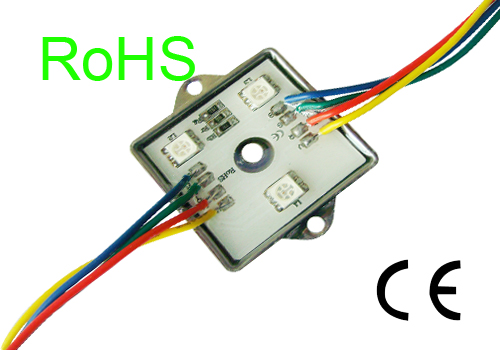
rgb led mood lighting and current control

Small size, high light output and flash or continuous video recording lighting output power LED lights have been developed specifically for mobile phone camera, light source, but have been overwhelmed by make battery a heavier burden. This paper discusses the current mobile phone camera light applications to optimize the efficiency, accuracy and control LED current power IC products and application technology.
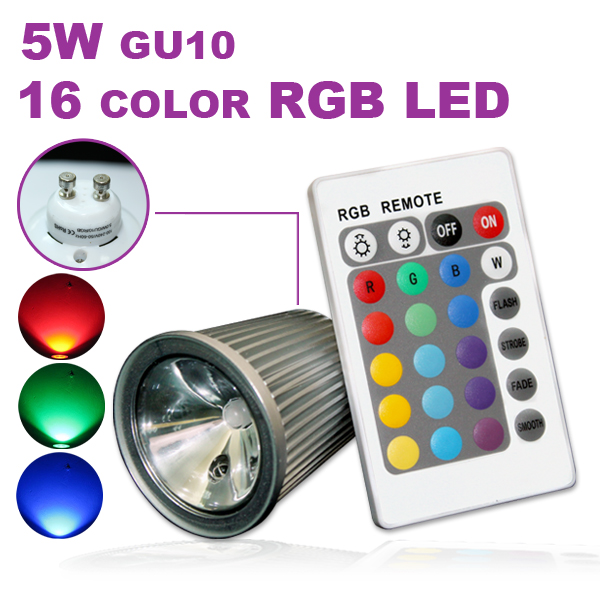
rgb led mood lighting and current control

A function of more and more popular in the phone built-in digital camera that can shoot high-resolution still and video images. With the wide bandwidth of 3G networks roll out, the demand for higher resolution photos as well as new applications (such as video conferencing) to enhance the performance of the integrated camera. High-power white light source in the camera when used indoors or in dim light, the camera performance enhancements also put forward higher requirements. The white LED lamps are already widely used in the color display backlight, but also become the main light source for camera phones. The white LED has a combination of stylish mobile handset designers the required performance: small size, high light output and flash or continuous video capture lighting. The output power LEDs have been developed specifically for the integrated camera light source. Although these dedicated camera LED is ideal for landscape lighting, but they are also the consumption of the battery is another important factor.


From the system designer’s point of view, there are three main problems with driving high current white LED: 1. To provide efficient power; 2 to adjust the LED current; camera light source is turned off to ensure that the LED power supply is completely cut off. Like an ordinary diode, the electrical characteristics of high current white LED forward voltage is 3.4V or a typical 350mA forward current (see Table 1).
Increase the LED current (“flash” mode, 500mA-700mA or more) will cause a higher forward voltage. The low current (“torch” or “video capture” mode, 100mA-350mA) to produce a low forward voltage. The forward voltage will decrease as the temperature increases, will have hundreds of millivolts of drift in the temperature range of the phone work as a diode forward voltage. Therefore, effective to provide LED power supply is very challenging, LED forward voltage due to different working conditions may be higher or lower than the voltage of the lithium.

LED driver should be applied to the buck and boost DC / DC conversion, with minimal pressure drop in the current control circuit to adjust the LED current.


If two or more parallel LEDs use a camera light, due to the great changes between any two LED’s forward voltage drop, therefore need some additional devices to ensure current matching. The most obvious way is the LED in series, the boost converter works well. If, however, need to be connected in parallel, the solution must be able to provide independent current control of each LED. In any way, the current control circuit in the current-sensing resistor should be at the lowest possible pressure drop. Another complex points in the camera light applications from as low as a microamp forward current-current LED visible light. No inherent LED disconnect, needs to be a separate switch in series on the LED to ensure the shutdown, the LED will not have a current flows through.

High power LEDs produce visible light is very simple, but in the existing design to produce high-performance power supply and current control solution is very difficult. In these applications, there is no dedicated power supply IC to solve the above problem, the battery life will still suffer. Linear Technology’s LTC3453 is specifically designed to optimize the efficiency, accuracy and control LED current  in the current camera light applications.
LTC3453 use of a synchronous buck – boost power supply and programmable low-dropout current source to adjust the LED bulbs current. Devices based on VIN and LED forward voltage synchronous buck, synchronous boost, as well as four switch buck – boost mode automatically converted. Each current source has its own independent control loop can be adjusted in a very low LED pin voltage currents to reduce power consumption. Truly cut off the LED current source can be turned off. 4 LED current source (LED1 to LED4) LEDs can be connected in parallel or together to jointly drive a single high output LED. By regulating VOUT to ensure that all current source is the minimum voltage of the regulator state, the overall efficiency can be optimized. Within the scope of the entire lithium batteries and LED forward voltage synchronous buck – boost topology, the efficiency of the “flashlight” mode is greater than 90%, increased by 20% to 30% than ordinary step-up solution.

rgb led rope lights and Luxeon led

The high output from the Luxeon and Nichia 1W white LED 12W incandescent lamps of similar brightness level, while the power consumption of only 1W, and the service life of up to 50,000 hours or more. For many light bulb applications, these devices is expected to achieve significant energy saving effect, and reduce maintenance costs. However, in order to maintain the correct brightness, must be a constant current to drive these LED lights. The range of process and temperature within the limits of the forward voltage drop of 2.8V to 4.0V. Circuit for driving the LED at the same time maintain a constant current drive to compensate for the forward voltage changes. The boost circuit is usually voltage feedback switching converter with additional circuitry to detect the output current (not voltage). This leads to the circuit structure is complicated and inefficient.
The LTC3490 provides a way for single or dual battery voltage is raised to the desired LED forward voltage and to adjust the current through the LED load a simple solution. The high frequency (1.3MHz) operation allows the use of small value inductors and capacitors. The current sense resistor and loop compensation components are built, thus reducing the number of components. The LTC3490 is a synchronous converter, eliminating the rectifier diode and the associated efficiency loss. Components needed for just the boost inductor and an output filter capacitor. Shutdown and dimming feature adds a small amount of resistance, and, in some cases also propose to introduce an input capacitor.

Circuit Description

The LTC3490 is a synchronous boost converter. Its box is shown in Figure 1. The use of a low-voltage startup circuit, it can start under normal conditions of input voltage down to 0.9V. When the output voltage exceeds 2.3V, the boost circuit will be connected to the start-up circuit is turned off. The boost converter is a fixed frequency current mode architecture.
the LTC3490 block diagram

LED current in the high pressure side of the internal 0.1Ω resistor to detect, which allows the LED tubes to negative ground. A sense amplifier is responsible for the voltage to be compared with the reference current flow through a ratiometric match 19.2Ω resistor. Detection voltage differential calculus, and for the setting of the PWM controller. Therefore, LED current is constant, this has nothing to do with the LED forward voltage.

Two battery applications, the LTC3490 efficiency up to 90%; in single cell applications, the LTC3490 efficiency higher than 70%.
the LTC3490’s efficiency

Overvoltage protection

Current sensing controller may drive the output voltage to the devastating levels (if there is no load), so, you need to output overvoltage protection. If the LED panel from the circuit is removed or fails, it will happen. As long as the output current is below 350mA, the output voltage will continue to climb and there may be damage to the LTC3490 in the case of the overvoltage protection circuit. When the output voltage higher than 4.5V, an overvoltage detector forces the LTC3490 into shutdown mode. Overvoltage detector to keep connected to the state, will resume normal operation when the output voltage drops below 4.5V.

Dimming function

The LTC3490 can use the CTRL / SHDN pin to gradually reduce the LED current. CTRL / SHDN input has three functions: stop, dimming control and constant current output. The pin with a proportional relationship exists between the VIN pin voltage, which makes using a simple resistor divider to set the current value. When the CTRL / SHDN pin voltage is below 0.2? The VIN, the device is in shutdown mode, while the absorption current is very small. When the CTRL / SHDN pin voltage is higher than 0.9? The VIN, the device is 350mA constant current mode. When the VIN between the CTRL / SHDN pin voltage is 0.2? The VIN and 0.9?, LED current from 0mA to 350mA linear change.

Low-battery detection

rgb led rope lights and Luxeon led

The LTC3490 provides two low-battery detection level. These level set by CELLS pin, for the number of the section indicates that the battery. CELLS pin is low, low battery detection level is set to 1.0V, and when connected to VIN CELLS, low battery detection level was set to 2.0V. Which correspond to single and double battery operation. When the battery voltage falls below the detection level / LOBAT pin on an open-drain output is pulled low. The output can be used to drive an indicator, or feedback to the CTRL / SHDN pin to reduce the LED current, thus extending the remaining running time of the battery.

Shutdown the LTC3490 when there is an undervoltage lockout circuit, the circuit in the battery voltage drops below 0.8V per section. This can prevent the battery current is too large (single cell), and uneven-discharge Ni-MH battery, reverse battery (two batteries).

Battery reality check

The battery there is a so-called “discharge recovery” phenomenon. When to move away load from a battery is almost exhausted battery, the battery terminal voltage will be restored to a surprisingly high voltage. LTC3490 when a nearly depleted battery dead battery shutdown transition occurs, the decrease of the absorption current makes the battery voltage can be restored. This will be re-connected to the LTC3490, and load again added to the battery. At this point, the battery voltage will drop to once again trigger the shutdown operation. This phenomenon has led to the LTC3490 quickly switched on and off the LED current. Observations: When the battery charge is close to exhausted, the average LED current decreases slowly. The LTC3490 provides a simple solution using alkaline batteries or Ni-MH battery to drive the high-output white LED’s. It has the characteristics of high efficiency and less number of components.

Light distribution design for high-power LED tunnel lights

1)       Select suitable lighting sources. Lumen output per Watt (also named power efficiency) is always a notion that determines the performance of LED lights, including LED tunnel lights. Theoretically, competent LED tunnel lights should have power efficiencies larger than 80lm/W. After a three-year rapid development, the majority of LED tunnel lamps that sold in the market has reached power consumption as much as 90lm/W, following by the increase of brightness. OSRAM provided more sophisticated LED lighting sources for high-power LED tunnel lights. Natural White/Cool White (4000-6000K) is more common among LED tunnel lamps, which can provide a higher CRI and less “Bright/Black Hole Effect”.


1) Select suitable lighting sources. Lumen output per Watt (also named power efficiency) is always a notion that determines the performance of LED lighting products, including LED tunnel lights.


2)       Light distribution design. According to the specific requirements of tunnel lighting, optical principles and the one-direction property of LEDs, different tunnel segments should apply different light fixtures (different light distributions). Once brightness and illuminance are satisfied, the reasonable consideration of light distribution can save even more energy. In the entrance section, accommodative section, transition section and exit section asymmetric illumination (backlighting mode) should be used. Under the same lighting circumstances, in comparison with traditional high pressure sodium lamps, LED tunnel lamps can increase the light intensity near the ground by 21%. Meanwhile, the high directivity can eliminate most of glare. In the middle section (basic section) of tunnels, there are several commonly used light distribution applications: light-concentrated distribution, side-emitting distribution, Lambert distribution, etc.. Light distribution varies depending on different situations. For example, road lighting should use batwing distribution, and spot light should use light-concentrated distribution. Due to the particularity of tunnel lighting, LED tunnel lights have a relatively compact arrangement. Besides, the light distribution will differ from road lighting. Generally, batwing and Lambert are commonly used, since both of them can meet the requirements of even illumination within a large area. In the same luminous flux conditions, high-power LED tunnel lights used these two light distribution can increase the light intensity near the ground about 64%.


The development and producing of high-power LED tunnel lights provide more opportunities for national railway lighting, highway lighting and tunnel lighting, having them expand the market furthermore. It not only filled the gaps of new tunnel lighting source technology, but also promoted the development of low-carbon environmental protection process.

rgb led sign and solution

White LED has been widely used in handheld devices such as mobile phones as a color LCD screen backlight and keypad light. Color LED is a good indicator of the situation reported to the user calls and battery charging. The brightness of the LED lights current is proportional to the voltage must be high enough so that they conduction. Now the most popular battery is a lithium battery, the voltage is usually 3.6V or so, but as the battery discharges, the voltage will drop. For these reasons, the LED can not directly use this battery-powered, you also need an adjustable boost converter. Adjustable charge pump solution is very popular, especially in the total output current less than 100mA of simple and low-cost applications.

rgb led sign and solution

Different current drive LED

Adjustable output charge pump, such as Catalyst’s CAT3200-5 is one of the ideal LED driver can provide up to 100mA 5V regulator output load current. For LCD backlight white LED current is 20mA, the forward voltage VF of approximately 3.4V. The current through each LED tubes series resistor to set the resistance is also known as ballast resistors (see Figure 1). This structure allows parallel through different current in the LED. Larger resistance value smaller means that the LED current. In Equation 1, the approximate draw of the LED current (ignoring interconnect losses).

adjustable output charge pump applications

Formula 1: VOUT = the VF + (LED current × RS).

, VF is the LED forward voltage, RS is the series resistance.

The stability of the output voltage VOUT 5V, take into account when the forward voltage VF of 3.4V when the LED current is 20mA, RS = (5V-3.4V) / 20mA, or 80 ohms. In this example, three white LED display backlight, two color LED (red and blue) as the indicator. Each color LEDs have different forward voltage characteristics. The red LED forward voltage is very low, 20mA of current when voltage is typically 2.8V. Indicator LED is not used for lighting, so its current is smaller than the backlight LED tube.


the application of the adjustable current charge pump

The CAT3200-5 of the charge pump is one kind of voltage doubler, and only needs a large capacitor as the accumulation of container, the charge transfer from input to output. It is recommended to use a 1μF ceramic capacitor. All external components of the other two 1μF capacitors, were placed in the input and output pins.

Market there are still other LED driver implementations, such as inductor boost or charge pump current control. Inductor boost drive with an inductance to the input voltage is increased to drive several LEDs in series, The advantage is that these LED provide the same current, but this structure is not suitable for the above application examples. Another LED drive current control of the charge pump, by using the on-chip current regulation, a separate LED channels can drive an LED. In this case, the size of the LED current set by external resistors. In a more complex drives, via a digital interface can be programmed into the chip inside to go. The advantage of this structure is no longer needed for ballast resistors. Since all the LED current is the same, so this solution is not suitable for the applications we discuss.

The power supply with a series resistance of the electrical schematic Figure

The most critical issues often appear when the system is powered on. When the enable input pin of the signal from a logic low to logic high conversion, the device turns on and charge a large capacitor. Results in a very short period of time input current increases rapidly, resulting in the so-called “surge” current. Used to describe the advantages of an indicator of the power management chip is how did it perform in the monitoring of the input current. High surge current risks associated with internal rail voltage (VRAIL) instantly drop and affect the system operation. The decline in rail voltage power supply output impedance RS and interconnect impedance RINTER function (see Figure 3).

System rail voltage is calculated as follows: VRAIL = VBAT-IIN × (RSINTER,

Which, VBAT is the battery voltage, IIN is the input current. For example, if the series resistance of the sum of 1.5 (inrush current is 0.5A, then the rail voltage: VRAIL = 3.6V (0.5A × 1.5 ohm) = 2.85V.


VIN 3.3V and the load current of 100mA power on
Such a low voltage can cause a system crash. A way to reduce the inrush current of the battery output is to increase the input capacitance of CIN. As a result, most of the large capacitor charging current provided by the capacitor, CIN can reduce the inrush current. Figure 4 depicts the input capacitance of 1μF and 4.75μF input current and output voltage waveform.

The input current waveform when the linear growth in the output voltage to the rated 5V input current is gradually increased. The initial current spikes because only a very short period of 2μs duration, so no harm, it has little effect on the input voltage.