Global emerging markets in all lighting are very active

Since 2008, the U.S. and European markets influenced by the financial crisis, so the demand decreased. The importance of global emerging markets are also increasingly subject to the attention of manufacturers: South America and South Africa in recent years. The rapid development of the Middle East market has large demand for low-priced products. In addition, Russia and Eastern Europe is also a potentially large market, many companies have also demonstrated the interest of Russian and Eastern European markets.
Global emerging markets in all lighting are very active

Indian market, India is 80% all lighting products imported from China in the Indian market, the LED lights outdoor use huge space, while the Indian Government is considering the traditional lighting systems for environmental protection and energy saving LED lighting system, which is expected to LED lighting market in India. The growth rate will reach 41.5 percent, and continued until 2015. In South America, Neo-Neon since last year already and gradually increase to expand efforts to develop LED lighting market in South America, led by Brazil. The first LED tunnel light project in the city of Sao Paulo, Brazil’s central city of Neo-Neon Group’s Silver Rain Lighting do the tunnel Ayrton Senna throughout South America’s first highway LED tunnel lighting, which is the landmark projects for LED lighting applications in the tunnel and highway.

In the South African market, there are Chinese enterprises active figure. Zhang Qingyu, NVC lighting Vice president, said that South Africa has become one of the NVC sales overseas markets. In South Africa, NVC dealer business model matures. Right now, the key distribution channels, specialty channels, modern supermarket channels.

Take the Middle East as an example, UAE and other Gulf countries are in a period of economic prosperity, retail, trade and real estate development has led to demand for all lighting, and other areas of Dubai and the UAE population growth has also led to development of the lighting industry.

In Russia, the Kremlin theater lighting project is one of the Shenzhen Mason representative to participate in the global market competition. This prestigious Ballet Theatre “Swan Lake” by Russian Prime Minister Vladimir Putin personally wrote an inscription, called the world”s most elegant theater one. Party on the theater scene design requirements are very harsh. And layers of rigorous testing and screening, Mason eventually stand out from the many international brands.
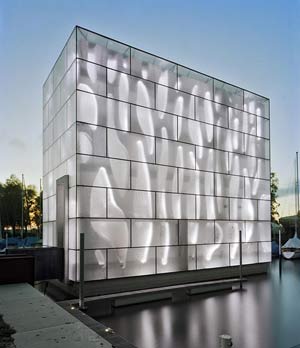
White Ray will become the mainstream of architectural LED lighting industry in 2013

It is estimated that the compound annual growth of LED lights industry in Europe is around 38% in next five years, which is the second fastest growing mature market after Japan. Topping the lists were architectural LED lighting (45.8%) and commercial LED lighting (39.2%) due to the price-carelessness and quality-chasing of customers in these two fields.


White Ray will become the mainstream of architectural LED lighting industry in 2013


It is showed by European LED lighting market research report (2011-2015) that the total size of the global architectural LED lighting market is about 3.191 billion USD, accounting for approximately 29% of the overall LED lighting market. Europe, as the prime market, will occupy more than 35% of the global LED lighting market, with an estimated market size of 1.12 billion USD.


The multi-color property of LED chips made most business organizations in Europe more willing to spend money on colorful lighting design to promote the cultural and tourism value to attract more visitors.


In the past, RGB lighting products were the mainstream in outdoor landscape lighting and indoor decorations. Not until 2011, LED demands were far exceeded by supplies, making the ASP of high-power White Ray LED lighting products dropped by 35-40%. Architectural LED lighting manufacturers started to use White Ray LED lamps. With the rapid improvement of White Ray lighting efficiency and the sharply dropping of prices, it is estimated that by 2013, White Ray will take place of RGB/Color become the mainstream among architectural lighting applications.


According to the recent research results, our country has six giant production bases for architectural LED lighting currently. In the first half of 2011, China has put more than 30 billion yuan in LED lighting industry, in which architectural lighting took up 30%.


However, the rapid growing trend also brought in disadvantages: the “vicious competition” between companies will weaken the digestion capacity of the market, or even worse, destroy the new-built confidence of this emerging market. Customers’ trust can be easily seriously injured by low-quality products. Once failed to obtain sufficient recognition from market, it is very easily for a new-born industry to be at a virtual standstill for many years. Experts suggested that, before developing architectural LED lighting, government and giant LED enterprises should and are responsible to establish a uniform standard to keep from a potential market chaos.

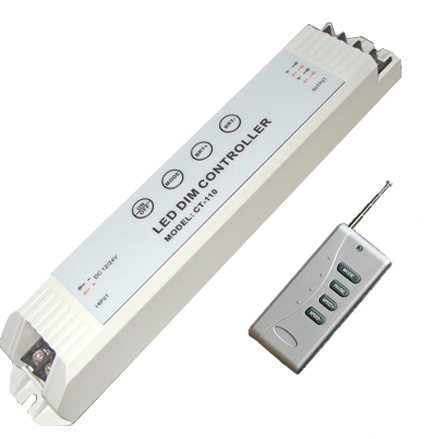
Three major development potential of LED dimming technology

Dimming is a commonly used technology in the lighting industry. For filament lamps, dimming technology can be easily realized on them in the case of low production costs. While LED dimming technology is much more difficult. For architects and ordinary families, they have no willing to lose the dimming function in the process of replacing traditional lamps with LED lighting products. In this article, we will give a small talk on LED dimming technology to provide some helpful information for someone needed them.


In this article, we will give a small talk on LED dimming technology to provide some helpful information for someone needed them.


Power Factor (PF) is a rather important parameter among electrical appliances. A higher PF can effectively reduce the energy consumption of distribution network. Thus regulatory agencies around the world are striving to restrict the PF of their electrical appliances within a reasonable region. Energy Star Solid-state Lighting Efficiency Certificate is one famous example, in which the PF of residential electrical applications should be larger than 0.7 and the PF of commercial applications should be larger than 0.9.


There are three major methods for LED dimming technology. All of them realize the dimming function through changes of LED drives current. They also can be divided into simulated dimming and PWM dimming on the base of different circuit systems.


1)       Dimming LED lights by modulating the derive current. Brightness of LED chips is proportional with the LED drive current, therefore it is available for us to dim LED lights by varying the input current.

2)       Pulse Width Modulation (PWM). ① Convert the input current into square waves, increasing its pulse width; ② Adjust the constant lighting time by adjusting the pulse width, realizing the PF control and dimming at the same time. The dimming frequency is about 200Hz – 10KHz. Due to the visual lag of our eyes, flickers cannot be seen by us. PWM are good at improving cooling sections, which is the biggest advantage of it. However, it also has defects: the excessive input pulse may reduce the service life of LED chips. Currently, PWM is the most common method in LED dimming area.

3)       VID (voltage ID) method. The linear increase or decrease of drive current will have less effect on LED chips. This method is a simulation of power-on/power-off state, also named linear dimming method.

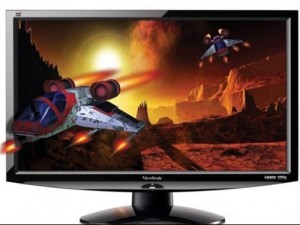
Introduction of real 3D LED display technology

3D LED LCD has become a trend. However, in the field of 3D LED display industry, there is still no 3D-related product coming out. Throughout the history of led lights display technology, from single color to full color, from plane to 3D, it is obvious that 3D LED display technology is an inevitable trend an can be realized one day.


3D LED LCD has become a trend. However, in the field of 3D LED display industry, there is still no 3D-related product coming out.


Currently 3D used polarized light technology, which can be captured by human eyes and reconstructed within visual centers in the brain. It is in fact seen as a fake 3D technology. Fake 3D technology can have very high resolutions, but still have obvious distinguish with actual feelings.


Many universities and research institutes in the world are striving to develop real 3D technology. In spite that the current fake 3D technology has already meet the requirements of most commercial and residential demands, but still incompetent in some other crucial area, such like military, medical (surgery and teaching). Real 3D LED display technology cannot be simply replaced.


At the moment, there is no high precision, low cost real 3D LED display been around, but the initial prototype has already created in laboratories, using transparent acrylic tube matrix, evenly distributed by LED tube chips. This device can realize the real 3D effect through the variations of LED lighting spot. Designers also faced up with a lot of problems: which method should be used in modulating signals? Once decided, this procedure will become the most expensive within the entire deign. If simply increase the number of transmitting channels, it is rather difficult to realize the full control of signal processing and signal synchronization. A large amount of computing will be inevitable involved. Currently, scientists are trapped in the options between Hierarchical Data Processing and Column Data Processing. The current work may just prove that which way is impassible. The creation of real 3D LED display still need a long time. Works done or doing would be the bridge to the success future.


In the near future, customers may have opportunities to view a “real fight” between Bruce Lee and Fearless before our eyes. Viewing from different angle will give our different visual effects, unlike the current fake 3D technology (same visual effect from different viewing angle).