
solar powered street lights price and Thick film technology

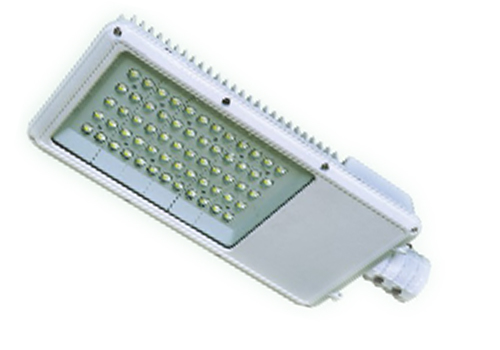
With the growing demand for LED (light emitting diode) lamps, the new cooling technology enables manufacturers to larger and longer life of the light-emitting diode LED lights output production. LED offers many advantages, including low power consumption, long service life (the bulb can use up to 40,000 hours or longer) and environmentally friendly (no mercury). With the new manufacturing technology to reduce production costs and enhance its cooling capacity of the LED lights, the shortcomings of the LED (for example, the price is higher than incandescent or fluorescent) will disappear.

solar powered street lights price and Thick film technology

According to the U.S. Department of Energy, Energy Efficiency and Renewable Energy Office to provide information, cooling is one of the most important factor in the successful design of LED street lights systems. Light-emitting diodes can only be 20% to 30% of the energy converted into visible light, the rest is converted into heat, the circuit board and heat sink must be imported from the LED chip. The excess heat will reduce the LED light output, and shorten its life. Therefore, the enhancement of the thermal efficiency is very important to optimize the LED performance potential.

At present, for the use of high power / high brightness LED substrate or module to be soldered to a metal-based printed circuit board (MCPCB), enhanced cooling printed circuit boards or ceramic substrates, and then stick to substrate received a heat sink. This configuration is widely used in the LED industry, but it is not the best cooling method, and manufacturing costs may be high.

MCPCB and enhanced thermally printed circuit board has a good thermal performance, but the design flexibility is limited, but if you need to improve the thermal performance, the cost may be high, because the need to spend an additional cooling holes processing cost and high thermal conductivity of insulating materials costs. Ceramic substrate thermal conductivity is not cheap ceramic (such as alumina ceramic), thermal conductivity and strong, but the price is very expensive ceramic (such as aluminum nitride ceramics can also be used). All in all, the cost of the ceramic substrate is higher than MCPCB and enhanced thermally printed circuit board substrate.

As an alternative to the above-mentioned substrate, LED panel manufacturers are testing directly on the aluminum panel making the circuit, because this method can provide excellent thermal conductivity. Because of its advantages, LED industry interest in using aluminum, aluminum plate and LED circuit insulation. Now, the thick film technology advances make the LED industry to have access to the benefits of using aluminum plate.

Thick film thermal pulp supplier Heraeus Materials Technology developed aluminum plate material systems (IAMS) is a low-temperature sintering (less than 600 ℃) thick film insulation system can be printed and sintered aluminum panel. The IAMS material system consists of the dielectric paste, silver conductive paste, glass protective layer and the resistor paste. These materials are suitable for 3000,4000,5000 and 6000 series aluminum plate.

Heraeus Thick Film Materials Division of the global LED project manager Mr. Kondo charge said: “IAMS is the insulation system design for the aluminum plate and aluminum can not withstand more than 660 degrees Celsius temperature, standard thick film products based on ceramics at high temperatures sintering temperatures as high as 800 degrees Celsius to 900 degrees.

Mr. Kondo charge explained: “because the IAMS slurry sintering temperature below 600 degrees Celsius, so the system is suitable for aluminum processing conditions. In addition, IAMS’s unique glass system can reduce warpage deformation of the aluminum, while can provide high Break down voltage and excellent thermal conductivity. “
solar street light cost and Heat ceramic

Due to the development of high power LED lights seriously, Heat ceramic has the characteristics of insulation, heat stability, excellent, etc., not only allows the plate can resist the pressure, no deformation, no oxidation and non-yellowing of the more The coefficient of thermal expansion and phase into the LED street lights chip (Coefficient of Thermal Expansion, CTE) of absolute advantage. Heat ceramic craft classification can be divided into HTCC (High Temperature Co-fired Ceramics) and LTCC (Low Temperature Co-fired Ceramics) two processes of LTCC ceramic punch in the soft baked from raw embryo positioning, followed by co-firing is made under the process conditions of 850 ℃, although this technology is easy shaping, but the burning ceramic low density, low thermal conductivity, mechanical strength and insulating properties are poor, the most important Health embryo by sintering there will be a contraction of the problem, leading to the dimensional accuracy issues to be a breakthrough. Fine line switch to multi-HTCC ceramic, ceramic use the 1300 to 1600 ℃ high temperature sintering, making it more superior than the LTCC ceramic mechanical properties, further drilling positioning the substrate surface and dimensional accuracy .

solar street light cost and Heat ceramic

However, due to the very superior mechanical strength properties in the ceramic cutting tool to the traditional difficult for surface processing, it is often processed to the Diamond Saw or laser. Low-cost diamond knife cutting, and therefore the way to mechanical force, cutting, tool wear and tear will not only result in often to be replaced, but also easily lead to the formation or rupture of the substrate cutting edge, in addition also water cooling limits the application of many of the processes. The laser not only has high accuracy, can be partially processed, cutting speed and easy control of cutting images and other advantages, but also not subject to the limit of the material hardness, brittleness, and melting point, the laser technology is a lot of import ceramic cutting drill.

Laser with the light of the general spontaneous radiation by the luminous light source to stimulate radiation, and this theory as early as 1917 by Einstein derived until 1960 before the artificial ruby ​​by Maiman by stimulated emission of light, called laser, which is subject to enhanced radiation source to stimulate radiation. The main structure of the laser can be divided into three parts, namely, the incentive component, the active medium and resonator incentive components pass into the high voltage to produce discharge effects to give the energy of active medium, the medium will be raised to an excited state from the ground state absorption of specific wavelengths of energy, not stability of the excited state will be reduced-order back to the ground state will release photons to produce the specific wavelengths of light when the light will be reflected in the resonance cavity on both sides of the mirror, when all the light in line with 2L = nλ conditions before they can make the incident and reflected wave phase and interfere with each other to form standing wave excitation photons to produce the standing wave and traveling wave, and finally to form a laser gain traveling wave from the semi-reflective lens wear clothing. Laser to penetrate the semi-reflective mirror output will be through the lens to focus on the target heat of vaporization, the purpose of cutting punch. Therefore, laser drilling, by raising the laser power or wavelength to be used more easily be absorbed by the material laser technology, the focus within the process, which can effectively enhance the depth of cut and reduce the process time to complete the fast The purpose of mass production.

solar street light manufacturers and high power led

2010 the global LED production value (about ten billion U.S. dollars) to recover almost nearly the TSMC year sales. Many of the large companies will jump into this light sea. The mainland’s foregone layout so that in 2012 the traditional LED battle (Armageddon), and the final victory will be China. China has not only mastered the market, the layout of almost one thousand MOCVD machine the sea, so you can seize the LED lights, in the downstream industries.

solar street light manufacturers and high power led

The vertical LED production necessary for the soldering of the GaN semiconductor substrate of low inflation, but the chosen low expansion material (such as silicon or GuW of) its poor heat dissipation, thermal expansion of the high thermal conductivity material is much larger than GaN (about 5.5 ppm / mK), the LED experts can not find the ideal convergence materials. This DLC for the interface of diamond and copper composite (diamond heat sink) for the substrate produced the world’s most advanced perpendicular to the LED. This will allow Taiwan’s LED industry to leapfrog ahead of foreign leading companies (such as Nichia, Osram, Lumiled) have taken advantage of to get rid of the patent blockade of Europe, the United States, Japan, Taiwan.

2010 LED tube is used extensively for indoor lighting, outdoor lights and TV backlight. The common incandescent indoor lighting (Incandescent Lamp) and fluorescent (Fluorescent Lamp) is caused by the LCD backlight cold cathode tube (Cold Cathode Fluorescent Lamp) is rapidly be eliminated.

Mainstream LED white lighting, most of the white light are presented in the blue light LED excitation yellow phosphors to generate pseudo-white. The bulk production of the LED are based on a sapphire substrate epitaxial epitaxy growth of GaN LED chip. Growth for the MOCVD (Metal Organic Chemical Vapor Deposition MOCVD). Taiwan has a maximum of MOCVD equipment, first in the country for the World LED die production. But the mainland has to catch up, and even provide the incentives of each the MOCVD grant ten million yuan.

Taiwan, although manufacturing Kingdom for the LED, but like the rest of the foundry industry, LED patent subject to the foreign companies, and each year have to pay large sums of royalties. Money and manufacturing in Taiwan for a foreign boss to make money, but now the production of LED technology has a large number of the relocation of the mainland, which is Taiwan’s LED foundry ecology of sorrow.

Several predicament of the Chinese lighting industry marketing

After years of rapid development of China’s lighting(led lights) market, it also face the dilemma of transformation. How to maintain rapid and stable growth was placed in front of the enterprises.

Several predicament of the Chinese lighting industry marketing

product dilemma

Symptoms: the division of lighting products is very extensive, including a number of professional books and also from the production point of view. It did not divide according to the market point of view. Most businesses can not plan out a clear line of products that can not support the brand image. The more business stay in the product competition stage.

Price dilemma

Symptions: dealer are sensitive to high price. Manufacturers desperately to keep the prices down while retail prices remain high, affecting sales. The profits margins of the lighting industry business is mainly concentrated in the hands of delaers.

Channels dilemma

Symptoms: no loyal dealers. Manufacturers do not know which dealers at what time to purchase.

Terminal dilemma

Symptoms: the sale terminals lies in the hands of dealers, and dealers almost all concentrated in the lighting market. Store image ca not be guaranteed.

Strategic dilemma

Symptoms: lighting industry companies do not understand the external environment, especially the state of competition in every lighting manufacturers. When they see any one of the lighting product sells well, they will immediately put into production, in total disregard of the company’s existing product positioning and consumer group orientation, playing the short-term to mention the sales, without considering the long-term business development planning. However,  it did not, closed, short-term, operating results which are often rapid development of the lighting. There is no obvious business lines, and thus fall into the low level of vicious competition cycle and result in a huge wastes.

R & D dilemma

Symptoms: Lighting R & D personnel, in fact, is the stylists. But one of the important task of the designer is “plagiarism”, the owner must look at the designer’s face, and even so the designers are often living on someone while helping others secretly.

Service dilemma

Symptoms: some local market dealer have no after-sales service, no commitment to delivery, installation, commissioning, maintenance, cleaning, lighting engineering design and guidance and no commitment to return. Because manufacturers do not return, causing dealers to reduce the amount of purchase, arrears of payment of manufacturers quality reasons. Manufacturers sink into the predicament of the after-sales service.

New lighting sources: AC-LED technology?

At present, almost every electronic appliance (without batteries) in world needs to work under AC. And also we electricity networks around us also provide alternating current, such like household electricity, industrial and commercial electricity. When DC-applying LED lighting products start to emerge on the market, problems came forward too. Every LED lamps should be used together with transformers. Since LED chips are very sensitive to voltage variations, ordinary transformers are not competent. LED manufactures have to design special transformers typically used for LED lighting products, for example high-frequency electronic transformers.

At present, almost every electronic appliance (without batteries) in world needs to work under AC.

In practices, AC-DC conversion devices came up with other problems: 1. During the process of AC-DC conversion, nearly 15%-30% electricity will be transferred into heat energy and completely wasted. That is contrary to the LED lights high lighting efficiency and energy saving concepts. 2. In most cases, designing and producing a suitable transformer will cost manufacturer a lot of money. It also increases the cost of LED lamps virtually. 3. Electronic components within AC-DC conversion devices have a relatively short service life. This makes LED drives (AC-DC conversion device embedded) became the most fragile parts of the entire LED lamps. 4. Under DC voltage, LED lamps maintained in a constant-working state. This is rather harmful internal electronic components, causing huge working temperatures, and consequently the light attenuation of LED chips.


In order to solve the above problems, some LED producers put forward a new concept – AC-LED technology. Literally, it is a technology that can make LED lamps directly used under AC without any transformers. AC-LED technology used principles of rectification circuit. However, since AC periodically changed, visible flickers are irresistible.


There are now two solutions for this problem: 1. Using series circuit to improve the wave and increase the power factor simultaneously. But this will also reduce the efficiency. 2. Using parallel circuit to smooth the wave. Although flickers cannot be removed completely, filtering capacitors are able to alleviate this phenomenon.


SunFor has recently found a way to decrease flickers caused by AC-LED technology: using phosphor powder. Light emitted through this new developed phosphor powder will have an obvious delay under AC. After applying this phosphor powder, lamps will only present a tiny alternating between light and dark.