Avoid over-reliance on the government to promote led lighting industry

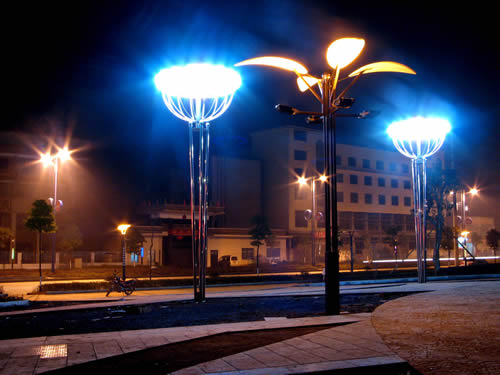
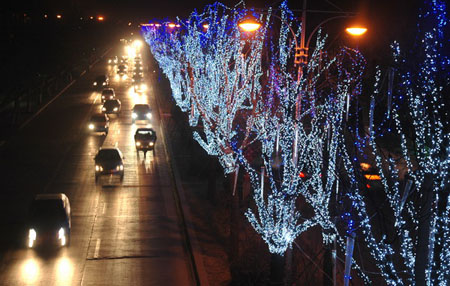
With the increasingly high demands of energy saving and environmental protection, as well as the start of semiconductor lighting engineering Ten thousand ten cities projects, China has basically identified as the main direction of LED outdoor lighting. Among them, LED street gains a lot of attention by the government as an important entry point for promoting lighting applications market. LED chip and packaging technology continues to progress, we can easily find many elevators, buses, aircraft cabin, restaurant entrance, even including the 2009 National Day military parade, in many star concert, taking the led lighting industry as a role to protagonist Guangyao Quartet. The application of these iconic milestone event, gives more prominence to the significant increase in the trend of white LED applications in China. Coupled with the issues of environmental protection and energy conservation under global attention, including North America, Australia, Japan and Taiwan are the development of energy-saving and carbon reduction regulations and lighting standards will contribute to the development of LED lighting applications market. This also means that the LED lights will immediately become innovative technology to dominate the field of road lighting, therefore, the people regard 2009 as the development of China’s LED Street Light golden year.

Avoid over-reliance on the government to promote led lighting industry

Avoid over-reliance on the Government to promote

The street light is a public works in led lighting industry, government investment is the key elements driving market development. If there is no value added to a product or social benefits, just with any government investment to form a sound market alone, it is very difficult, that is that say the government in overnight can let the market surge. And it is also likely to disappear with overnight, especially in China, where there is a high country of such a policy execution, greater market uncertainties.

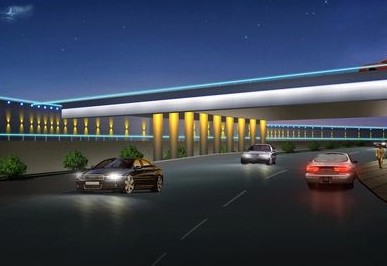
China’s relevant government tender and plan put forward in succession. They make the majority of manufacturers more optimistic in the domestic LED street lamp and led tunnel light market size estimation. But in fact, a lot of construction bid or government, implementation of the scale and scale are obvious drop, plus local interest disputes, the manufacturers, whether can obtain the expected market interest or not remains to be seen. We should not be overly optimistic, and also over-reliance.

LED enterprises should be on the alert: EU intends to raise the standard

EU intends to raise the corresponding standard for directional energy-efficient lamps and directional LED lights: EU can only accept directional LED lights and directional fluorescent lamps with energy efficiency coefficient larger than or equal to 0.2 (2.5 times higher than previous energy efficiency standard). The U.S. government launched even more strict standards for directional lighting devices, more strict market supervision and inspection procedures.


LED enterprises should be on the alert: EU intends to raise the standard


At present, there are more than 3000 LED enterprises in Guangdong, most of which are exporters to Europe and North America. The announcement of new standards from EU and the U.S. government exerted huge influences on our LED industry and export products. According to the estimation of WTO/TBT Notification and Enquiry Center of Guangdong Province, LED enterprises in Guangdong Province will therefore increase the production cost of around 40 billion yuan.


In recent years, regions and countries in Europe and the United State continued to limit the export of Chinese products via their technological advantages and patent monopoly, in order to protect the domestic industry. These technical barriers usually caused great loss to our manufacturers, and meanwhile reflected the defects of them: lacking of core technologies and patents, being subject to foreign technologies and enterprises in some areas.


In fact, this problem has been existed for a long time. Not only the LED industry, many other industries hindered by such problem, which also blocked the development of relevant industries in China. But now this problem is particularly acute in the led tunnel light industry, waiting for effective solutions urgently.


The current state of the domestic LED industry is: low LED technical content and products with different qualities, having no obvious advantages no matter in the international market or in the domestic market. Cutting price is the last and the most upset solutions for them, leading to price war and vicious competitions. In order to survive under such circumstances, many LED manufactures tried to reduce production costs instead of improving their technologies. This is sign of vicious circle and final destruction. Indeed, companies could get short-term profits by doing so, but it is impossible for them to have a long-term sustainable development. And the promotion of LED and other green light sources will take a heavy toll.

How to improve the lifetime of LED chips?

In order to extend the lifetime of LED chips, the most commonly applied method is to change sealing materials, mixing fluorescent materials within them. Siliceous sealing material is more effective in slowing down the material deterioration and lighting attenuation than traditional epoxy resin sealing materials used on blu-ray/ultraviolet LED chips.


In order to extend the lifetime of LED chips, the most commonly applied method is to change sealing materials, mixing fluorescent materials within them.


The epoxy resin sealing material can absorb around 45% rays with wavelength of 400-450nm, while siliceous sealing materials absorb less than 1% rays within this range. According to estimation, the lifetime of LED chips using epoxy resin packaging materials (light attenuation reach 50%) is less than 10,000 hours, while siliceous package could extend this period to more than 40,000 hours. This is almost equivalent to the service life of the entire lighting device. In another word, the corresponding LED lamp is in no need to replace the LED chips during its operation lifetime. However, siliceous resin is a kind of high elasticity soft materials. Special production technologies must be used during the production process. In addition, dust could be easily attached to siliceous resin materials. Thus developing improved surface characteristic technologies are necessary in the future.


Although siliceous sealing materials can ensure a 40,000-hour service life of LED chips, but the lighting application industry have a different view. The main debate is on the service life of traditional incandescent lamps and fluorescent lamps, which has been defined as “brightness dropped to less than 70%”. As we mentioned before, the approximate time of 50% light attenuation of LED lights is 40,000 hours. If calculated as the specification of 70%, then the lifetime of LED chips will recued to 20,000 hours. There are two major countermeasures for this condition:

  1. Limit the heat generation of white-ray LEDs;
  2. Stop using the resin encapsulation;


It is generally believed that, the LEDs’ service life could be extended to 40,000 hours (30% light attenuation) by using above two methods. Cooling PCBs is a mostly used method to limit the temperature rising of white-ray LED chips. Basically, the encapsulation resin material will rapidly deteriorate in the high temperature state and under highlight. Stop using resin package can completely eliminate the deterioration, since led tunnel light rays are reflected in the encapsulating resin. Using special resin reflecting plates which are able to change the traveling direction of light from chip side surfaces, the entire light extraction will be sharply dropped. This is the main reason that all LED manufacturers choose to use ceramic and metal based package.

Using heat sinks to solve the heat dissipation problem of white-ray LEDs

In order to reduce the thermal impedance, many foreign LED manufacturers set LED chips on heat sinks made of copper and ceramic materials. Then welding connect them with printed circuit boards. According to the test result of German OSRAM Opto Semiconductors Gmb, the gap thermal impedance between LED chips and welding points mentioned above could reduced to 9K/W, about 1/6 of the conventional LEDs. For example, if the input power is 2W, the bonding temperature of LED chips will be 18K higher than welding points. In normal conditions, the bonding temperature of LED chips will be impacted by PCBs. Thus reducing LED chip working temperature is necessary, namely reducing the thermal impedance between LED chips and welding points. This can effectively reduce the cooling operation burden of LED chips. Conversely, even if white-ray LEDs have special structure to limit the thermal impedance, if heat cannot be successfully conducted from packaging structure to PCBs, the luminous efficiency will reduce dramatically as a result of LED temperature rising. Thus Matsushita Electric developed a new PCB-package integration technology, which can package the 1mm square blue-ray LEDs to ceramic substrates in the form of flipchip. Then attach ceramic substrates to the surface of copper PCBs.


Using heat sinks to solve the heat dissipation problem of white-ray LEDs


The tightness between heat sinks and PCBs directly affects the heat conducting effect. Therefore the design of PCBs became rather complex. As a result of these, many LED packaging manufacturers (like United States LumiLEDs, Japan CITIZEN) have developed high-power led tunnel light with simple cooling technologies. CITIZEN began to provide white-ray LEDs (new package samples) to their customers. The new heat dissipation technology could directly remove the heat on heat sinks (2-3mm) without any help from special bonding technique. According to CITIZEN, although the thermal impedance between LED chips and welding points is approximately 30K/W, much higher than 9K/W of OSRAM, this white-ray LED model still can maintain a normal working condition even no cooling ventilators are used.


LumiLEDs started to promote high-power white-ray LEDs from 2005, the maximum LED chip bonding temperature can reach up to +1850C, 600C higher than similar products from other companies. If using traditional RF4 PCB package, within the ambient temperature range of 0-400C, the equivalent power can be 1.5W (approximately 400mA).

White high-brightness LED packaging structure can extend the lifetime of LED chips

White LEDs can be much brighter than general LEDs and also have similar power consuming characteristics than fluorescent lamps, but on the basis of overcoming the following four shortcomings: a. temperature rising; b. unstable service life; c. need-to-be-improved luminous efficiency; d. the equalization of luminous characteristics; If we can start with the white high-brightness LED packaging structure, everything seems much easier.


White high-brightness LED packaging structure can extend the lifetime of LED chips


The basic solution for the temperature rising problem is reducing the thermal resistance of the package; improving the chip shape, using small chips can sustain the lifetime of LEDs; there are also some specific methods for equalizing the luminous characteristics of LEDs. Generally, LEDs generated after 2005 can improve their performances though above methods.


There are many other methods to increase the lifetime of LEDs, for example, using siliceous sealing materials and ceramic packaging materials can increase LEDs’ lifetime by 10%, especially useful for white LEDs (which spectrum contains wavelength below 450nm). Short-wavelength rays can easily cause damages to traditional epoxy resin sealing materials. White high-brightness LED packaging structure will speed up this process. According to industrial tests, after approximate 10,000-hour continuous lighting, the brightness of high-power white LED applications usually reduced by more than 50%, which can hardly meet the basic requirements for long-term lighting.


Improving chip packaging structure can improve the luminous efficiency of high-power white LED products, achieving the same level of low-power LED products. Basically, when the current density is increased by more than 2 times, the extraction of light from high-power LED chips will become more difficult, leading to the dilemma that the luminous efficiency of high-power white led tunnel light is much lower than that of low-power white LEDs. In theory, improving the electrode structure of chips can solve the extraction problem mentioned above.


About the equalization of light-emitting characteristics, it is generally believed that improving the uniformity of material (phosphor) density and production technologies of phosphor can overcome this distress. We need also reduced the thermal impedance of white high-brightness LED packaging structure to improve the heat dissipation process, as well as increase the input voltage: a. reduce chip-to-package thermal impedance; b. suppressing the thermal impedance from package to PCBs; c. smooth chips’ cooling performances.

LED backlight market value was expected to climb continuously

LED backlight market is expected to stage a comeback. With the resolution improvement of action device panels, and meanwhile active-matrix AMOLED limitation due to technical characteristics (it is unable for resolution improved in the short term), the market value of LED backlight components would continue to rise next year.


Experts indicated that, due to the self-luminescence characteristics of AMOLED, light sources are no longer needed.


Experts indicated that, due to the self-luminescence characteristics of AMOLED, light sources are no longer needed. Thus AMOLED is treated as the biggest threat to the LED backlight market. However, with the rapid development of LED backlighting technology, many LED-backlight-related industries, including smart-phone, tablet devices and other consumer electronics, caused the popular tide of high-resolution. AMOLED encountered bottlenecks in this area together with its expensive production costs will slow down the growing trend of AMOLED products. On the other hand, the liquid crystal display (TFT LCD) will feel no constraints, making LED backlight market continue to light.


Experts further pointed out that, although AMOLED has multiple advantages: super-thin and high color-saturation, the over-low resolution is still the fatal Achilles Heel for it. Take Samsung high-end smart-phone Galaxy S3 for example, its resolution is only 306ppi, while the resolution of Apple iPhone5 is 326ppi. It is estimated that with the further improvement of TFT LED display technology will increase the resolution, from 326ppi to 441ppi. Now the gap between these two smart devices is obvious.


In addition to the resolution obstacle, the expensive selling price is the main reason that hindered the fast rising of AMOLED applications. According to professional analysis, nearly 90% AMOLED panels is monopolized by Samsung, leading to the constant high price. In order to reduce production costs and meanwhile meet the high-quality requirements of users, other mobile manufacturers adopted LCD IPS panels with full high-definition (Full HD) and energy-saving led tunnel light backlighting elements.


In addition, AMOLED panels can be hardly adopted by TV sets, which is another major reason for its low production rate. In spite that both Samsung and LG have announced the successful development of 50 inch+ AMOLED panels, the implement of quantity production has been repeatedly delayed. The estimated selling price is also breathtaking. For many families, buying general LCD TV sets will be more practical than purchasing AMOLED display products.

The low utilization rate of indoor LED lighting products: high price is not the only reason

In order to increase the utilization rate of indoor LED lighting product, in addition to public institutions, civil facilities should also strengthen the import of the LED technology. Earlier, a number of measures have been taken by South Korea Government to push such process forward. Mr. Jeong Hyun Jeong (PR minister of KLEDA) “It is very hard for ordinary people to afford such expensive products. Besides, lamps are not as important as other furniture. Most of buyers would not purchase expensive fixtures to save a little electricity.


The low utilization rate of indoor LED lighting products: high price is not the only reason


This time, the Seoul City Government and KLEDA took into account the quality consciousness of their people. Jeong said: “We held several introduction meetings, providing free five-year warranty and other attractive after-sales service. We received great and positive response, which is a good thing for us, means some high-quality indoor LED lighting products still can get the attention of consumers, regardless of their expensive selling prices.” It is said that KLEDA has received a lot of LED-related replacement requirements from ordinary families. Jeong also introduced that: “Many citizens passed their opinions and expectations to us. They expected LED lighting technology not only to be used in public places, like underground parking lots, shopping centers, but also could be used indoors.”


During this importing process, the previous obstacle – expensive selling price problem has also been solved. Through the cooperation with KLEDA and other LED enterprises, the average price of LED lighting fixtures reduced from 100,000 won to 50,000won. “Free installation, charge the saved electricity.” This advanced strategy is a key point to the promotion of indoor LED lighting products. Due to the unit price decline of LED lamps, the refund period based on ”paid by saved electricity ” will be shortened.


In accordance with the introduction of KLEDA, an apartment in Busan replaced 300 pieces fluorescent tubes used in their underground parking lot with LED lamps one year ago, leading to a monthly-electricity saving of 7.5 million won. The importation of each led tunnel light lamp cost them 161,000 won, in which 48.3 million won coming from the replacement cost. Taking this into account, the free import strategy has significant meanings.

South Korea: target to 100% LED city lighting penetration

Seoul City government had launched very active LED universal policies. From 2007 to 2009, 23 billion won has been put into this area, replacing 156,000 transportation lighting applications and 38,000 building lighting applications with LED lamps, consequently saving electricity of 42,400 MWh (1.6 billion won).


In 2012, on the basis of these policies, the Seoul Metropolitan Government announced a number of additional measures to speed up the process of 100% LED city lighting penetration.


In 2012, on the basis of these policies, the Seoul Metropolitan Government announced a number of additional measures to speed up the process of 100% LED city lighting penetration. The local government announced in June of 2012, public institutions should be responsible for introducing LED lamps in new buildings and facilities. By the end of June of 2012, the utilization rate of LED lamps in public institutions reached 10%. It is reported that this plan will be further expanded in the future, aiming at a 50% LED lighting utilization rate in public building by 2014, and 100% in 2018. It is estimated that, at such speed, the 100% LED city lighting penetration can be realized by 2030.


Before 2014, there are 7.8 million lamps need to be replaced, while the forbidden of incandescent lamps will speed up this process, 50% of public institution lighting, 25% of civil lighting. According to the local government’s projections, if it is realized in the future, they would save approximate 1100GWh per year, reducing 120 billion won electricity cost annually.


Public institutions include: Seoul Metropolitan Government Building, 25 Districts, 17 offices, 218 subway station facilities, 20 underground shopping streets, ranged widely. All lamps used in these places will be replaced by LED lighting products. This plan has been steadily implemented.


In addition, Seoul City local government intended to cooperate with KLEDA to promote led tunnel light technology in underground parking lots. Seoul City government and KLEDA released in May of 2012 “the popularization plan of LED city lighting business in apartment underground parking areas and large-scale commercial facilities underground parking areas”. This support policy was put into force since June this year. In fact, before this, a similar policy has executed in Gyeonggi and Daegu City in February 2011, Seoul is the expansion of this plan.


Under the encourage of government’s support policies, underground parking lots of apartments and large-scale commercial facilities in Seoul can import LED lights for free. Although individual introductions are not included into the “free” range, buyers still can enjoyed a 40% discount in the form of government subsidies.

Seoul lighting target: the 100% LED city lighting project

In 2006, South Korea announced a plan for popularizing LED city lighting “15/30 (the penetration LED lighting applications in Seoul should reach 30% by 2015)”. This project will be start with traffic lights, outdoor displays and billboards, replacing traditional incandescent lamps with LED lighting technology. Therefore, a large number of companies considered this as a good opportunity to expand their business and swarmed into this emerging market.


In 2006, South Korea announced a plan for popularizing LED city lighting “15/30 (the penetration LED lighting applications in Seoul should reach 30% by 2015)”.


But the truth is LED lights were not widely promoted as expected. Through large-scale investments from several electronics giants, South Korea’s upstream LED chip industry grew rapidly and became the second largest provider in the world in a short term. In the field of downstream LED application manufacturing industry, in addition to large makers, small and medium sized LED companies also showed a positive response to exploit the international market. But too many enterprises have involved into this business, plus the continuous dropping of unit price, making these companies entered a difficult period in advance.


What is worse is that the stagnated pace of the popularity of the Korean LED lighting industry. in 2010, the total occupation of LED products among all lighting technologies is around 2.5%, this value only grew by 1.5% by the end of 2011 (6% in Seoul). The government worked to support these enterprises by implementing a couple of LED city lighting projects. However, in order to realize the object of “15/30” plan, from 2012, the popularity of LED lights should be at a rate of 6.5% per year. For now, it is difficult for the South Korean Government to achieve the target.


The constant low level of domestic LED penetration will undoubtedly impact negative influences on their international market plans. More and more Korean enterprises will lose their competitiveness in overseas markets. Accordingly, the government, local government of Seoul City and the LED industry group Korea LED Association (KLEDA) stood in their respective positions, introducing measures for further promotion of LED lamps. In order to head the call, Seoul local government began local led tunnel light city lighting projects from themselves, using LED lamps in their new government buildings: the external glass can change the building appearance through its internal mounted LED lamps (dimming and color mixing).


Installation problems of LED airport lighting applications

There are several important problems need to be taken into consideration in the installation of LED airport lighting applications: 1) the installation of LED airfield lamps is more difficult than that of incandescent lamps; 2) the compatibility problem. The LED airport lighting system may not be compatible with the old electricity infrastructure system, which is typically designed for incandescent lights. Verification is necessary before the purchasing and installation;


There are several important problems need to be taken into consideration in the installation of LED airport lighting applications


According to comprehensive survey results, major reasons for LED airport lighting applications are reduce maintenance costs, decline power consumption, improve the visibility of the airport lighting system. Interestingly, no one mentioned any legislative reasons. Despite the fact that the national energy legislation, such as the 2007 EISA (Energy Independence and Security Act), improved the luminous efficiency requirements for general lamps. Many existing incandescent lighting products may not meet this requirement in the next ten years. However, it seems that EISA impacted little influences on airport lighting projects. One possible reason may be that this act does not include some special light sources with anti-vibration and anti-corruption capacities.


Expectations of maintenance reduction were often mentioned in the literature. Copenhagen Airport indicated that they have recently installed hundreds of LED obstruction lights, with an estimated lifetime of 100,000 hours, far more than that of incandescent lamps (2,000 hours). In order to win the tender, some manufacturers even provided a 5-year warranty. According to the report of Airports Council International (ACI) in 2007, compared with incandescent slides, their LED slides were expected to reduce maintenance costs significantly. LED stop lamps used in the Newcastle International Airport (UK) were expected to extend the maintenance cycle of their lighting system, from one month to six years. The Burlington (Vermont) International Airport (Edelstein 2009), (Little Rock, Arkansas) the Neuberger Airport (States News Service 2009a), (Trenton) the New Jersey Airport (TendersInfo 2010a), the San Bernardino (California) International Airport (TendersInfo 2010b), the Raleigh-Durham International Airport (News and the Observer, 2010), the Tulsa (Oklahoma) International Airport (Stewart 2011a), all these airports had similar reports about their LED airport lighting applications.


Reducing energy consumption is another important reason to replace incandescent lights with LED lamps in the airport lighting system. U.S. General Accounting Office (USGAO 2010) listed led tunnel light as one the four common energy-saving equipments used in airports. At Neuberger airport, reducing energy consuming is the most important reason for them to install LED airport lamps (States NewsService 2009a, Targeted News Service 2010). It is estimated that the power consumption of led tunnel light is only 25%-33% of incandescent lamps.