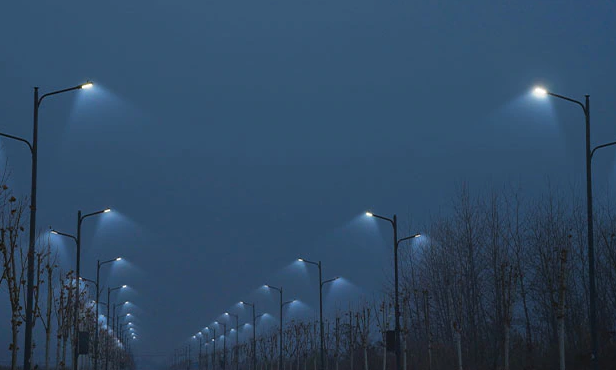
Argentina’s National University of Rio Negro and the National Research Council of Science and Technology (CONICET) have developed the world’s first “on-demand public lighting system.”

On July 20, 2026, the National University of Rio Negro (UNRN) and the National Research Council of Science and Technology (CONICET) announced that their jointly developed world’s first “on-demand public lighting system” has been officially registered for patent. This system allows users to turn on streetlights via a mobile application; the lights follow pedestrians, forming a “light strip,” significantly reducing energy consumption and light pollution while ensuring nighttime safety.

Argentina's National University of Rio Negro and the National Research Council of Science and Technology (CONICET) have developed the world's first "on-demand public lighting system."

From Community Controversy to World’s First

This innovative technology stemmed from a long-standing debate in the Los Coihues community of Bariloche. Since 2014, local residents have debated the conflict between “safe lighting” and “darkness protection”-one side demanding enhanced nighttime lighting for safety, while the other insisted on protecting the nighttime ecological environment and stargazing conditions. At a community meeting attended by over 120 residents, a consensus was reached: instead of choosing perpetual illumination or returning to complete darkness, a third path of “respectful lighting” was explored.

This community demand was incorporated into the interdisciplinary course “Science, Ethics, and Social Production and Environmental Intervention” at the National University of Rio Negro, with students from various disciplines including environmental engineering, electrical engineering, communications engineering, computer science, and economics participating in the research and development. Under the coordination of faculty and researcher Santiago Conti, the team continued participatory work with the community, ultimately completing the system design. Early prototypes were based on Wi-Fi connectivity, and the student team continued to advance the project and refine the technical solution after the course ended.

Smartphone-controlled lights, lights off when people leave

Unlike traditional all-night lighting or motion sensor solutions, this technology only illuminates the lights when a person actively requests them. Users submit lighting requests via a mobile application, and the system then activates streetlights along the path, creating a “light strip” as pedestrians move. This design effectively avoids ineffective lighting triggered by accidental factors such as animal activity or wind, minimizing energy consumption.

In a statement, the university said, “This technological solution addresses a common challenge facing cities worldwide today-how to reduce energy consumption and light pollution while ensuring the safety of residents. The impact of light pollution on biodiversity, human health, and nighttime stargazing is receiving increasing attention.”
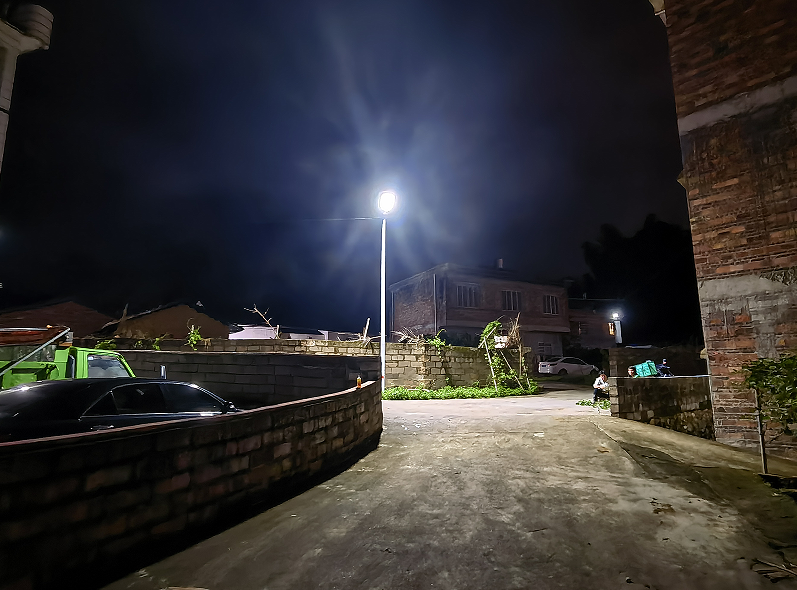
Shangsi Village in Hezhou, Guangxi Upgrades 60 Solar Streetlights

To implement urban renewal initiatives, improve the rural living environment, and effectively address villagers’ nighttime travel difficulties, on June 15, 2026, leveraging funds from the 2026 First Secretary’s Village Assistance Project, the village committee and village work team of Shangsi Village, Liantang Town, Babu District, Hezhou City, Guangxi Zhuang Autonomous Region, completed the replacement of 60 old solar streetlights in the village. The project successfully passed inspection, addressing the village’s lighting shortcomings through this small-scale public welfare project, ensuring bright lights at night and protecting villagers’ travel safety.

Shangsi Village in Hezhou, Guangxi Upgrades 60 Solar Streetlights

The original solar streetlights in Shangsi Village had been in use for many years. Due to years of weathering and natural aging, some lights suffered from damaged light sources, failure to illuminate at night, and insufficient brightness. These created numerous lighting blind spots in high-traffic areas such as the main roads and cultural square, affecting villagers’ evening walks and daily travel, and posing traffic safety hazards, becoming a pressing issue for villagers to resolve.

Focusing on the urgent needs and concerns of the villagers, the Shangsi Village Committee and the village-based work team promptly surveyed the operation of all streetlights in the village and precisely formulated a replacement plan. This project prioritized convenience for residents, focusing on key public areas such as the main roads, side roads at the village entrance, and the cultural square as the first replacement sites, eliminating lighting blind spots in core areas. To expedite construction and ensure safety during high-altitude operations, the project utilized aerial work platforms for dismantling and installation, significantly shortening the construction period and minimizing the impact on villagers’ daily travel.

The newly installed solar streetlights feature comprehensively optimized hardware configurations. Compared to the old models, they are equipped with larger photovoltaic panels and more LED chips, resulting in higher energy storage efficiency, stronger nighttime illumination, and longer battery life, further enhancing energy-saving and environmental performance. Furthermore, the lights adopt a universal compatibility design, compatible with both straight and curved poles within the village, eliminating the need to modify existing infrastructure and effectively saving on renovation costs, significantly improving adaptability and practicality.

Ganzhou, Jiangxi Province Completes Overhaul of Public Toilet Lighting Facilities

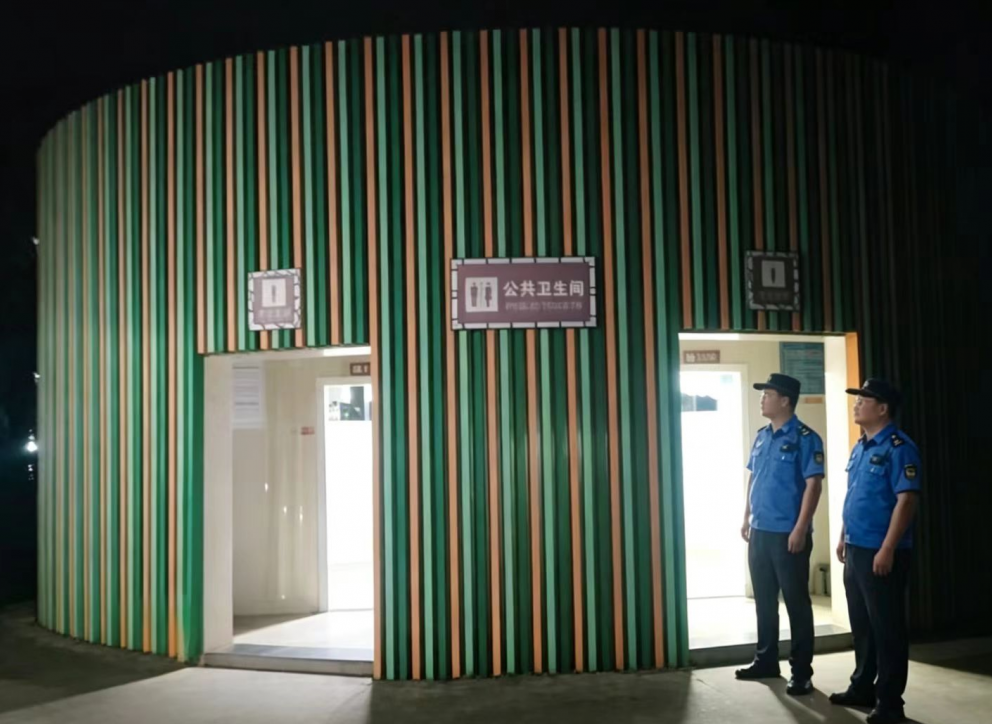
Public toilets are a vital part of people’s lives, and nighttime lighting is crucial for the safety of residents when using the toilet or going out at night. To effectively implement public welfare projects and eliminate safety hazards caused by dim lighting and damaged lights in urban public toilets at night, the Anyuan County Urban Management Bureau of Ganzhou City, Jiangxi Province, recently organized municipal, street lighting, and sanitation workers to conduct a special nighttime overhaul of the lighting facilities in all public toilets in the urban area.

Ganzhou, Jiangxi Province Completes Overhaul of Public Toilet Lighting Facilities

This nighttime overhaul adopted a street-by-street, toilet-by-toilet inspection approach. Workers carried electrical testing tools, light bulbs, and wiring accessories to check and register the ceiling lights, corridor sensor lights, washbasin lighting, and accessible pathway lighting inside and outside the public toilets. For problems found during the inspection, such as burnt-out bulbs, poor wiring connections, insufficient light brightness, and malfunctioning switches, on-site replacement, repair, and wiring reinforcement were carried out simultaneously. Old and dim lighting fixtures were upgraded uniformly, the lighting layout was optimized, and blind spots in corners and steps were eliminated to ensure sufficient lighting inside and outside the public toilets without any dead angles.

“Before, the public restrooms were pitch black at night, but now all the lights are on, making it much safer to walk around,” a passerby praised the improvement measure. Dim lighting not only affects the user experience but also greatly increases the risk of falls and bumps. While seemingly a small detail, public restroom lighting directly impacts the public’s sense of safety and convenience when traveling at night.

Next, the Anyuan County Urban Management Bureau will include the routine maintenance of public restroom facilities in its public service work plan, establishing a dual mechanism of daytime inspections and nighttime spot checks. Regular maintenance will be conducted on supporting facilities such as water, electricity, lighting, and sanitary ware. Focusing on the small, pressing needs of the public, the bureau will continuously improve urban public service facilities, using tangible improvements to address practical issues affecting the lives of residents and continuously enhance their sense of well-being.

Wenbi Mountain Lighting Project in Quanzhou, Fujian Officially Put into Service

At seven o’clock in the evening, Wenbi Mountain in Tuzhai Town, Huian County, Quanzhou City, Fujian Province, was thronged with visitors. Zhuang Jianfeng, Party Secretary of Tuzhai Town, and Wang Qi, Deputy Party Secretary and Town Mayor, walked steadily to the mountain summit and jointly activated the lighting switch. In an instant, lights lit up along the mountain range. The brilliant glow resembled a luminous ink line, outlining the towering and imposing silhouette of Wenbi Mountain. The official launch of the Wenbi Mountain lighting project has lit up a safe passage for residents’ nighttime leisure and outdoor activities.

Centered on convenience, safety and practicality for local residents, this lighting project fully upgraded the lighting facilities along mountain hiking trails and at the mountain top. It effectively addresses poor visibility and inconvenience during nighttime mountain climbing, enabling residents to take walks, work out and enjoy mountain views in a safer and more comfortable environment after dark.

Since the project was put into operation, the night time leisure environment of Wenbi Mountain has seen remarkable improvements. It has become an ideal nearby venue for residents to relax and exercise, delivering tangible livelihood benefits right to the public’s door step.

Moving forward, under the overall guidance of the Project Headquarters for the Upgrade of Wenbi Mountain Forest Park in Huian County, Tuzhai Town will continue to improve all supporting facilities within the park, optimize visitors’ experience, and strive to build a livable and pleasant space for leisure and recreational activities.

Safety Lights Installed Along River Embankment in Xisaishan Industrial Park, Huangshi, Hubei

To earnestly respond to public demands and resolve prominent livelihood issues, in light of proposals from deputies to the People’s Congress, Xisaishan Industrial Park in Xisaishan District, Huangshi City, Hubei Province attached high priority to the lack of lighting along the river embankment, which created safety risks for residents travelling at night. The park quickly launched the river embankment streetlight lighting project to shore up infrastructure along the embankment, build a solid safety barrier for residents’ nighttime travel, and light up the riverside walkway with soft lights to safeguard people’s journeys.

Safety Lights Installed Along River Embankment in Xisaishan Industrial Park, Huangshi, Hubei

During project implementation, the park adhered to scientific planning and targeted measures to steadily push forward all construction work of the lighting project. After receiving proposals from NPC deputies to add lighting facilities along the river embankment, the park immediately engaged the District Urban Administration Bureau and River Embankment Management Office, establishing a joint working mechanism to pool efforts. Staff conducted multiple on-site surveys along the embankment, comprehensively identified hidden safety hazards on walkways, and formulated a scientific construction plan for streetlight installation based on actual conditions including pedestrian distribution and waterside landforms. Once the plan was finalized, the park promptly arranged construction teams to carry out works such as positioning streetlights, installing equipment and commissioning circuits. As of June 18, installation and commissioning of 26 streetlights along the embankment were completed and all lights have been put into service.

The successful completion of the river embankment lighting project forms a safety shield for residents to take leisure walks, exercise and travel after dark. Bright streetlights cover the entire riverside walkway. The project not only improves supporting public facilities along the river in the industrial park and optimizes nighttime travel conditions, but also illuminates the path of safe travel and happiness for residents, delivering tangible livelihood outcomes. Moving forward, the park will continue follow-up management and maintenance of the lighting project, conduct routine inspections, overhaul and maintenance of streetlights to guarantee stable operation of lighting facilities. Meanwhile, the park will keep focusing on residents’ urgent concerns, earnestly deliver various livelihood initiatives, and continuously enhance residents’ sense of gain, happiness and security.

Streetlight Installation Completed at Tianyang District Sports Center, Baise, Guangxi

To further improve infrastructure at the sports center, optimize nighttime travel conditions and ensure public safety for citizens engaging in fitness activities and walking after dark, the Tianyang District Sports Center in Baise City, Guangxi Zhuang Autonomous Region has recently finished the additional installation of streetlights. This initiative comprehensively enhances nighttime lighting at the venue, delivering tangible benefits and resolving difficulties for local residents.

Streetlight Installation Completed at Tianyang District Sports Center, Baise, Guangxi

The Tianyang District Sports Center attracts heavy foot traffic on a daily basis. It serves as a key public venue for residents to relax, work out, jog, stroll and enjoy family outings. Previously, insufficient lighting facilities along main roads, footpaths and leisure zones led to dim conditions at night. This not only created inconveniences for visitors, but also posed safety risks such as trips and collisions, limiting the capacity of the sports center to provide public services after dark.

To address these problems, relevant authorities organized on-site surveys and scientifically planned lamp positions based on terrain, pedestrian flow and lighting requirements, launching a dedicated streetlight installation project. New energy-saving streetlights were installed in batches along primary and secondary roads, fitness trails, entrances and exits, parking lots and green belts. The construction team seized favorable construction windows to efficiently complete foundation casting for lamp poles, cable laying, luminaire installation, power commissioning and other tasks. Strict standards were enforced for construction quality and safety to guarantee stable operation of every streetlight.

Since the streetlights were put into service, the problem of inadequate nighttime lighting at the sports center has been fully resolved. The overall environment of the venue has been upgraded, and a solid safety barrier has been established for citizens travelling at night. The bright, comfortable nighttime setting extends residents’ available time for exercise and leisure and enriches people’s cultural life. It greatly boosts residents’ sense of well-being, security and gain, winning widespread praise from fitness enthusiasts.

Tokyo Launches Another Demonstration Project for Perovskite Solar Cell Garden Lights

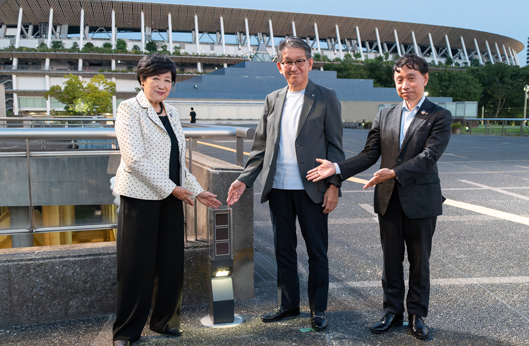
Recently, the Tokyo Metropolitan Government installed 39 garden lights using perovskite solar cells at Odaiba Seaside Park (Minato City, Tokyo) and two additional units at the Tokyo Metropolitan Government Building. A thin-film version of the same type of battery is expected to be installed at Harumi Passenger Ship Terminal around the summer of 2026, with a total capacity of approximately 50 kilowatts-currently the largest-scale installation of its kind in Japan. The initiative aims to accelerate the demonstration and practical application of such solar cells.

Tokyo Launches Another Demonstration Project for Perovskite Solar Cell Garden Lights

Previously, the metropolitan government installed 35 garden lights at Tokyo Metropolitan Gymnasium in August 2025 and conducted demonstration tests there until December of the same year. In this new demonstration, improved garden lights have been used, with their operating time extended from a maximum of eight hours to fourteen hours.

Since the previous demonstration confirmed that a certain amount of electricity can be generated even on cloudy or overcast days, it was decided to conduct further verification at the Tokyo Metropolitan Government Building, where sunlight exposure is relatively poor due to its location among high-rise buildings. The garden lights installed at Odaiba Seaside Park will be jointly verified with Ricoh to ensure nighttime illumination and promote decarbonization.

The installation project at Harumi Passenger Ship Terminal is scheduled to commence around the summer of 2026, and will be carried out in collaboration between Sekisui Solar Film Co., Ltd. (Kita-ku, Osaka) and Kyocera Communication Systems Co., Ltd. (Fushimi-ku, Kyoto).

Street Light Replacement on Wannian Avenue, Yizheng City, Yangzhou, Jiangsu Province

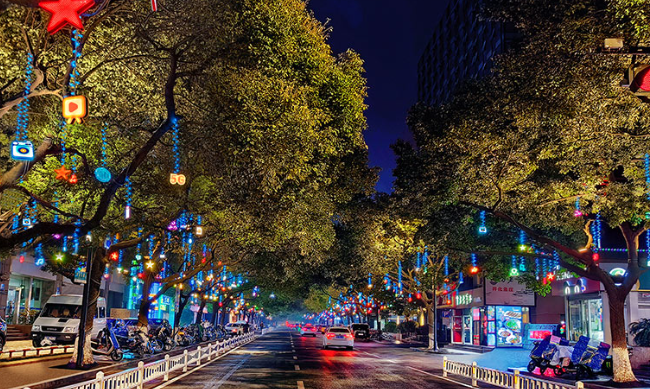
Recently, Jianyang Municipal Engineering under Yizheng Urban Development Group has completed a special upgrade and renovation project for street lighting facilities on the carriageway of Wannian Avenue (from Wankang Road to Zhanqian Road) in Yizheng City, Yangzhou, Jiangsu Province. The renovation was efficiently finished within 5 days, with a total of 101 light fittings replaced, effectively improving the lighting quality and night time traffic safety of this road section.

Street Light Replacement on Wannian Avenue, Yizheng City, Yangzhou, Jiangsu Province

During construction, Jianyang Municipal Engineering strictly followed the construction plan and carried out all operations in a standardized and orderly manner. Old light fittings along the road were removed, while potential safety hazards at wiring connections were inspected, so as to eliminate safety risks caused by aging equipment at the source. Meanwhile, under strict compliance with construction safety requirements and traffic order, all original LED lights with severe light attenuation were replaced with new 200W LED lights of the same power rating.

The new lights are significantly superior to the original ones in luminous efficiency, color rendering performance and operational stability. They can effectively improve the uniformity of road surface illumination, reduce dark areas and glare on the road, and provide a solid safety guarantee for night time motor vehicle and pedestrian traffic.

Going forward, Jianyang Municipal Engineering will continue to strengthen daily inspections and maintenance of urban lighting facilities, promptly identify and rectify various lighting?related hazards, and steadily promote the quality upgrading of people?centered infrastructure. Through refined and high?quality municipal services, it will continuously enhance residents’ sense of well?being and security.

Wenzhou, Zhejiang: Ouhai Avenue Tunnel Lighting Revitalization Completed

Recently, the comprehensive revitalization project for the lighting systems within the main tunnels of Ouhai Avenue in Wenzhou, Zhejiang Province, was successfully completed. As a major transportation artery connecting the eastern and western sectors of the city, the lighting infrastructure within the Ouhai Avenue main tunnels-originally refurbished and commissioned in 2016-had gradually begun to suffer from issues such as aging components, light decay, and uneven illumination. These deficiencies not only diminished visual comfort for drivers but also posed adverse risks to traffic safety.

Wenzhou, Zhejiang: Ouhai Avenue Tunnel Lighting Revitalization Completed

To minimize the impact of this revitalization project on main-road traffic, the municipal streetlamp maintenance team in Wenzhou adopted a “short-duration, streamlined, and rapid” night-time construction model starting April 23. Working in close coordination with traffic management and expressway maintenance departments, the team flexibly scheduled lane closures to facilitate construction. Following 10 nights of intensive work-involving a total deployment of 190 personnel-the team efficiently completed the full replacement of over 2,000 light fixtures.

This lighting revitalization project represents several significant breakthroughs in terms of both technical innovation and operational detail compared to previous efforts. Regarding construction methodology, scissor lifts were introduced for the first time; their enhanced maneuverability significantly boosted operational efficiency within the tunnels confined and elongated spaces. In terms of lighting quality, the newly installed fixtures feature a standardized color temperature of 4000K, producing a more neutral and softer light that effectively mitigates visual disparities experienced when transitioning between the bright outdoor environment and the tunnel interior. From a technical infrastructure standpoint, the project involved replacing older-generation LED streetlamps (rated at 120 lm/W) with high-efficiency LED models (rated at 160 lm/W). This upgrade not only ensured a 25% increase in illumination levels but also achieved a 21.5% reduction in energy consumption. Furthermore, the configuration of both “enhanced lighting” and “basic lighting” systems was optimized and tailored to the specific functional requirements of different tunnel sections. This strategic adjustment effectively alleviates the “black hole effect”-the sudden sensation of darkness experienced by vehicles entering a tunnel-thereby ensuring a smoother and safer transition for passing traffic.

Streetlight Installation Completed on Dongjin Bridge in Qitaihe, Heilongjiang

Recently, the Dongjin Bridge in Qitaihe City, Heilongjiang Province, completed its streetlight installation project. Four brand-new LED streetlights have been put into use, completely solving the problem of insufficient illumination and lack of lighting on the bridge, thus strengthening the safety of citizens traveling at night.

Streetlight Installation Completed on Dongjin Bridge in Qitaihe, Heilongjiang

Previously, the bridge lacked lighting facilities, resulting in dim lighting at night. This obstructed the vision of pedestrians and non-motorized vehicles, especially during rainy weather, increasing the risk of collisions and accidents, becoming a major public concern. After receiving complaints from citizens, the Urban Roads and Lighting Service Center of the Municipal Urban Management Bureau responded quickly, listing the Dongjin Bridge lighting upgrade as a key project for improving people’s lives. During construction, workers used aerial work platforms for precise operations, overcoming difficulties and strictly implementing traffic control measures to minimize disruption to pedestrians. The entire process, including anchoring the light poles, installing the lights, and debugging the wiring, was completed on the same day.

Now, as night falls, four streetlights are neatly arranged along both sides of the bridge, their soft light evenly covering the entire surface, illuminating not only the path for citizens but also warming their hearts.

A relevant official from the Qitaihe City Urban Management Bureau’s Urban Roads and Lighting Service Center stated that they will continue to focus on the needs of citizens, strengthen daily inspections and maintenance of urban lighting facilities, promptly investigate and rectify lighting hazards, and leverage these “small streetlights” to improve people’s lives, making the city’s nightscape more beautiful and citizens’ travel safer, thus demonstrating their commitment to serving the people through concrete actions.