Light attenuation of white LED lamps (1)

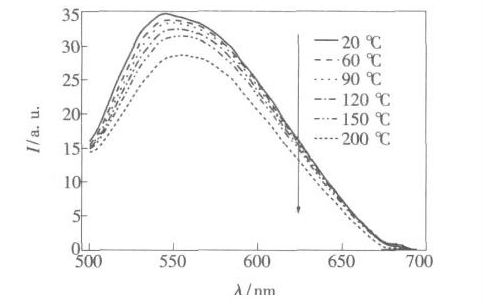
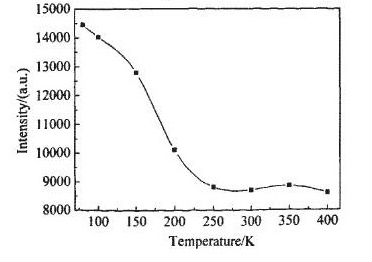
At present, white LED lamps have very serious light attenuation problems, especially for low power white LED Street lights. Light attenuation phenomenon dramatically reduces the working life for them. Generally, white LED lamps are very expensive in LED lighting market. If manufacturers want to stay in business, they have to increase the working life of their products. But they cannot. There are several causes for the problem: the degeneration of fluorescent powder in high temperatures; the degeneration of blue-ray LEDs; the degeneration of LED bases; other packaging materials; packaging technique; misuse (improper power supply, bad cooling). In below, we will discuss them separately in more details.


At present, white LED lamps have very serious light attenuation problems, especially for low power white LED lights. Light attenuation phenomenon dramatically reduces the working life for them.


The degeneration of fluorescent powder in high temperatures:

The stimulated light efficiency of fluorescent powder will drop with the increase of temperature. A testing report from a fluorescent powder factory in Guangzhou shows that the stimulated light efficiency of fluorescent powder drops by 2% under 80 oC. However, this is just a short-term experiment. When temperatures drop back to the normal level, fluorescent powder regains the original performance. If we intend to find whether this degeneration is restorable or not after long-term work, aging tests are necessary.


In some cases, we will find that after a period of aging tests (1000 hours for lower power white LEDs, 2000 hours for high power white LED Street Light), white LED lamps become brighter. This situation may cause by following reasons:

  1. Fluorescent powder used together with epoxy glue lead to the degeneration of fluorescent powder. In the initial effect of temperatures, the stimulated lighting emitting ability of fluorescent powder will be recovered to some degrees.
  2. In some cases, the stimulated lighting emitting ability of fluorescent powder will be raised rather than dropped for being combined with epoxy glue.
  3. The performance of blue-ray LED chips will be enhanced after a period of work.


Among the aging tests of low power LED white lamps, scientists found that the luminous flux of them will increase within 200 hours’ continuous work. But after 200 hours, situations are completely different. They will inevitably meet with light attenuation problems. Conditions are a little bit of better for high power white LED lights. The luminous flux of these lamps will become unstable within the working range from 100 hours to 6000 hours. However, after 6000 hours work, they will also meet with attenuation problems.

The second chapter:LED export orders are declined 30%, shenzhen led manufacturer close watch on the civilian market

The emerging of LED High Bay industry reshuffle tide 

Pan Wenbo said, It is estimated that domestic LED business is about 8,000 companies, which are in a “small and scattered”state. Industry shuffle the high voice of the order development of the industry. In fact, the undercurrent of the shuffle is also surging in the industry field. Starting from last year, it will continuous emerge the LED failures.

It is reported that by the send of 2012, only shenzhen led manufacturer, the closure of LED lighting business is more than 80. Foshan city, is about 10%. Followed by Shenzhen, Foshan,Dongguan, Zhongshang, LED Street lighting companies feel the market cold wave.

As a barometer of the global lighting industry, the Guangzhou International Lighting Exhibition data shows the indication of the  industry lighting in shenzhen led manufacturer. According to Pan Wenbo said, the 17th Guangzhou International Lighting Fair exhibition held in June of this year expanded by 10% over than last year, but the company number is 12% less than last year. From 2900 cut down to 2600, shows that the enterprise increased concentration and industry reshuffle is started.

In contrast with the industry downturn, this year’s enthusiasm for the IPO of domestic LED is still rising.

According to the statistics, only in the first quarter of this year, the listed companies and over-ready listed LED companies have 8, more than the total number of listed companies than last year’s LED business.  Six companies are listed on the March. At the end of last year, four LED Products companies report on the grand within five days.  Industry are generally expected that the tide of shenzhen led manufacturer listed will continue to be staged.

On the surface, the IPO craze seems to run counter to the industry, but Guangya Lighting Institute analysis that the emerging of the listed company is actually prepared for the futher of a company. Otherwise, it will be gulp down by potential acquirers.  Inroads into the Chinese market,Philips, Osram LED giant, crossed the border into the shenzhen led manufacturer, BOE, TsinghuaTong Fang and other well-known domestic enterprises, as well as the traditional lighting companies of brand and channels have become many small LED micro-enterprises potential acquirers.

The first chapter:LED export orders are declined 30%, shenzhen led manufacturer close watch on the civilian market

After experienced years of development spurt, shenzhen led manufacturer began to enter the trough period from the second half of last year. The reporter learned from the 111th Canton Fair which held recently, the LED Projects business is commonly dropped by 30%  from Europe and the United States since the beginning of the orders.  On the perspect of listed company, 13 companies listed from the first quarter of last year to this year’s annual report, the growth rate of 11 enterprises are in severe decline. But in order to avoid the misfortune of being mergers and acquisitions, domestic LED company IPO is still in full swing staged.

The data from the world’s largest lighting exhibition in Guangzhou International Lighting Exhibition indicate that the scale of this exhibition will be opening in early June, an increase of 10%, but the number of exhibitors has decreased by 12%. Behind the bustling capital of LED heat surged the flood of industry reshuffle. Guangzhou International Lighting Exhibition, founder of Pan Wenbo have an interview with reporters, said, “The temporary trough period of LED high bay industry provide the timing of the reshuffle. The international giant and competing LED domestic enterprises listed will become shuffling leader.”

The export order drop down by 30%

According to industry sources introduced, domestic LED enterprised are in the leading of exporting of 70%. Under the influence of a variety of factor of the U.S. consumer market recovery and weak, the reduction of orders are obvious cutting down since the second half of last year.

The situation of U.S. and European markets this year is particularly severe, orders fell 40%. Reporters learned from a number of shenzhen led street light manufacturer, European and American orders slow down by three to five percent which is quite common in the industry field. The deduction of  orders will directly influence the revenue decline. According to the statistics of Guangdong Guangya Lighting Research Institute, from the 2011 Annual Report released by the 12 companies listed from last year to the first quarter of this year shows just  the photoelectric Liantronics two maintained a slight increase in growth rate. The other 10 enterprises is as a slow speed declining.  Among them, the rectangular illumination  in 2010 kept 234% of the growth rate, only 57% of 2011 operating income growth. Mason Technologies performance even shows zero growth.

To be continued…

Analysis for thermal radiation of LEDs

Until now, many people believe that LED high bay has no thermal radiation. Is it true? Firstly, there are some concepts need to be understood:


What is LED? LED is the abbreviation of Lighting Emitting Diode, a fully packaged electric component including chip, base, wires and colloid. LED is constituted by multiple materials, not only PN junctions.


Until now, many people believe that LED has no thermal radiation. Is it true?


What is the lighting principle of LED lights? Within LED PN junctions, rays are generated though the combination of electrons and holes. When an electron is captured by a hole, this electron will drop from conduction band to valence band. During this process, the released potential energy converts into optical energy. In ideal condition, all of the potential energy will convert into optical energy since energy cannot be divided. Thus in ideal conditions (without any impurities and defects in diodes), there is no thermal radiation for LEDs, except for some special LEDs, like infrared diodes.


What is the meaning of thermal radiation? Objects above absolute zero will inevitably generate infrared rays, namely thermal radiation. Generally, thermal radiation in real life is the thermal influence of objects when they have a higher temperature than surroundings.


What is cold light source? Cold light source can emit rays without heat. Bioenergy, chemical energy and electricity can stimulate its internal electrons transition to emit rays.


Now let us discuss about the original questions: does LED really have thermal radiations? As we mentioned before, in ideal conditions, there will be no heat generated during the combination of electrons and holes. But, chip has resistance, the internal potential of PN junction will obstruct the movement of electrons (make negative works), electrodes have resistance, chip base has resistance. All of these will generate heat due to the external electric field, leading to the entire LED Street Light component has a high temperature than surroundings and consequently thermal radiations.


Lighting principle is different from heat generation. They are two distinguished properties of LEDs. It is completely wrong that LED has no heat generated since there is no vibration (heat) in the light-emitting process. PN junction is not the only part of LED, there are many other parts. As multi-materials components, thermal radiation for LEDs is inevitable. Cold light source still generate heat.

Misunderstandings of residential LED lights (2)

LED tubes:

The working principles of fluorescent lamps determined their tubular structures. Lamp bases applied to filament lamps cannot be used on fluorescent tubes. However, fluorescent tubes were widely used, in spite of the oversized lamp body and noise coming from ballasts. Because fluorescent tubes have a most important advantage: energy saving. Designers continued to use the design concept of fluorescent tubes, and created LED tubes. However, this tubular structure has nothing to do with principles of LEDs, just a copy of the traditional design concept. The oldest fluorescent tubes are T10 tubes. In order to improve the lighting efficiency, designers then invented T8 fluorescent tubes. Until today, T5 and T4 tubes have been used in many places. According to the working principles of fluorescent lights, the longer and thinner the lamp body, the better the lighting effect. Thus diameters of tubes became smaller and smaller. However, it does not mean that this kind of design is also suitable for LED tubes. As a type of residential LED lights, LED tubes cannot work in high temperatures. Designers did not take this into account. From the oldest T10 LED tubes to T8 LED tubes and nowadays T5 LED tubes, the cooling system has become the biggest problem for LED tubes designers. It is not to say that LED tubes cannot be made as tubular structure. But they should have their own sizes and shapes, which is consistent with their own characteristics.


The working principles of fluorescent lamps determined their tubular structures. Lamp bases applied to filament lamps cannot be used on fluorescent tubes.


LED High Bay bulbs:

LED bulbs are the oldest residential LED lights in LED lighting industry. However, there are a lot of unreasonable places in their shape designs. For instance, LED chips have much better lighting efficiency, but designers applied opaque covers which obstruct up to 30%-50% lights. This is a rather ridiculous design. Similar to LED tubes, LED bulbs is another LED lamps that followed the design steps of traditional filament lamps. These spherical-shaped LED bulbs actually go against working principles of LEDs. Designers have to reduce the entire volume of cooling sections to have this shape. As a result, most currently used LED bulbs are low powered, with limited luminous flux. Under such circumstances, designers still use opaque covers to reduce brightness further, it is really ridiculous.


Misunderstandings of residential LED lights (1)

LED used for residential purpose, who will be replaced?

With the continuous development of LED lighting technology, the luminous flux of LED lamps becomes higher and higher. Nowadays, many LED technique has been used in outdoor lighting, not to mention indoor lighting. Residential LED lights occupy more than 40% in current indoor LED lighting market. There is no doubt that traditional filament lamps have regularly replaced by LED lamps. No matter in energy-saving area or in lighting effect area, LED lamps are much better than filament lamps. What about other traditional lights? What about fluorescent lamp and energy-saving lamps? Can LED lamps shake their positions? LED lighting technique has many advantages, compare with traditional lighting. However, LED lamps should not follow the steps of traditional lamps. Take LED bulbs for instance, they have much similar shapes with filament bulbs.  Designers have to reduce the volume of radiators to keep this shape. That is the main reason why high powered LED bulbs cannot be found in the market. If we can get rid of the restrictions coming from traditional design, take full advantage of LED technique, LED lamps will replace fluorescent lamp and energy-saving lamps in the future.


With the continuous development of LED lighting technology, the luminous flux of LED lamps becomes higher and higher.


LED spot lights:

Ф5 MR16 spot lights are obsolete. Designers misunderstood the requests and lighting effect of spot lamps, as well as “MR”. They just used MR16 lamp cups as covers. As a matter of fact, LED spot lights can also be made by other lamp cups. Nowadays, substitutes of MR16 LED spot lights use aluminum plates as radiators. People still call them MR spot lights. Only a small part of LED spot lights are used as residential LED lights. Some of them are used for decoration purpose. Usually, this type of spot lights can create beautiful spots on the ground, and enhance the aesthetic effect. Most of them are used for focus lighting. This type of lamps needs a very strong condensation effect. Different from the parallel rays emitted by searchlights, LED spot lights used for focus lighting always have very strong light intensity in the middle of the beam. The external light should be soft. Ф5 MR16 spot lights cannot create such lighting effect.

The reason for LED lamp market dilemma?

One problem: there is no real openning market

As we all know, because of insufficient penetration of LED lamp market, the public to the LED Lights has been in a stranger. Although some companies in the industry is the leading brand within the industry. However, first-class brand to get consumers in the market really agree with and trust of the public seemed to have never seen. The eyes of the entire industry to market has always been on a test the water of the hotel, shopping malls goals and national mandatory bidding poor small-scale projects.

We all see that, huge market cake only have a trace of smal share of the points. The swarm of LED Street Light companies head long into this narrow space, desperately hoping to grab and cheap runs.  It is not difficult to see that all the them driven to the wall, no positive sign of industrial market. The vast LED lamp market is secretly laughing at the side.

Second Problem: marketing efforts far not in place

LED industry sales model has been too independent on the traditional dealer channel, an irreversible emerging power of fresh forces are creeping up. They are the professional managers.

“See rabbits not spread eagle”, the market is still being in the range of tepid. Because the narrow eyes and professional degree is not enough, traditional dealers keep established in onimmediate gains and losses and the current interest. In the face of the ooperating costs and other costs of store, the dealers have the time and effort to advocate the business of the main products. How many professionalism for the people who are accustomed to wait and see. In fact, it seems also reasonable. Dealers will not be the real push hands for the LED lamp market. When the market have truly effective and quick start, the dealers who lack of long-term vision are bound to rush into mass action. Thus, the future of the LED High Bay market is bound to repeat the mistakes of the traditional lighting industry,  the situation in the industry as a whole turn will  turn into a vicious circle and disorderly the chaotic situation. Therefore, The hope and future of the LED can not be pinned on the top of traditional distributors.


Different cooling materials for LED lamps (2)

In previous sections, we discussed two different cooling materials for LED lamps: porous structured ceramic and conductive plastics. But none of them are available for practical uses. In next section, we are going to introduce the final cooling material, see if it is suitable for LED lamps.


Graphite material: due to its special molecular structure, graphite material has a property of anisotropic heat transmission. Graphite has a layer structure, covalent bond structure within each layer and molecular bond structure between layers. The internal-layer construction is compact, having stronger heat radiation ability, while the inter-layers construction is incompact, the heat transmission speed is much lower than internal-layer.


In previous sections, we discussed two different cooling materials for LED lamps: porous structured ceramic and conductive plastics.


According to its special internal construction, designers usually cut graphite into sheet structure when used as radiators due to its high heat radiation ability in lateral. However, those transmitted heat will be gathered on the side surfaces. How to radiate this part of heat into air is the key potion. Designers have to increase the area of side surfaces, and meanwhile make sure that the middle transversal surface lower than a threshold to maintain the lateral heat radiation ability. Therefore, designers create an approximate cone structure. Although this conical graphite radiator has a very good heat radiation capability, it is unfeasible in practice since that they need a lot of space. The current used graphite radiators in the LED Street Light market are sheet-shaped. They actually just transmit all the heat from middle to both sides. How to radiate the heat on side surfaces is a big problem. After a series of tests, the cooling capability of graphite plate in amazing, even better than aluminum plate. However, they can only maintain this well behavior in a short term. As time passes, their performance will get worse and worse. After ten hours, the heat radiation capability will drop to 30%. Sales of this kind of radiator are not good. In near future, they will be probably disappeared just like porous structured ceramic and conductive plastics did.


So far, aluminum plates are the most commonly used cooling materials for LED lights. No matter how many other materials were created or are creating, for a quite long time, we believe that aluminum will still be the main material for radiators.

13 watt led bulb prices decline in March, which slowed down in some areas rebound

LED High Bay inside survey shows that the retail prices  in March of this year does not continue a steady downward trend like the last two quarters. The price to replace 40W LED bulb with 13 watt led bulb is about 7%,the main place is Japan and the United Kongdom. Replace 60-watt LED bulbs in March prices showed 1.6% fell slightly,the average international price of $ 33.

Beside the US, in March 2012, the global price of basic stop faliing in some areas even more substantial rebound. In addition to the exchange rate and other objective factors,  the main reason for the new expensive products on the market is the prices.

To replace the traditional 40W LED bulb, the international average price in March rebounded to about $ 21, mainly due to new product performance led to price increase of 13 watt led bulb, such as full beam emitting angle of the design and sensing. The UK in February has large price changes, average price to replace 40-watt LED Street Light bulbs is more than 30 U.S. dollars, mainly due to the old low-quality items out of the market, while the new items luminous efficiency or beam design leading to higher prices. Furthermore, in addition to other parts of Japan currencies against the U.S. dollar exchange rate fell, resulting in the conversion price relative rising. In South Korea and Germany rose 5% and 6%, respectively, only the U.S. prices continued the downward trend, a decrease of about 2%.

To replace the traditional 60W LED bulbs with 13 watt led bulb, the international average prices continue to fall in March. But slow speed, a drop of only 1.6%. The United States market competition, the decline price is very obvious. The average price has reached 25.6 dollars,  the most price advantages region.  Japan area has no significant change, but because the upgrading of Japan yen exchange rate is eventually resulting in the downslow prices. In addition, South Korea and the United Kingdom in March, the prices were up slightly. Mainly due to the falling exchange rate and the slightly reducing down of the commodity prices.

The United States to replace the 40 watt and 60 watt LED bulb price dropped sharply. The LED light bulb which need to replace 40W lighting fell 19%, the average price has fallen below $ 20, came to $ 18.

Different cooling materials for LED lamps (1)

The commonly used cooling material for electric devices is aluminum. In some special cases, copper is also used, like CPU. Copper better than aluminum in capacity of heat-transmission but worse in capability of heat radiation. Compare two radiators with same construction but made by different materials, radiator made by aluminum are better in natural cooling. However, if cooling fans are taken into account, the result is opposite. Recently, a lot of LED manufacturers tend to introduce ceramic, conductive plastics and graphite material into their LED cooling technique. What are the particular performances of these new cooling materials for LED lamps?


The commonly used cooling material for electric devices is aluminum. In some special cases, copper is also used, like CPU. Copper better than aluminum in capacity of heat-transmission but worse in capability of heat radiation.


Ceramic: the firstly used cooling material is a type of ceramic with porous structure. The original purpose of this radiator is to raise the coefficient of heat transfer by increasing the surface area. In fact, this method is infeasible. The real thermal conductivity of this radiator is only 15 W/(m oC), even lower than alumina (a commonly use ceramic material for cooling technique). Thermal effect of it is much worse than the aluminum plate. Thus this oldest ceramic cooling material exited for a very short time and disappeared thoroughly.


Conductive plastics: this is a new LED Street Light cooling material turned up in recent years. If you study specifications of this material, you will find it has a very low thermal conductivity (only 15 W/(m oC)). Some plastics have better capabilities of surface heat radiation than aluminum. However, tests results indicated that this cooling material is only suitable for low powered LED lamps. They have very similar working effects with aluminum alloy when used in low powered LED lamps (lower than 2W). For high powered LED lamps, the cooling efficiency is even worse than the material mentioned before. The final temperature of LED PN junctions for a 6W LED Spot Lights (using this type material as radiator) is up to 92 oC. Although some plastics have good capability of heat radiation, but thermal conductivity of them is too low. They absorb those heat generated by LED chips in a very slow rate. If the heat generated by LED chips dramatically exceeds their digestion, they will lose the cooling function completely. Similar to porous structured ceramic, conductive plastics did not exist very long in LED lighting market.


These two cooling materials for LED lamps are not competent. In next section, we are going to discuss the performance of graphite material.