How to measure the temperature of LED PN junction? (1)

More and more people realize that estimating the specific temperature of LED chips by measuring LED lamps covers temperature is inaccurate. However, how to get the exact temperature of LED PN junction? At present, there are three commonly used PN junction temperature measuring methods: thermal resistance method, voltage method and thermal imagine method.


More and more people realize that estimating the specific temperature of LED chips by measuring LED lamp covers temperature is inaccurate.


Thermal imagine method requires very expensive instruments which cannot be afforded by ordinary people. However, using thermal imagine method to measure PN junction temperature cannot guarantee the accuracy of results. Thermal imagines can only display the general heat distribution. There are many other things need to be taken into account to get the accurate temperature value. Surface emissivity is the main factor. In order to measure accurate temperatures though thermal image, we need to set a surface emissivity value at first. However, in the surface of LED Street Light chip, there are several materials. Different materials have different surface emissivity values. Even if every exact surface emissivity value was known by us, which one should be chosen as the reference value? Meanwhile, if we successfully obtain the accurate temperature by thermal images, it is a surface temperature, what about the temperature of LED PN junction? No matter what kind of optimization is taken, thermal imagine method can only get an approximate value. Therefore, it is a not commonly used method to measure temperatures of PN junctions. In the next step, we are going to do some introductions about thermal resistance method and voltage method.


Voltage method:

According to semiconductor theory, the voltage of PN junction is not only a function of temperature, but also a function of current. And the relation between junction voltage and junction current is not linear, which means voltage-temperature relations are different under in different current. Thus, if we intend to measure the temperature of LED PN junction, the working current needs to be known at first. Before measuring PN junction temperature using voltage method, we need to set a fixed constant working current for LED High Bay. Then put them into a thermostatic equipment to offer a constant working temperature. The last step is reading the measuring voltage value. Change into another temperature, repeat this operation once again. Normally, 3-5 measuring results can give out a relatively accurate relation between voltage and working temperature of LED PN junction, namely voltage-temperature factor.

Temperature influence for LED PN junction

As we all know, light color of LED can be determined by materials used in n-type region and p-type region, and light intensity is determined by the number of carriers within LED Street Light. Carriers’ number is not fixed in diodes. Temperature can exert a significant influence on it. With the increase of temperature, the intrinsic excitation effect will be enhanced. More electron-hole pairs will be generated in n-type region and p-type region respectively. This additional electron-hole pairs will change the width of LED PN junction as well as internal current.


As we all know, light color of LED can be determined by materials used in n-type region and p-type region, and light intensity is determined by the number of carriers within LED.


Apply a forward bias voltage on LED High Bay, a certain amount of heat will be generated. Thus more electron-hole pairs will be created during this process. This intrinsic excitation can happen within p-type region, n-type region and space charge region.


Intrinsic excitation within p-type region: electrons created by intrinsic excitation combine with holes provided by the positive potential connected to the other side of p-type section, leading the reduction of PN junction. This kind of combination can generate heat energy.


Intrinsic excitation within LED PN junction: if an electron-hole pair is generated within PN junction, the electron will be impelled into p-type section due to external electric field. This electron will combine with a hole provide by the positive potential. Since this kind of combination cannot provide enough potential energy to generate visible light but infrared rays. Some parts of these infrared rays are absorbed by LED and consequently converted into heat energy, the other parts radiated into the air. Scientists also name this type of combination as invalid combination.


From the analysis of above two intrinsic excitations, a part of holes provided by power supply will be combined by electrons created by intrinsic excitations. These holes cannot pass PN junction. Similarly, a part of electrons provided by power supply cannot pass PN junction due to intrinsic excitations. Intrinsic excitation within LED PN junction is the chief culprit for this invalid combination. Thus, only a part of carriers provide by power supply can pass though PN junction containing enough potential energy (reach the band gap) to emit visible lights.


However, if the working temperature is higher than a certain threshold value, optical quenching phenomenon will be caused. Except for invalid combination caused by intrinsic excitations within LED PN junction and LED Panel, tunnel effect is another factor. When carriers concentration is too high, the Fermi level of p-type region can reach up to or even exceed the Fermi level of n-type region. So electrons have no need to pass PN junction and reach to p-type region directly. The energy released by the combination of electrons and holes will be lower than the band gad, leading to the optical quenching phenomenon.

Why heat is generated within LED PN junction? (2)

3.  Electrons in the edge of p-type section. Electrons pass LED PN junction and finally reach the edge of p-type section. Most of them will be captured by the large amount of holes within p-type section. Since electrons have higher potential energy than holes, after being captured by holes, this potential energy will be released as the form of electromagnetic wave (LED Street Light). The light color all depends on the material of diodes. Different diodes has different band gap (different potential energy), which can emit lights with different wavelengths. As we all know, wavelength determines the color of the light. Wavelength within visible range can be seen by human eyes. Electrons from n-type section originally have a higher potential energy than holes within p-type section. In addition that electrons’ potential energy is raised when they pass though the space charge region. It is quite easily for them to reach up to the band gap potential energy. Notice that, this potential energy gained by electrons has nothing to do with external electric field, only decided by LED Projects materials used in n-type region and p-type region.


Electrons in the edge of p-type section. Electrons pass LED PN junction and finally reach the edge of p-type section. Most of them will be captured by the large amount of holes within p-type section.


4.  Electrons within p-type section. Most electrons will be combined by holes when they enter p-type region. This process will cause the reduction of holes in the edge of p-type region. Since we add a forward bias voltage on LED PN junction, this reduction can be immediately supplemented by holes given by the positive potential connected to the other side of p-type region. External electric field exerts a forward force on electrons and make them accelerate, collide with nucleus and other electrons within p-type region. During this process, energy created by external electric field is converted into heat energy.


According to the above analysis we can see that the light energy generated by electron-hole combination is not decided by external electric field by materials used in p-type section and n-type section. It is a fixed characteristic of LED PN junction. On the other hand, all of heat energy created by PN junction is a conversion of electric energy from external electric field. It is an inevitable outcome of LED. Thus a good cooling system is very important for LED lighting applications, especially for those LED lamps with high power consumptions. For the reason that LED cannot work in high temperatures.


Why heat is generated within LED PN junction? (1)

LED (light-emitting diode) is a kind of one-way conductive electronic component. Generally, diode is a PN junction composed by a p-type semiconductor and an n-type semiconductor. An equilibrium condition is reached within the space charge region in the condition of zero bias.


LED (light-emitting diode) is a kind of one-way conductive electronic component. Generally, diode is a PN junction composed by a p-type semiconductor and an n-type semiconductor.


At room temperature, why do carriers within LED PN junction generate heat along with light?

  1. Electrons in n-type section. Under positive bias (the normal operating condition for LED Street Light), the negative potential connected to n-type section will continuously provide electrons to PN junction. In matter of fact, most of the electrons provided by the negative potential will be “swallowed” in n-type section. 80%-90% electrons will be captured by nucleus or collide with other electrons. Once electrons were caught by other nucleus, they would lose the original speed given by external electric field. Part of them convert into heat energy, the other part is transferred to adjacent electrons as kinetic energy. Then these “new freed” electrons will repeat their predecessors’ destiny. A substantial amount of heat will be generated during the constant repetition of this process. Thus we can see that most of the energy provided by external electric field converts into heat energy of nucleus at last.
  2. Electrons in space charge region (PN junction). There is an internal electric field in space charge region which is opposite to external electric field. Therefore,LED Tube internal electric field will created an inverse force on electrons as opposite as external electric field dose. However, since the forward force generated by external electric field is much greater than the backward force generated by internal electric field. Electrons are still impelled in the original direction in LED PN junction. In the view of LED Products energy transmission, internal electric field creates negative work on electrons. In other words, PN junction absorbs kinetic energy from electrons and converts them into heat energy. The source of electrons’ kinetic energy is the external electric field. On the both sides of space charge region, there exists an energy level difference. Electrons need to increase their energy level as well as overcome the PN junction resistance. The energy applied to increasing the energy level is from nucleus within LED PN junction. Since energy is absorbed by electrons, the vibration amplitude of nucleus will reduce, leading to a temperature reduction. However this “cooling down” is trivial compare with the heat generated by the negative work from the internal electric field. On the whole, LED PN junction will generate a large amount of heat in their work.


The global duration of bright sunshine push up the plant lights led factory

At this stage, the global climate change intensely, and the extreme weather are more frequent than in modern times. From 2011,2012 Northern Hemisphere increasingly getting colder, From the perspective of clouds covering rate, rainfall intensity in 2011, the deduction time of lighting will be a harmful factor for the agricultural development. LED Grow lights and plant lights led factory have become another remedy way in the agricultural academia.

Japan’s central government, local government (County Road), starting from the 2011, to coach local agricultural industry, plant factories to develop grow light manufactory.

The global duration of bright sunshine push up the plant lights led factory

Japan’s government put forward policy of remedying plant lights led factory in 2009, total spent 14.6 billion(Ministry of Agriculture, Forestry and Fisheries of about 9.6 billion yuan; the Ministry of Economy, Trade and Industry is about 50 billion) to build planting factories. Up to the 2010, an additional 1.04 billion yen completely provided to artificial plant factory with high added value technology development. Benefit from the subvention, the number of plant factory from 50 in 2009, gradually increased to more than 100 specifications, which include artificial light and the sun-light-type plant factory.

The main coause of the prevalence of plant lights led facotory.

Firstly, the high cost of agricultural land.

Secondly, the high temperature,LED High Bay light, in summer.

Thirdly, resources and related equipment is easier to obtain. It is also contributed the main cause of the plant factory.

Fourthly, Greenhouse hydroponic leafy vegetables in Japan have a certain market. Using plant lights led factory to cultivate vegetables, consumers can be fully accepted.

Fifthly, The large demand for high-quality vegetables among consumers, and they are willing to pay.

Sixthly, The related power consumption equipment upgrade, especially the performance of light and air-conditioning equipment has been greatly enhanced.

Seventhly, Japan’ s government strongly advocate and promote the high percentage of the subsidy, and regardless of enterprise or farmer.

However, plant lights led is not only adopting LED Street Light source.  The early planning is to use fluorescent lamp which is in accordance with a specific wavelength to supply the plant. In addition, it has been developed a long time. And the more power, energy saving, better ability to specify the wavelength of the LED lighting considered the advantage of combining variety of wavelength, which become the expectancy of plant lighting. At the same time, the benefits of long-term use of energy-saving, the less replaced time than the fluorescent tubes are more obvious.

Canada New Glasgow: 1200 street will make led lamp replacement of the LED lights

In the spring of this year, the Democractic Party government of Canada launched legislative rule that the roads and highways must use LED lights. And regulated the municipality will be completed the replacement projects within five years. As early as last year, Cao lisa MacDonald indicated that the Government has sufficient funds which can be fully support the led lamp replacement projects.

It is reported that in the coming weeks, the city of New Glasgow, Canada will be replaced all the street high-pressure sodium lamp with LED street lights.

Canada New Glasgow: 1200 street will make led lamp replacement of the LED lights

Last year, the town of New Glasgow tried out 59 LED lamps. The result shows that the effects LED lamp lighitng is more significant than the traditional light. If all high pressure sodium lamps are replaced with LED lights, then the annual carbon dioxide emissions will be reduced 287 tons for local town. However, at present, only the New Glasgow introduced a led lamp replacement project, other municipalities  are still conducting the investigation where can be better choices.

Vastervik Cao Scott Fraser (Westville CAO Scott Fraser,), said that last year’s study shows that LED lights really saved energy and money in the town of New Glasgow. Trenton, Pictou and Pique municipalities are looking forward to the implementation of the LED conversion scheme.

New Glasgow nearly have 1200 streets to participate in the led lamp replacement plan. The municipal government has signed installation agreement with GLahill(a company’s name). The cost for replacment projects is about  $ 820,000 this time. And Nova Scotia (NovaScotia) Department of  Energy will invest  $ 120,000. Miss Cao LiSha said, the led lamp replacement project will get back to revenue after six years later.

According to a worker who manage the LED Lights introduced that the led lamp replacement projects spread from last years’ December. She said, the install street lamp in the past years are sodium lamps, at present, all lamps are replaced to LED digital lamps. Although the power is less 400W, but it is more brighter than 500W’s sodium lamps. Some workpeople are moving different accesorries, some install street lamp, some make the installed lamps set upright. The two sides of streets are presented persperous scene.

How to Solve Problems Hide behind the Excessive Development of China types of led lighting?

Recently, regardless of the mainland or abroad, the LED lighting industry is in rapid development, but behind the rapid development Chinese LED lighting products has exposed the lack of core technology and innovative capacity, disorderly competition in the market and other issues. Specific performances are as follows:

How to Solve Problems Hide behind the Excessive Development of China types of led lighting?

Firstly, as for the output value, the current mainland types of led lighting market penetration rate is only 5%. Relying on imports of core technologies and higher overall cost, which becomes a stumbling block to hinder the further development of LED industry. The LED chip is like the engine of a car. Lack of core technology will be directly restricts the development of this industry. It is understood that the LED upstream chip production technology lies in the hands of foreign companies, and the slower the process of domestic technology affects the development of the industry. MOCVD epitaxial furnace and its related technology, on behalf of the most high-end of the LED Street Light industry chain, mainly depends on imports,  which greatly restrict the cost control of the LED industry upstream.

Secondly, as to the overall level, the gap between China and the international-class is still about two years. Many developed and developing countries or regions in the world are accelerating the development of semiconductor lighting technology and industry. On technology, China is in the second echelon.

Thirdly, blind investment and the lack of core technology lead to the imbalance development of LED lighting market. Inconsistent quality is also a common issue for LED enterprises. The types of led lighting market exists a lot of small and medium-sized enterprises to produce low-quality products, and the industry pattern is unstable.

Fourthly, with international giant companies entering into the Chinese market, lots of enterprises with core competitiveness in mainland will face the risk of M & A, while enterprises lack of competitiveness may be eliminated directly. If we do not regulate the market, Chinese LED Lights market may degenerate to a wedding dress maker for foreign lighting giant.

According to the analysis of a number of experts, recommendations are as follow:
Strengthen the guidance of government planning on the whole types of led lighting, and carry out enforceable national industry standards as soon as possible, especially related products in the industry standard in the demonstration project, such as street lamps, tunnel lights, display, landscape lights, so that it can provide procurement of local governments and enterprises, standard to follow.

Common problems for LED flat panel light

As for residential LED lighting, LED flat panel light is more feasible than LED bulbs. They are more sophisticated since they have higher light efficiency, better cooling system and more beautiful.


Nowadays, most LED panels are side-lighting lamps. LED chips are mounted evenly on the four sides of them. Most of the lighting from light sources will be reflected by diffusing board mounted at the back of LED panels. They look really good, very suitable for indoor lighting and decoration. However, in point of energy saving and environment friendly, this type of lights are not advisable.


As for residential LED lighting, LED flat panel light is more feasible than LED bulbs. They are more sophisticated since they have higher light efficiency, better cooling system and more beautiful.


There are a lot of disadvantages of LED panels.

  1. The normal lighting effect of LED flat panel light is around 70lm/W. In other words, this light cannot save more energy than traditional fluorescent lamp. Customers will not choose them just for the purpose of reducing electricity consumption.
  2. As we mentioned before, LED panels need the help of diffusion broads. All of them are plastic products, which will produce toxic gases in high temperatures. Although the normal working temperature of LED flat panel light is much lower than the threshold level of making diffusion broads send toxic gases, this potential risk should not be ignored. Meanwhile, disposing these plastic products is also a big trouble.
  3. LED panels are only suitable for spacious rooms without any suspended ceilings. Therefore, LED flat panel light rarely used in residential lighting applications such as LED Street Light . Usually, they are used as a kind of office lighting.


However, a new type of LED panels appeared in LED lighting market recently, which solved most of problems mentioned above: Back-lighting LED panels. Since all of the light sources are mounted at the back of this type of lights, there is no need to use diffusion broads. And also they are thick enough to use better cooling systems. In many ways, they are more sophisticated than side-lighting LED panels. The only disadvantage of back-lighting LED panels is that they are heavier and occupied more space than side-lighting LED panels.


Overall, LED panel is a big process. They are no longer restricted by traditional design, like LED bulbs. Its form is more suitable for LED light sources.

Embarrassing situations for residential LED light bulbs

Compare with traditional bulbs, LED light bulbs have many different properties:

  1. LED chips are very small. They can be integrated together constitutes the light source of a LED lamp
  2. LED street light cannot work in high temperatures. Normally 70-80 degrees are most suitable working temperature for LED chips. Thus cooling system is very important for LED lights. Cooling systems for high power LED lights, like LED high bay lights, requested high heat dissipation capability. Relatively speaking, small LED lights only need common cooling systems, like residential LED light bulbs.
  3. The beam angle for LED lights is much small than that of traditional lights. Thus in practical applications, light redistributions need to be considered.


The power consumption of residential LED light bulbs is 3W, 5W and 7W. In fact, LED bulbs within this range perform much worse than 40W-60W filament blubs.


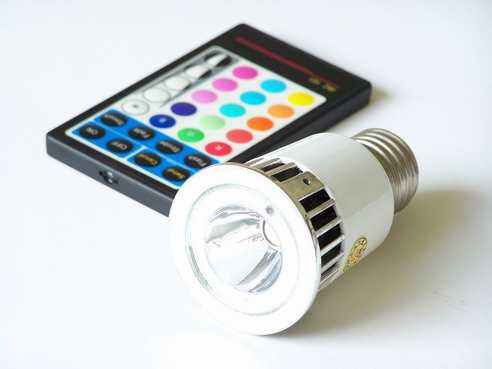
Photo above shows a typical form for LED blubs. Basically adopt the design concept of traditional bulbs. However, this design is improper for LED lamps. Indeed, residential LED light bulbs designed as this form are more beautiful than other formed LED tubes. This beautiful appearance is at the cost of the sacrifice of heat dissipation ability. In order to make this shape, designers have to reduce the volume of cooling fins. In accordance with today’s LED manufacturing technique, a LED bulb does not look brighter than a traditional filament lamp with similar power consumption. However, high power LED bulbs is hardly to be realized, since they cannot work in high temperatures. The power consumption of residential LED light bulbs is 3W, 5W and 7W. In fact, LED bulbs within this range perform much worse than 40W-60W filament blubs. It is impossible to use them as main lighting tools. Think about your living room looks like a movie play room during the night, you won’t like this image. They can only be installed in the bathroom or passageway as an auxiliary lighting source.


It is really an embarrassing situation for residential LED light bulbs, and also the main reason why LED bulbs cannot widely spread like LED down lights and LED panel lights. If you have no request in brightness, and you are looking for a method to reduce your outrageous electricity bills, you can try to install some of these LED bulbs in your bathroom, bedroom or even in your living room. But you can expect a bright living environment.


However, salty fish also cab break up unripe. If LED manufacturing technique can get further improvement: more efficient cooling method or higher lighting efficiency, there is no doubt that LED bulbs will replace traditional tubes in indoor lighting area.

China’s power led lamps trading environment has improved

With the western development and living standards improved a lot, it will lead to LED Products market becoming increasingly prosperous in the near future.

In the first grade city, power led lamps in department stores, supermarkets are increasingly luxurious. With the upgrading of the consumption level, people who purchase lamps are no longer just to meet the needs of lighting, but to create a better shopping atmostphere. They are paying much attention to the scene display, store decoration and the products are more and more upperscale, luxury, which is obvious in the area of east, south, north and other places.

China's power led lamps trading environment has improved

The second and third grade cities are risen gradually. In the east and south China region, a number of perfecture-level cities and county-level cities are economically developed, where the professional and stores, decoration quality are rising. For example, in Huzhou, zhejiang, the business area of 5000 square meters of lighting supermatket opened at the end of 2009, and became the first store in Zhejiang Province.

The power led lamps in the second and third grade city are continue to rise up. It provides much convenience for the local lighting consumers. A lot of consumers who originally go to big city to purchase light are directly choosing to buy at local. Also, it stimulate the local LED lamp consumption.

With the Project launch of the “China Green Lighting Project”, the 13 departments of the State Economic and Trade Commission jointly organized and implemented aiming at saving energy, protecting the environment, improving lighting quality activities. “Green light” refers to highg efficiency, long life, sacurity and performance through the science of lighting design to improve the way that people work, study, living conditions and quality purposes, therefore, creating a efficienty, comfortable, safe, economical and beneficial to the environment, in order to reflect the lighting of modern civilization.

At present, LED street light are on the pioneering phase in the market. The price is a little high, and unknown to the widely customers. But the market potential is huge. On account of its many advantages, for example, eye protection, energy saving, environment protection and long life. It can be estimated that in the near future, with the declining cost of high power LED lamp, the market of power led lamps will have a broad development.