
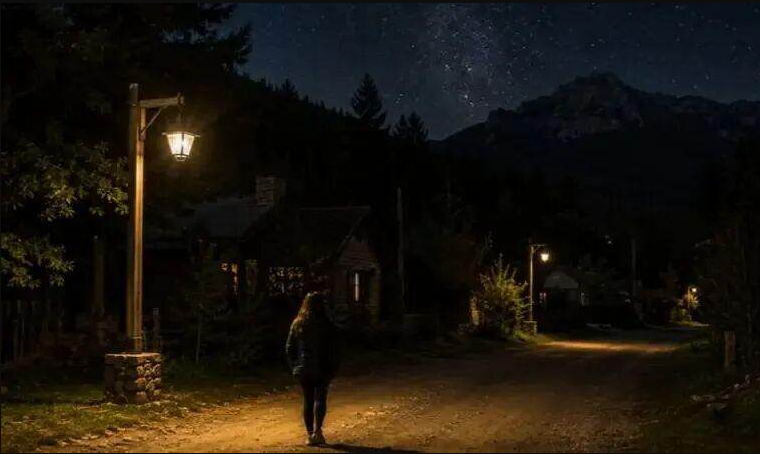
On July 20, 2026, the National University of Rio Negro (UNRN) and the National Research Council of Science and Technology (CONICET) announced that their jointly developed world’s first “on-demand public lighting system” has been officially registered for patent. This system allows users to turn on streetlights via a mobile application; the lights follow pedestrians, forming a “light strip,” significantly reducing energy consumption and light pollution while ensuring nighttime safety.
From Community Controversy to World’s First
This innovative technology stemmed from a long-standing debate in the Los Coihues community of Bariloche. Since 2014, local residents have debated the conflict between “safe lighting” and “darkness protection”-one side demanding enhanced nighttime lighting for safety, while the other insisted on protecting the nighttime ecological environment and stargazing conditions. At a community meeting attended by over 120 residents, a consensus was reached: instead of choosing perpetual illumination or returning to complete darkness, a third path of “respectful lighting” was explored.
This community demand was incorporated into the interdisciplinary course “Science, Ethics, and Social Production and Environmental Intervention” at the National University of Rio Negro, with students from various disciplines including environmental engineering, electrical engineering, communications engineering, computer science, and economics participating in the research and development. Under the coordination of faculty and researcher Santiago Conti, the team continued participatory work with the community, ultimately completing the system design. Early prototypes were based on Wi-Fi connectivity, and the student team continued to advance the project and refine the technical solution after the course ended.
Smartphone-controlled lights, lights off when people leave
Unlike traditional all-night lighting or motion sensor solutions, this technology only illuminates the lights when a person actively requests them. Users submit lighting requests via a mobile application, and the system then activates streetlights along the path, creating a “light strip” as pedestrians move. This design effectively avoids ineffective lighting triggered by accidental factors such as animal activity or wind, minimizing energy consumption.
In a statement, the university said, “This technological solution addresses a common challenge facing cities worldwide today-how to reduce energy consumption and light pollution while ensuring the safety of residents. The impact of light pollution on biodiversity, human health, and nighttime stargazing is receiving increasing attention.”