
Public toilets are a vital part of people’s lives, and nighttime lighting is crucial for the safety of residents when using the toilet or going out at night. To effectively implement public welfare projects and eliminate safety hazards caused by dim lighting and damaged lights in urban public toilets at night, the Anyuan County Urban Management Bureau of Ganzhou City, Jiangxi Province, recently organized municipal, street lighting, and sanitation workers to conduct a special nighttime overhaul of the lighting facilities in all public toilets in the urban area.
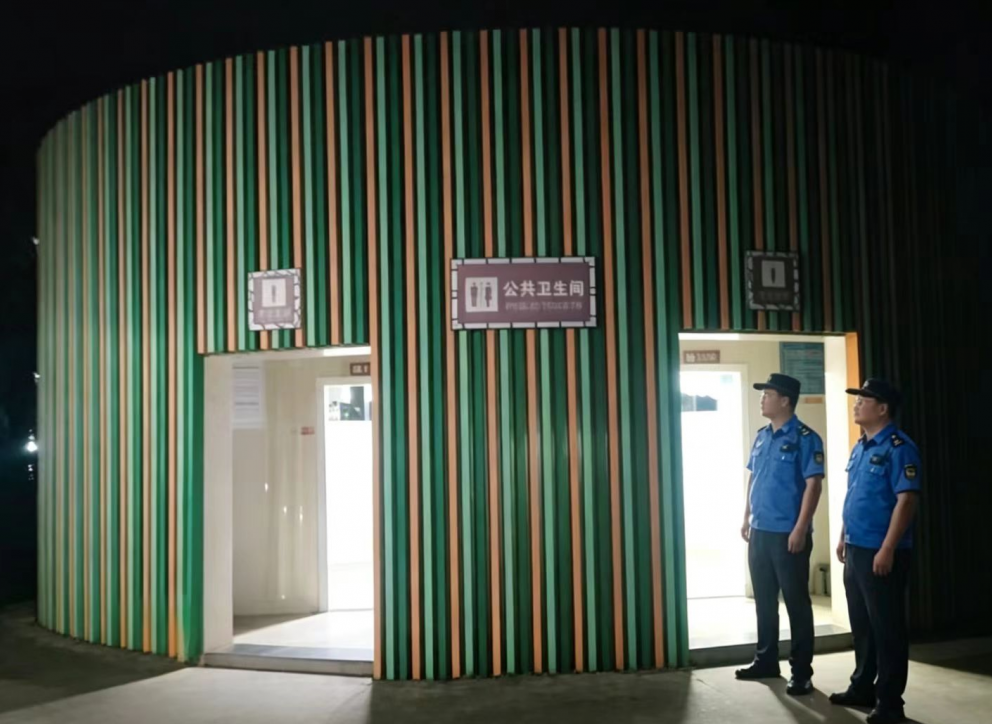
This nighttime overhaul adopted a street-by-street, toilet-by-toilet inspection approach. Workers carried electrical testing tools, light bulbs, and wiring accessories to check and register the ceiling lights, corridor sensor lights, washbasin lighting, and accessible pathway lighting inside and outside the public toilets. For problems found during the inspection, such as burnt-out bulbs, poor wiring connections, insufficient light brightness, and malfunctioning switches, on-site replacement, repair, and wiring reinforcement were carried out simultaneously. Old and dim lighting fixtures were upgraded uniformly, the lighting layout was optimized, and blind spots in corners and steps were eliminated to ensure sufficient lighting inside and outside the public toilets without any dead angles.
“Before, the public restrooms were pitch black at night, but now all the lights are on, making it much safer to walk around,” a passerby praised the improvement measure. Dim lighting not only affects the user experience but also greatly increases the risk of falls and bumps. While seemingly a small detail, public restroom lighting directly impacts the public’s sense of safety and convenience when traveling at night.
Next, the Anyuan County Urban Management Bureau will include the routine maintenance of public restroom facilities in its public service work plan, establishing a dual mechanism of daytime inspections and nighttime spot checks. Regular maintenance will be conducted on supporting facilities such as water, electricity, lighting, and sanitary ware. Focusing on the small, pressing needs of the public, the bureau will continuously improve urban public service facilities, using tangible improvements to address practical issues affecting the lives of residents and continuously enhance their sense of well-being.