Japan’s LED bulb market trapped in the doldrums

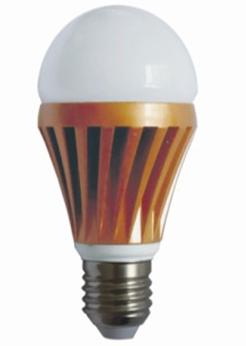
In Japan, the government, LED manufacturers, buyers, most of people are now promoting LED lighting technology in their life and work. After the earthquake in 2011, the needs for energy-saving became significant and necessary, which led to a vigorous development of LED lighting applications in Japan. In 2011, the spread of LED bulbs was far beyond the expectation of people. However, the supposed prosperous of LED bulb market has not come finally. LED manufacturers had to face up with rather naughty situations. LED technology has indeed spawned a new growth in the lighting area, bringing hope to the lighting market. But on the other hand, the long service life of these bulbs reduced the demand, plus the increasingly intense competitions, forcing large local LED companies to convert the business structure.


In Japan, the government, LED manufacturers, buyers, most of people are now promoting LED lighting technology in their life and work.


In early August, in one large home appliance store in Osaka, on the corner of floor one, reporters saw counters are piled up with LED bulbs. Labels of “low-price” were stick on boxes, like “4,650 yen for three”, “7,750 yen for five”…


According to the store’s sales, from May of this year, sales of LED bulbs started to trap in the doldrums. Due to the constant prices dropping, buyer chose to wait, it turned out that sellers’ expectations came to nothing.


It is really a hard time for LED bulb market in Japan. The re-construction of nuclear power plants in Japan still remained some distances off, some local governments required each ordinary household to save more than 10% daily electricity. Under such serious circumstance, LED bulbs are still unmarketable. Mr. Koji Sato, the registrar of the electrical appliances giant Toshiba, said, “the sales of LED bulbs is only 80% of that in 2011. It was expected previously that sales of LED blubs will climb up to the peak during 2013-2014. But now, it seems that 2011 is the peak year for the LED bulb market in Japan.”


The global general lighting market has a scale of 7 trillion to 10 trillion yen, and the scale of Japan is about 800 billion yen. In 2011, although that LEDs’ occupation has expanded to 17% in the general lighting market, the previously “hot” LED bulbs began to cool down.

Promote white-ray LED technology in indoor lighting applications

Although high-powered white-ray LED technology has made great breakthroughs in luminous efficiency, CRI and power consumption of single chip, and local LED manufacturers continued to improve their technologies and promote new products, white-ray LED technology still have a long way need to go before providing comfortable lighting environments practically. In order to improve the quality and also quantity of white-ray LED products in the indoor lighting area, the following points should be noticed by both producers and users.


Although high-powered white-ray LED technology has made great breakthroughs in luminous efficiency, CRI and power consumption of single chip,


In the view of the visual function, it is difficult for current LED products to meet basic needs for general lighting, both in luminous flux and lighting effect. Thus, reasonable lighting designs will be a key point to the indoor lighting. For example, using LED in local lighting and accent lighting, like spotlights; using LED as assisted lighting applications or in dimming designs, since they can be easily controlled. Some LED manufacturers even created intelligently controlled LED lighting system.


There is no doubt that the upstream business and midstream business are significant and crucial to the development of LED technology. But the downstream applications also played a lead role to the midstream business. Relations between scientists, engineers and designers should be strengthened, giving the LED industry a more reasonable and humanizing development.


LED secondary emitting is a key technology to LED lighting applications. Normally, lighting distribution can be optimized though LED secondary emitting designs. In this way, LED can emit much more reasonable light and meanwhile avoid glare.


Presently, testing departments in China have embarked on developing more effective test methods for LED lighting applications, including the development of relevant testing equipments. Standardization Technical Committee of National Lighting Appliance has already put the standardization work of LED lighting applications into agenda, including the standardization of LED technologies and also testing methods. The government hoped to promote the development of LED lights technologies and their applications in the field of lighting through the formulation of relevant LED standards. For LED indoor lighting standards, exerts believed that it is optical characteristics that should be improved at first, like luminous flux, lighting distribution, brightness, spectrum distribution, chromaticity coordinates, CRI, light attenuation, etc. Besides, the characteristics of electrical accessories, mechanical properties, temperature characteristics and appliance safety features should not be ignored, either.

White-ray LED lamps: meet the need of users psychologically and physiologically

During normal indoor activities, people not only need their visual function to be satisfied, but also need to feel comfortable visually, which is defined as a psychological needs for the lighting environment. Normally these good-quality lighting environments should not be bothered with direct glares and indirect glares, with right color temperatures, with comfortable arrangement of lamps. In the aspect of glare control, white-ray LED lamps have both advantages and challenges. Since LEDs have smaller emitting points and beam angles, it is relatively easy to control the direction of the beam. But on the other hand, as a kind of highly concentrated lighting sources, if the maximum light distribution of LED lamps cannot be disposed properly, the entire lamps will send out some glares which exert bad influence on human eyes. It is showed that the discomfort glare will not only case a decline in the efficiency of your works, but can also cause visual fatigue, headaches and other adverse reactions. If choosing RGB LED chips as lighting sources, manufacturers can produce white-ray LED lamps with arbitrary color temperatures. But this will affect the comfort and aesthetics of the whole field of view. Blue-ray LEDs with YAG powder will generate high color temperature rays. In order to maintain good illumination effects, the color temperature of lighting sources must be adapted to the illumination requirements. Higher color temperatures will definitely impact the indoor white-ray LED lighting applications. Because it requires a correspondingly higher illuminance to make people feel comfortable. Besides,


White-ray LED lamps: meet the need of users psychologically and physiologically


People’s physiological needs for indoor lighting are mainly in the health part. It is cleared that a long-term UV radiation can have skin adverse effects on human bodies. Besides, there are two other health-hazard optical influences that can be easily ignored: visual effects and effects on the circadian rhythm system. There are two effects that closely associated with white-ray LED lights for indoor lighting: the blue-ray hazardous effect on retina and the light affect the circadian rhythm system by suppressing the secretion of melatonin. Usually, UV caused damages on the front of our eyes (cornea). The wavelength of blue rays is longer than that of UV rays. Thus they can easily get through the eye ball and reach end to the retina. Furthermore, blue-rays have the highest unit energy among visible ranges, can easily burn the retina and lead to cataracts. On the other hand, the melatonin secretion is affected by light. The disorder of melatonin secretion will cause physiological imbalance, even cancers or other diseases in some serious conditions.

The visual requirements for white-ray LED lights

The color temperature and CRI of white-ray LED lights are close related to production process of LEDs. It was Nichia that created white-ray LEDs for the first time by using InGaN blue-ray LED chips (yttrium aluminum gamet) with phosphor powders. After that, people also created white-ray LEDs through light mixing of RGB chips.


The color temperature and CRI of white-ray LED lights are close related to production process of LEDs.


Blue-ray LEDs plus YAG phosphor is relatively simple than other methods, and cost less. It is the most commonly used method to make white-ray LED lights. But relatively, LEDs produced through this way have very low CRI. Adding some red phosphor powder and green phosphor powder can increase the CRI level, but the lighting efficiency will be declined. Theoretically, ultraviolet LED chips combined with RGB tri-chromatic phosphor powder can generate multiple color temperatures and white-rays with higher CRI. But the problem is the current ultraviolet LED technology is still in an immature stage. Indeed, multi-chips can obtain arbitrary color temperature and white-ray LEDs with high level of CRI theoretically. However, the input voltage and output light of multi-LED chips are different. Besides, the temperature characteristic and the light-keeping characteristic are different, either. Thus, it requires very sophisticated circuit designs. The current immature technologies will lead to the huge variations in color temperatures.


In order to satisfy a certain level of illuminance, LEDs should provide sufficient luminous flux. Take a small reading room for instance, assumed that the area of this reading room is 6m x 8m. Normally, lamp with a luminous flux around 20000lm – 30000lm is fit for reading needs. If taking no consideration of other factors, even using single LED chip with a luminous efficiency of 200lm/W, 100-150 pieces are necessary. However, currently, the common luminous efficiency of single white-ray LED chip is only about 30lm/W-40lm/W, far less than the assumed 200lm/W. It is cleared that no both in power consumption and in production costs, compared with energy-saving lamps, white-ray LED lights is in no match. In addition, the immature design of optical technologies reduced the stability of the lighting distribution of LED lamps. Obtaining a much more even lighting distribution, manufacturers have to increase production costs. In terms of spot lighting applications, LEDs with a small amount of energy consumption can meet the needs of visual, as well as evenness. In CRI aspect, the current white-ray LEDs can meet the needs of the general indoor activities.

The Diaoyu Islands incident triggered variations of Japanese LED enterprises

15th of September is the 100th anniversary of Japanese electronics giant Sharp. Sharp-China panned to hold a series of large-scale commercial activities in Shanghai. But due to the further deterioration of the Diaoyu Islands incident, this plan has been halted.


The Diaoyu Islands incident triggered variations of Japanese LED enterprises


Similarly, the new president of Sony (China) has originally planned to promote a series of new products of TV sets and other digital products. However, this long-planned marketing project was also greatly impacted by the The Diaoyu Islands incident. The Diaoyu Islands incident triggered variations of large LED enterprises of Japan, including Japanese LED enterprises.


According to the relate market researches, from July to September, Japanese LED enterprises were losing their market share. Data shows that the Sharp TV’s share fell from 8.8% to 4.7%; Sony’s share fell from 5.9% to 4.4%; Panasonic’s share has dropped to only 0.4%; Toshiba, Sanyo and other Japanese big brands’ share all fell to less than 1%.


As a matter of fact, in order to reverse the strategy errors previously, Panasonic began to spend several billion yuan on promoting LED LCD TV sets. But the result turned out to be just the opposite of their wish. The market share was falling instead of rising. They had to pay for the advertising costs.


The Diaoyu Islands incident made many Japanese LED enterprises be sandwiched between the two giants. “It is no longer as simple commercial battles, it is a series of conflicts between two large countries. China is the largest producer of LED and meanwhile the largest market of LED lights in the world. If it is possible, we don’t want to lose this place. The resistance from the media and the public is the thing that we were most worried about. ” Sony prepared a fair for digital products and LED lighting products in Guangzhou on 12th of September, their PRs expressed their anxiety about this event. Although most of the media attend the meeting on that day, the originally planned promotion of a new series of Interchangeable Lens Digital Camera (ILDC) was impacted by the gradually warming Diaoyu Islands incident. After being ready for the September market in China, Sony felt unprecedented pressure. It is a hard time for them and other Japanese LED enterprises in China.

Analysis of indoor white-ray LED lighting applications

As a kind of lighting sources with huge developing potentials, people paid more and more attentions on their incomparable advantages: long service life, rugged construction, low power consumption and flexible appearance. In recent years, single-ray LED technologies have been widely used in various areas, like large screens, signal lamps and landscape lighting applications. With the rapid development of LED, white-ray LED lighting technology was finally stood out from the crowd and conquered the most consumers, giving them full of expectations on white-ray LED lighting applications. It has been proved that white-ray LED lighting applications are more advanced in lighting efficiency, CRI, color temperature. In the meanwhile, the magnificent parameters of LEDs, like power consumption of signal LED chips and luminous flux of the entire LED model continued to make breakthrough.


As a kind of lighting sources with huge developing potentials, people paid more and more attentions on their incomparable advantages


However, using white-ray LED lighting applications indoors is still a big challenge for LED manufacturers. There are still a lot of technological problems need to be solved. Take single LED chip for example, the luminous flux of single LED chip cannot meet the basic requirements for indoor lighting applications. In addition, the over-expensive production costs, less lighting efficiency than common energy-saving lamps, lacking of stabilities, etc. Currently, only testing results can “cheer people up”. It really takes time to produce market-oriented products that truly meet the lighting requirements in practices. It is an inevitable truth for developers, producers and buyers.


The development status of white-ray LEDs.

Born in 1960s, the brightness of LED increased 30 times by average for every 10 years. On the other hand, their prices dropped nearly 10 times for every 10 years. The development of LED technology was completely followed the “Hydes’s Law”. According to related reports, the current luminous efficiency of white-ray LEDs is around 100lm/W (laboratory data), while the actual high-powered white-ray LED lighting applications in commercial and industrial area has also reach up to 40lm/W. With the continuous breakthrough in technologies, the luminous efficiency of high-powered white-ray LED lights still has large room for growth. It is estimated that by 2020, the maximum luminous efficiency of white-ray LED lamps can reach up to 150-200lm/W. In the meanwhile the luminous flux of these applications was also been proved dramatically due to the technological breakthrough in packaging and heat dissipation. From a latest data report from Nichia, LED modules with 5.5W (250lm) and 11W (400lm) have been successfully developed recently, which is a big step forward for white-ray LED lighting industry.

LED lighting applications: the path of popularity is full of difficulties

The energy crisis and the enhancement of environmental protection awareness gave global LED lighting market a prosperous future. In the dual stimulus coming from the market and the regulations, the global LED industry showed a rapid increasing. At present, the semiconductor lighting industry has formed a new industrial distribution and competitive landscape in the world, the three pillars of the United States, Europe and Asia. North America and Japan are always in a leading position in the upstream chip manufacturing. In Asia area, Taiwan also has very powerful LED core technologies and occupied a large amount of the mainland’s market. In Europe, the traditional lighting giant, Philips, OSRAM have shared the entire LED lighting market.


The energy crisis and the enhancement of environmental protection awareness gave global LED lighting market a prosperous future.


Thanks to the increasing enthusiasm of customers to environmental friendly products, not only developed countries, but also a lot of developing countries start to develop LED lighting applications and exploit their local markets. Frankfurt Lighting Fair in Germany was always been considered as the largest, the most important and the most authoritative lighting exhibition in the world. In past few years, LED lighting applications occupied a dominant position. More and more LED manufacturers emerged in this exhibition.


Currently, the majority of LED lighting applications are from commercial area. However, the over expensive prices blog the popularity of LED lighting products in this part. It is estimated that if the price of LED lights were reduced by more than 30%, the proportion of LED lights in the entire lighting market would have increased to 60% based on the research data. Thus, how to improve technology contents and meanwhile reduce production costs became the most significant issues waiting to be solved.


For the development strategy of China’s LED lighting industry, Mr. Zaihua He, a senior investment consultant, indicated that “LED lighting industry is having a rapid development here in China. The number of enterprises that entered this area each year grew linearly. Everyone treated LED as a giant delicious cake, if you come, you can have one bite. But actually, this phenomenon is very dangerous for the entire lighting market.” It is true that the large capital inflowing blindly will cause chaos to the market. At first, abnormal developments will emerge among industry chains, including serious disconnection, downturn of profits. There will be only input with no output. Secondly, the blind investment in the downstream of the LED lighting industry will speed up the compression of the margin profit and increasing the intense of competitions.

Chinese-style LED bulb market

1st of October in this year, the China Government will launch a ban for incandescent lamps. It has been explicitly indicated in relevant documents that incandescent lamps with power consumptions more than 100W should stop selling in the mainland. It will be an opportunity for LED bulbs or not? Whether the implementing of such issue can improve the relatively downturn LED lights bulbs market? Some people felt confident about this market, but some other people still expressed their concerns.


1st of October in this year, the China Government will launch a ban for incandescent lamps.


Experts believed that in Japan, in Korea and other places of South-East Asia and North America, LED bulb market has huge developing potentials. Under the influences of European debt crisis, many LED manufacturers chose to step back.


Earlier, OSRAM, GE Lighting, Philips and other international companies have introduced their own LED bulb series, having good performances in the lighting of Japan, Korea and North America. However, the performances of China’s LED lighting products could not make people satisfied.


The market spindle of LED bulb lighting industry is in rural areas. But subjected to the high prices of LED lighting products and the limited market awareness, the rural market has not yet been fully opened. Besides, the over-expensive selling prices is one of the three biggest obstacles that blog the increasing of market awareness in LED lighting area. In fact, whether LED bulbs can successfully take place of incandescent bulbs or not raised suspiciousness in the heart of both producers and buyers.


Consumers’ concerns usually showed as followed:

1)       Incandescent lamps can be used in the kitchen, while LED bulbs could not escape the interferences of fumes and dust.

2)       Unmatched base. Normally, incandescent lamps used in rural areas used B22 base, totally different from the E27 bases of LED bulbs. Thus the replacement of incandescent lamps with LED bulbs will be more complex than “screwing”.

3)       Incandescent applications are usually used in low-end places. Buyers may probably be unwilling to afford such expensive products (LED bulbs) in relatively unimportant places.


In view of the above points, you can speculate that if incandescent lamps exit in the domestic lighting market, LED bulbs will not meet the demand in some areas. In addition, it is incandescent lamps with power consumption higher than 100W that will be banned in the mainland market. LED manufacturers should not put too much expectation on the LED bulb market.

LED lighting industry has its modes for chasing money

A few days ago, I attached the LED seminar held in Shanghai. About 200 people attended, most of them are local LED manufacturers. Some of them delivered a speech in the seminar, shared their experience or expressed their opinions on running a LED company in the right direction.


A few days ago, I attached the LED seminar held in Shanghai. About 200 people attended, most of them are local LED manufacturers.


As the 4th generation lighting source, LED lighting industry still in the early stage of their development, full of potentials and opportunities, plus the support policies coming from local governments. During this meeting, many attendances posed questions, like “Many LED patents are about to expire. What kind of influences would this effect on the entire domestic LED lighting industry? Positive or negative? ”, “In terms of market, What the size of it during the replacement process (fluorescent lamps replaced by LED lights)?”, “Whether the gathering of LED industrial bases can be finally realized?”. Most attendances were filled with expectation and nervous. No one has a clear sight for the future in such market chaos.


In the Japanese market, as a result of power shortages caused by the earthquake and tsunami, energy-saving technology, like LED lamps have become a hot topic among buyers, producers and even the government. LED bulbs enjoyed a hot selling in 2011, shortening the distance with incandescent bulbs. It is expected that the sales hot will be continued in 2012. On the other side, with the increasingly mature of LED technology and gradually normalization of the market, the price of LED bulbs continuously dropped for a long time. According the related research results, the dropping rate of LED bulbs’ prices was even higher than LED screens in 2011. However, some experts yet came with totally opposite conclusions. In their opinion, by the end of 2012, the Japanese LED bulb market will touch the top and then turn down.


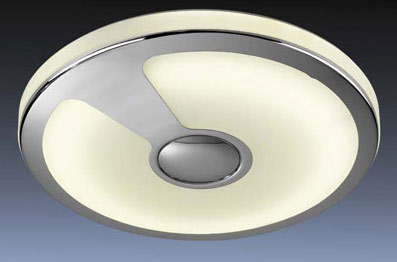
In consideration of the above analysis, some LED producers started to shifted their attention from LED bulbs to LED ceiling mounted lamps. LED ceiling mounted lamps is a type of LED panel, which is another important member in the whole family of LED lighting industry. Normally, selling prices of LED ceiling mounted lamps are within the range of 20,000 yen to 50,000 yen. Although they were classified as high-value commodities, they still had good performances in Japanese market. According to the introduction of GfK, LED ceiling mounted lamps accounted for about 70% sales in the complete market for ceiling mounted lamps.

LED city lighting: who are playing this game?

According to 2008-2010 statistics, it is expected that by 2012, the market size of outdoor LED lighting applications will be 6.4 billion $, in which 4.3 billion $ are from LED lights.


According to 2008-2010 statistics, it is expected that by 2012, the market size of outdoor LED lighting applications will be 6.4 billion yuan, in which 4.3 billion yuan are from LED street lights.


In LED city lighting area, the government was always a supporter. Surveys reflected an upward trend in the percentage of LED lighting applications used in city lighting projects. “This is a huge cake, a 100-billion-size of cake, how to share it evenly? If it is possible, than each exiting domestic LED producers will become a billionaire. For me, the answer is no, they will never carve up this cake evenly, the market is a battlefield.” Said one CEO of a LED company in China. Currently, there are about 1000 LED lighting manufacturers (large scaled) in the mainland. Indeed, if the 100-billion-size market is shared evenly, each one of these manufacturers can obtain at least one billion $. However, it is no difficult to find out that manufacturers “really involved in the LED city lighting projects” are always a few familiar faces.


In fact, LED lighting applications and related control systems applied in the Beijing Olympics and Shanghai World Expo are all from several well-known international brands, like Philips, OSRAM, Bridgestar, etc. while other complementary products were all provided by large-scaled domestic lighting enterprises, like NVC, Starlight, TCL, Lonon, Simon Electric, Xinwen Line, CH Lighting.


“We have no quality for national lighting projects. For local municipal lighting projects, we cannot afford. In spite of participating every competitive tenders, only those who done a good job in public relations can finally win. ” implied this CEO in a helpless manner. Indeed, in China, usually those giant companies with considerable strength and deep local background can win in LED city lighting project biddings. In Dongguan, whenever there was a bid, there must be Kingsun (the largest LED lighting manufacturer in Dongguan) and always won the final bidding.


Municipal lighting project is a game with few players, and always those few players. Said the CEO from another small sized LED company. But like thousands of small and medium-sized LED lighting business owners, he was a veteran in the war of the competitive tender of municipal lighting projects, filling with hopes for the future market and the development of his company. They not only concentrated on city lighting projects, non-government commercial project is another big cake for them.