
The popularity in led lights for the home

Shenzhen Xianglong photoelectric Blue Wen-liang told reporters: “If a family is fully configurable LED home lighting, th cost is about 5,000 yuan to 6,000 yuan, the price is high but still affordable for consumers. But lacking of knowledge of the LED is still a long-standing problem, so it leads the LED in the field of household consumption and the effects are poor. ”

But he also explained that with the rise of the young consumer groups, the LED user groups will become an increasingly widespread
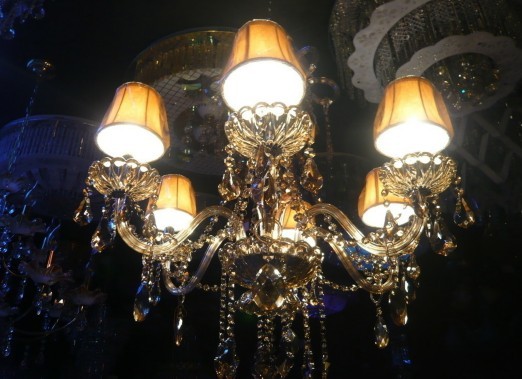
The popularity in led lights for the home

The led lights for the home will be a new house “standard”

With the five countries, second-hand housing transactions in Beijing, Shanghai, Guangzhou, Shenzhen and other places gradually are cooling down, the opposite is the new home sales gradually benefit from it.

Fearing 20% of the transactions taxes increase the cost of home buyers will have more to choose a new home may bring new home prices rose too fast.

Accordingly, the official said, for the problem of rising house prices, the developers need to develop a new bright spot to reflect the selling point of the real estate, and smart & intelligent home furnishing can constitute an important selling point, as property sales gimmick.

Industry experts point out that, intelligent lighting control system uses a modular design, the dimming module, switch power, scene control panel, sensors and programming, the programming socket, PC monitoring machine independent control module is connected to the computer data line, composed of an independent lighting control system, intelligent management and automatic control of lighting systems.

Compared to other traditional light sources, LED intelligent lighting system showed better compatibility and interoperability, and have a greater advantage in energy efficiency. Intelligent LED lighting will become the new trend of the future development of lighting technology.

In the United States, the intelligent LED lighting has been reached first in the proportion of intelligent home industry. The LED Engineering Institute (GLII) statistics, the domestic intelligent led lights for the home penetration rate is less than 2%, the relevant market is still in its infancy, a far distance from the United States and other developed countries.

“To sell the concept of intelligent LED lighting to high-end residential users, it is a relatively new marketing tool, there are relatively few people do, but the market is still there, the key is to look at how to cut into consumer psychology.” XuLiang told the reporter.
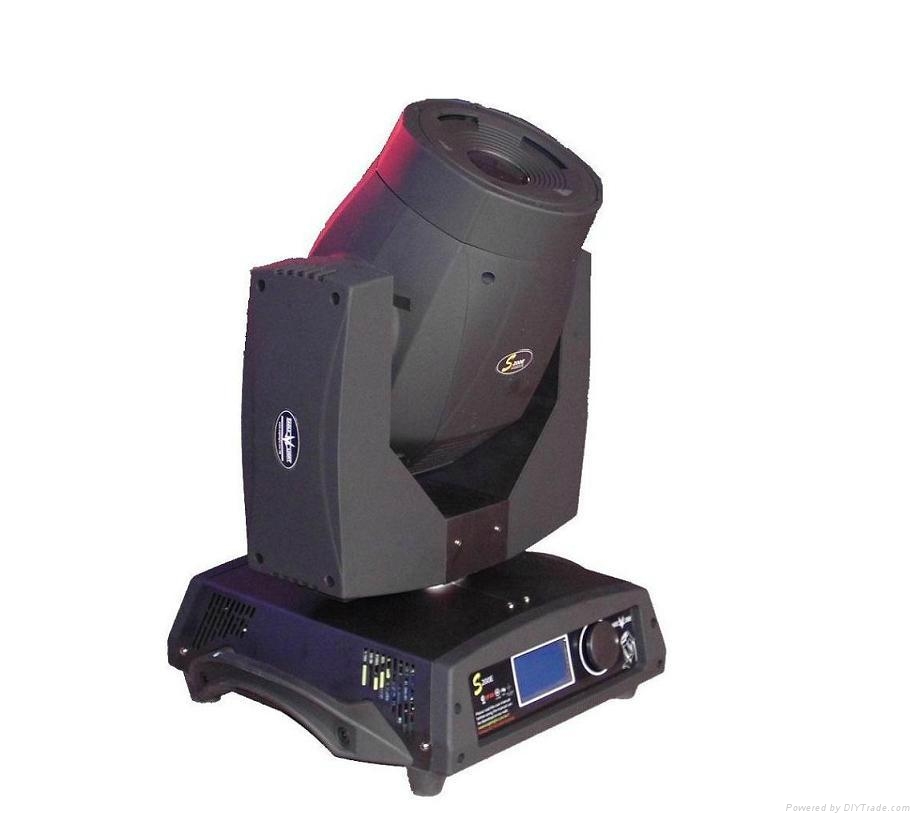
stage lighting led with CREE Chips

In order to fulfill the US Energy Independenceand Security Act and the EU eco-design directive, the artificial lighting system transition from incandescent to energy-saving lamps (CFL) and LED, in order to save energy and reduce greenhouse gas emissions. Compared with the traditional incandescent bulbs, the new energy-saving lamps and light-emitting diode (LED) bulbs stage lighting led can save 70 to 85% of energy consumption, service life is also greatly increased, and therefore is considered to be a huge energy saving potential The technology, however, the design of these new bulbs than traditional light bulbs is much more complex, with potential adverse environmental effects, even with consumer electronics devices. CFL and LED components containing more metal. Uncertainty of the potential environmental impacts of these components is necessary to dispose reached the end of its working life, the need to make special provisions? Seong-RinLim published an article published this month, “Environmental Science and Technology” (Environ.Sci.Technol) LED potential environmental impact: metal resources, or toxic hazardous waste (PotentialEnvironmentalImpactsofLight- EmittingDiodes (LEDs): MetallicResources, Toxicity, andHazardousWasteClassification). Their three types of bulbs (incandescent, LED  stage lighting led and energy-saving lamps) in many aspects of the evaluation of the environment and resources.

stage lighting led with CREE Chips

After the test found that LED bulbs need to be gold, silver, antimony, copper, and so on resource consumption than incandescent two orders of magnitude, 2-5 times higher than the energy-saving lamps. Have a major impact on resource consumption for energy-saving lamps, material is copper. Silver and gold is a precious metal as a material resource crisis in the EU antimony. Copper in the United States has not yet reached crisis proportions, but in the energy saving lamp and LED, the amount of copper is very high, other metallic materials is 1-6 orders of magnitude, to develop also worrying. Most metal content in the LED lamp is aluminum, barium, chromium, gallium, and they will be obvious to result in the total consumption of resources. To note here is that on in Supplier consideration risk Although gallium reserves in the world is estimated to be quite large, it is still considered a possible crisis of material, because gallium only be obtained as a byproduct of the processing of bauxite and zinc ore . On the contrary, yttrium, gadolinium and cerium also belong to the rare earth elements, but less likely to become a crisis material, yttrium, cerium fairly abundant, the amount of gadolinium very little.

If the LED and energy-saving lamps at the current rate continues to replace incandescent bulbs, will have a considerable resource consumption, because the supply of gold, silver, antimony, copper resources are insufficient. As having a low electric resistance is mainly used for connecting the LED chip electrode wire. Silver as the stage lighting led in excellent reflective coating material. Antimony is a core material of the LED chip. Copper is used for the LED and energy-saving lamp coil and the printed circuit board. DfE these auxiliary components (non-light-emitting technology itself) there is hope for transformation and modernization in order to reduce the metal content, as in the information and communications industry, fiber-optic cable instead of copper cable. Additional examples of successful DfE actual product can be found in the U.S. EPADfE website. In addition to the transformation of the component technologies, recycling technologies and management strategies should follow up to ensure the recovery of precious metals in the LED and energy-saving lamps can be recycled.

Regulations of existing U.S. federal and California state government, through the application life cycle impact and hazard-based evaluation methods to assess whether these bulbs products to be classified as hazardous waste. Life cycle impact-based approach, with the conventional life cycle assessment (LCA) is different, it is to quantify the toxicity potential of LCA elements. The energy-saving lamp and the LED lights are to be classified as hazardous waste, because the loss of lead (132mg / L, 44mg / L, respectively, has been extremely excessive prescribed safety standards) and a high content of copper (111000mg/kg, and 31600mg/kg, and safety standards for 2500), Lead (CFL bulbs 3860mg/kg safety standards for 1000) and zinc (CFL bulbs 34500mg/kg safety standards for 5000), and the incandescent light bulb is not dangerous the. Note that results CFL lamp bulb mercury vapor is not considered, the experimental sample preparation process does not capture). Compared with incandescent lamps, energy saving lamps and LED lamps have a high potential to lead to resource depletion and toxicity, mainly due to their high aluminum, copper, gold, lead, silver and zinc.


stage lighting stands in LED application

In order to fulfill the US Energy Independenceand Security Act and the EU eco-design directive, the artificial lighting system transition from incandescent to energy-saving lamps (CFL) and LED, in order to save energy and reduce greenhouse gas emissions. Compared with the traditional incandescent bulbs, the new energy-saving lamps and light-emitting diode (LED) bulbs can save 70 to 85% of energy consumption, service life is also greatly increased, and therefore is considered to be a huge energy saving potential stage lighting stands The technology, however, the design of these new bulbs than traditional light bulbs is much more complex, with potential adverse environmental effects, even with consumer electronics devices. stage lighting stands CFL and LED components containing more metal. Uncertainty of the potential environmental impacts of these components is necessary to dispose reached the end of its working life, the need to make special provisions? Seong-RinLim published an article published this month, “Environmental Science and Technology” (Environ. Sci. Technol) LED potential environmental impact: metal resources, or toxic hazardous waste (Potential Environmental Impacts of Light- Emitting Diodes (LEDs): Metallic Resources, Toxicity, and Hazardous Waste Classification). Their three types of bulbs (incandescent, LED and energy-saving lamps) in many aspects of the evaluation of the environment and resources.

stage lighting stands in LED application

After the test found that LED bulbs stage lighting stands  need to be gold, silver, antimony, copper, and so on resource consumption than incandescent two orders of magnitude, 2-5 times higher than the energy-saving lamps. Have a major impact on resource consumption for energy-saving lamps, material is copper. Silver and gold is a precious metal as a material resource crisis in the EU antimony. Copper in the United States has not yet reached crisis proportions, but in the energy saving lamp and LED, the amount of copper is very high, other metallic materials is 1-6 orders of magnitude, to develop also worrying. Most metal content in the LED lamp is aluminum, barium, chromium, gallium, and they will be obvious to result in the total consumption of resources. To note here is that on in Supplier consideration risk Although gallium reserves in the world is estimated to be quite large, it is still considered a possible crisis of material, because gallium only be obtained as a byproduct of the processing of bauxite and zinc ore . On the contrary, yttrium, gadolinium and cerium also belong to the rare earth elements, but less likely to become a crisis material, yttrium, cerium fairly abundant, the amount of gadolinium very little.

If the LED and energy-saving lamps at the current rate continues to replace incandescent bulbs, will have a considerable resource consumption, because the supply of gold, silver, antimony, copper resources are insufficient. As having a low electric resistance is mainly used for connecting the LED chip electrode wire. Silver as the LED in excellent reflective coating material. Antimony is a core material of the LED chip. Copper is used for the LED and energy-saving lamp coil and the printed circuit board. DfE these auxiliary components (non-light-emitting technology itself) there is hope for transformation and modernization in order to reduce the metal content, as in the information and communications industry, fiber-optic cable instead of copper cable. Additional examples of successful DfE actual product can be found in the U.S. EPADfE website. In addition to the transformation of the component technologies, recycling technologies and management strategies should follow up to ensure the recovery of precious metals in the LED and energy-saving lamps can be recycled.

Regulations of existing U.S. federal and California state government, through the application life cycle impact and hazard-based evaluation methods to assess whether these bulbs products to be classified as hazardous waste. Life cycle impact-based approach, with the conventional life cycle assessment (LCA) is different, it is to quantify the toxicity potential of LCA elements. The energy-saving lamp and the LED lights are to be classified as hazardous waste, because the loss of lead (132mg / L, 44mg / L, respectively, has been extremely excessive prescribed safety standards) and a high content of copper (111000mg/kg, and 31600mg/kg, and safety standards for 2500), Lead (CFL bulbs 3860mg/kg safety standards for 1000) and zinc (CFL bulbs 34500mg/kg safety standards for 5000), and the incandescent light bulb is not dangerous the. Note that results CFL lamp bulb mercury vapor is not considered, the experimental sample preparation process does not capture). Compared with incandescent lamps, energy saving lamps and LED lamps have a high potential to lead to resource depletion and toxicity, mainly due to their high aluminum, copper, gold, lead, silver and zinc.