How do domestic LED chip manufacturers survive under “overseas attack”? (3)

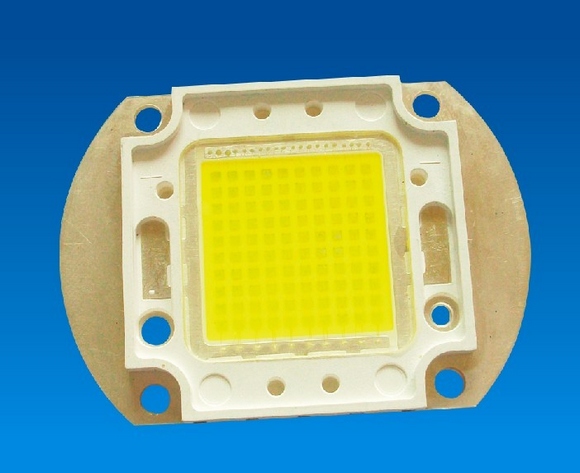
LED high bay chip industry has a very high technical threshold. The scarcity of professional LED technicians restricted the further development of domestic LED chip manufacturers. Relevant departments proposed solutions on this issue: an industrial reconstruction is necessary. Just like what happened in Taiwan ten years ago, there may be 6-7 enterprises can be survived at last. Those who cannot produce high quality products will be inevitably eliminated.
 LED chip industry has a very high technical threshold. The scarcity of professional LED technicians restricted the further development of domestic LED chip manufacturers.

More than 80% high power LED STREET LIGHT chips are expected to be improved by introducing advanced foreign technology. Our LED chip industry developed from 1995. In 1998, there are only three domestic LED chip manufacturers. Nine in 1999. From 1999 to 2009, about 2-7 companies would enter this industry each year. Currently, there are more than 100 LED chip manufactures in China. They have different focuses. For instance, Sanan Optoelectronics produces chips for low power LED lighting applications and display products, ChangLight only makes chips for outdoor LED landscape lighting applications, and AquaLite is a specialized manufacturers for red-yellow LED chips.

At present, many domestic LED companies have their own LED chip technology in low power LED field. But their high-power high-light-intensity LED technology cannot keep path with international level. More than 80% high power LED chips still relied on import. High power LED chips require much better materials. Take the cooling section for instance: high power LED lighting products generate more heat than low power LED lighting products does. Materials with lower thermal conductivity will cause LED chips work in high temperatures, consequently leading to light degeneration and work life reduction. In addition, high power LED chips have other technological difficulties: the secondary optics design and the power supplier design. However, patent problem has become a main obstacle for domestic LED chip manufacturers. All evidence so far suggests foreign rivals are trying to restrict our development in high power LED industry. Low power LED application market has saturated, while high power LED market is not yet. They attempted to control the entire market though controlling LED chips manufacturing technique. This further explains why Chinese LED chip companies need to own independent LED chip technologies. In consideration of currently technological resources and technician resources in China, without the help of government, it is very difficult for Chinese LED chip manufacturers to produce their own chips.


How do domestic LED chip manufacturers survive under “overseas attack”? (2)

“Since January, the price of LED STREET LIGHT chips dropped by 20%, while demand was less than our expected. Many enterprises faced with tremendous pressure. We had to adjust our strategy repeatedly.” Said Zhou Zheng, regional manager of Philip Advance in China. Chinese LED chips market has already saturated, plus the recent financial crisis, chip giants are struggling, not to mention small and medium sized domestic LED chip manufacturers. “We do not expect profits, we just want to survive. We are suffering financial crises, if we can survive this period of time, we may see the dawn” said Mr. Zheng. According to sources, many chip enterprises canceled their new products promoting plans, and temporarily turn their attention to other electrical products market. This is not to say that they gave up the LED lighting market. In fact, it is a kind of retreat for the sake of advancing. They save their power for later use.

Unbearable burden gave birth to the reconstruction of domestic LED chip manufacturers.

LED chip companies from America, Korea and Taiwan have successively entered Chinese LED lighting market. As for LED chip manufacturers, competitions are always international. Currently, there are more than 100 domestic LED chip companies, in which Sanan Optoelectronics, ChangLight, Inspur and AquaLite are relatively large chip enterprises in China. However, compare with overseas rivals, they are still far behind. “We need the support of government, both in technological aspect and in commercial aspect. China is the largest LED factory in the world, more than 70% LED applications produced and exported here every year. We should control this market. ” said Xiangyi Hu, marketing manager of Sanan Optoelectronics. Some experts raised objections. “Technology is not the key point to survival. There are two main factors for enterprises to win this battle: product quality and cost.”

In 2007, Chinese LED chip industry output reached 4 billion yuan, increased 100%! But in 2011, the average growth rate is only 10%. In 2008, the total sales of Chinese top ten LED chip companies is over 2.7 billion yuan, accounting for nearly 70% of the annual LED chip industry output. Even now these old LED chip giants still can guarantee stable annual sales of 100 million yuan. Competitions from foreign companies did not cause great pressure to them. But small and medium sized domestic LED chip manufacturers were not so lucky. This attack can say a catastrophe for them.

How do domestic LED chip manufacturers survive under “overseas attack”? (1)

Overseas LED chip companies followed the LED tide, joining into the fierce competition in Chinese LED lighting market one by one. LED chip prices will be reduced again. It is the third price dropping of LED street light chips within past five years. How domestic LED chip manufacturers cope with such serious situation?


Taiwan chip giant landed on China

At present, our LED chip industry still in the stage of developing. More and more LED enterprises start to co-operate with domestic LED chip manufacturers or set up their own chip manufacturing departments. But, Chinese currently used LED chip technologies are all borrowed from foreign chip companies. Lacking of our own chip developing and manufacturing technique is the biggest defect of us. In the intelligent electrical apparatus market, Chinese companies were continuously at a disadvantage in competitions with overseas rivals. Foreign chip giant has aimed at LED lighting market, racing to provide their LED chips for LED CHINA manufacturers. According to experts’ statistics, LED chips will probably be an independent market in near future. Chinese LED designers are striving to invent their own chips to face up this war.

Since the 2009, the high demand of LED lighting products is far beyond their expectation. Gradually, they realized that they are biting off more than they can chew. Finally, Taiwan LED distributors looked to the Chinese market then, entering into mainland market though the co-operations with domestic enterprises or set up their own epitaxial factories.


Overheated investment leads to prices reduction in Chinese LED chip market.

The number of MOCVDs sold to China in 2011 in is occupied over 50% of the global MOVCD supply in 2010. In this case, after three years, the yield of epitaxial factories will be 10-15 times as much as right now. Over 1/3 traditional lighting enterprises have entered or prepare to enter this battle, actively seizing the market. As for them, LED lighting industry is just a part of their strategies. In next few decades, it will become a key development direction. In order to prevent being controlled, they chose and have such capability to develop their own LED chips. This undoubtedly makes things even worse. With the continuous release of capacities, chips for white LED applications had to drop prices again in August this year. The average drop is around 25%. 1W LED chip only costs 1 USD.


Overseas LED chip companies followed the LED tide, joining into the fierce competition in Chinese LED lighting market one by one.

Cooling technique for super high power LED lights (5)

4.      Micro-channel cooling technology. Similar to synthetic micro-spraying, micro-channel cooling is also a new born cooling technology for super high power LED lights. In 1980s, Tuckerman and Pease introduced a kind of micro-channel cooling concept in their report. The thickness of this device is only 50um. Although this technology has been put forward theoretically, it is very difficult to be realized due to the relatively backward manufacturing level. 20 years later, Mr. Goodson and his colleagues invented electroosmotic pump: non-motion component, lower power consumption. Tests results demonstrated that when thermal flux reaches 200W, micro-channel drove by electroosmotic pump can cool LED STREET LIGHT chips nearly 20 degrees, while the power consumption is less than 1W. So far this cooling technology has not been commercialized.

5.      Thermoelectric refrigeration cooling technology. Different from the previous methods, thermoelectric refrigeration can create a much colder surface within a certain area by using Peltier effect. This technique can used in large space, but the cooling effect is only 10% of micro-channel cooling technology and also much lower than other cooling technologies. Thus it cannot be used in super high power LED lights.

Chinese designers also promoted their own LED cooling concepts. Mr. Mao introduced a kind of channel cooling module that used for LED blocks in 2005.

Chinese designers also promoted their own LED cooling concepts. Mr. Mao introduced a kind of channel cooling module that used for LED blocks in 2005. He connected LED boards with MMC (Metal Metric Composite) plates or silicon plates, then “carved” small channels on these plates though micromachining technology. Liquid can flow though these channels, carrying off heat with no influence on LED boards. To enhance the cooling effect, Mr. Mao also set several small auxiliary heat sinks on plates.


In 2006, Sheng Liu and his colleagues tried to solve cooling problems of super high power LED lights by using micro-pumps. They connect LED boards on slots-covered plates. Cooling water will be impelled though these slots under the work of micro-pumps, taking away heat. The over-heated water is then cooled down by fans within a block. These micro-pumps have very good cooling capacity, but internal interfaces generally have large thermal resistances, reducing the final cooling effect. And also the complex construction made LED manufacturers have little interest in applying this technique in their LED HIGH BAY applications.


Cooling technique for super high power LED lights (4)

Norlux is not doubt a good innovation in cooling technique for super high power LED lights. However, everything has its defects. Using PCBs with aluminum layers can improve the heat radiating performance and also increase the LEDs output power. But PCBs are not good heat conductors. Choosing right PCB materials is still a key point to LED cooling technique.

Norlux is not doubt a good innovation in cooling technique for super high power LED lights. However, everything has its defects.

Cooling design after PCBs:

Heat generated by LED High Bay chips can be transmitted to PCBs. If we do nothing about it, having them contact with the air directly, this will dramatically reduce the thermal radiation. The simplest way is installing additional cooling fins on both sides of PCBs and using fans to enhance the convection of the air. On one hand, it can expand the area of interfaces. On the other hand, it can speed up the heat radiation process. However, this method is only suitable for LED chips with lower heat flux. In recent years, scientists also invented many other after-PCBs cooling techniques, some of which are typically for super high power LED lights.


  1. Several new designed heat sinks can further improve the heat radiating performance. For instance, some LED manufacturers decided to applied needle-shape heat sink at the back of PCBs. This design dramatically increases the interface between PCBs and the air.
  2. Some designers preferred to use micro heat pipes to help radiating heat. This is a new design concept for LED cooling system. Heat pipe technology was born in 1963 in Los Alamos National Laboratory in America, designed by George Grover. As a type of thermo-element, heat pipes can strengthen the heat radiation though phase change. Heat pipes have even higher thermal conductivity than metals also much lighter than them. They can be used for long-distance and narrow-space heat radiation. Thus once produced, heat pipes were widely used in vehicle LED STREET applications.
  3. Synthetic micro-spraying technology. This technology can change the surrounding air pressure though membrane vibration and consequently form jet. Once the vibration frequency within the range of 100Hz – 200Hz, the speed of the jet can reach up to 30 m/s. In terms of air cooling technique, the cooling effect of synthetic micro-spraying technology is 2-3 times as much as that of ordinary fans, while only consumes half energy than them. However, the cost of this sophisticated technology is too high and the entire cooling concept is too complicated, that so far it has not been widely used in LED lighting area.


Cooling technique for super high power LED lights (3)

Recently, LED scientists have invented a new packaging structure for super high power LED lights: silicon based chips. Normal LED chip has a layer of epoxy resin on the top and use sapphire as base. Both of them are weak in thermal conductivity. Therefore, heat can only be transmitted though pins. It is very hard for heat to be radiated from both side (up and down), impacting a bad effect on chips function and reliabilities. In 2001, LumiLeds invented a new LED package structure: AlGalnN structure. It is a typical silicon based structure,. LED chips will be mounted on silicon bases though small bumps. Thus heat can be directly transmitted into silicon/ceramic bases, which obviously have larger thermal conductivities, and consequently into external metal bases. However, thermal resistance is proportional to the thickness of heat sinks. Due to the restrictions from the mechanical strength of silicon, it is very hard to further reduce the thermal resistance (increase the thermal conductivity) by reducing the thickness of silicon bases.


Recently, LED scientists have invented a new packaging structure: silicon based chips. Normal LED chip has a layer of epoxy resin on the top and use sapphire as base.


How PCB materials affect the cooling section of super high power LED lights?

In the process of thermal transmission from LED chips into circuit boards, the thermal conducting capacity of PCBs is rather important. At the same time, PCBs also provides electrical connection and physical support for LED chips. Thus, the designs for PCBs must take both electrical capacity and thermal conductivity into account.


Materials for high power PCBs must have high-insulation resistors, high reliabilities, high conductivities, a CET (coefficient of thermal expansion) which is quite similar to LED chips. With so many restrictions, only few metals or alloys can meet the requests. In order to guarantee the insulation, the entire PCB needs to be coated with a layer of MIP (Molecularly Imprinted Polymer) membrane or ceramic membrane.


Currently, most LED CHINA manufacturers would like to use MCPCB structures: connect chips with PCBs (with a layer of copper electrode on surface) though aluminum due to its good thermal conducting capacity. Another way is connecting LED chips on PCBs which have metal sandwiches, then mounting the them on cooling sections. Norlux series made by UOE are LED chips using such package technique. UOE’s designers connected LED chips on PCBs which contain a very thin aluminum layer (shows as follow). PCB plays a role of electronic connection of LED High Bay chips and the aluminum layer works as a heat radiator.

Cooling technique for super high power LED lights (2)

The thermal transmission process of super high power LED lights:

As for normal LED lamps, LED chips are the source of heat. Heat will be transmitted within the entire lamp in three ways: conduction, convection and thermal radiation, in which thermal conduction makes the biggest contribution. Thus when technicians design the cooling section for a certain lamp, they will attempt to improve the thermal conductivity of each section with it.


As for normal LED lamps, LED chips are the source of heat. Heat will be transmitted within the entire lamp in three ways: conduction, convection and thermal radiation, in which thermal conduction makes the biggest contribution.


Feature above is a typical structure for LED system. The thermal conductivity is basically determined by the thermal resistances between LED, circuit board and the air. There are three main problems within this part:

  1. Thermal resistance of LED components determines whether heat can be successfully transmitted into bases. Thermal resistance can be reduced by improving packaging technique, choosing suitable materials.
  2. Reducing thermal resistance between LED chips and circuit boards. Normally, it will be determined by materials of circuit boards, distances between LED chips and circuit boards, distributions of resistors on circuit boards and the connection of LED chips and circuit boards.
  3. If the thermal resistance between circuit boards and the air is too large, the collective heat will increase the working temperature of the entire lamps, even though all of the heat generated by LED chips were completely transmitted from LED chips into circuit boards.

In follow sections, we are going to give a small discussion on how to improve the thermal conducting capacities of super high power LED lights though these three respects.


Thermal radiation of LED chips and LED STREET LIGHT.

Most of the heat generated by PN junction will be transmitted though bases, glues and heat sinks. The simplest way is to increase thermal conductivities of them, and meanwhile increase the contact area (which can also raise thermal conductivities). In consideration of space restrictions and cost of production, the improvement in this aspect is rather limited. Among them, glues are most likely to be changed. Designers tend to use glues which have small paste thickness, like heat conducting glue, conductive silver paste and tin slurry. These three materials are typically used as LED chip glues. Among them, heat conducting glue has a relatively low thermal conductivity, conductive silver paste has better thermal conductivity and also paste strength, but it is not the best glues, since it will generate a large amount of heat by itself as well as send out toxic metals (lead). Compare with the former two materials, tin slurry is the most suitable LED chip glues, both in heat conductivity and in electric conductivity.


Cooling technique for super high power LED lights (1)

As for the fourth generation lighting source, LED is a great technical innovation in history. They have many advantages: high light efficiency, long life, fast respond and environmental friendly. However, completely replacing traditional lighting products is still a long journey for LEDs due to technical difficulties or maybe technical bottlenecks. Among various technical bottlenecks, cooling system is always a big trouble for LED manufacturers. Nowadays, with the rapid development of LED technique in lighting area, the luminous flux of LED lamps is increased continuously. But, respectively speaking, the cooling system cannot keep path with it. For example, the birth of super high power LED lights is definitely a large step of LED lighting technology. However, as a matter of fact, this type of lamps has not been widely used in the market just because of the lag of cooling system. They are incompetent. The aim of this article is to simply explain and analysis the current cooling technique for LED lamps.

As for the fourth generation lighting source, LED is a great technical innovation in history. They have many advantages: high light efficiency, long life, fast respond and environmental friendly.

LED is a solid semiconductor which can convert electricity directly into light. They are small, bright, reliable, consume less energy, radiate less heat, can be used for a very long time, these advantages contribute to the widely spread of LED technique in lighting area. LEDs have very limited surface areas and also high current concentration during work. Normally, multiple LED chips will be mounted on a lighting board as the lighting source. As we all know, longer working in high temperatures will cause LEDs degeneration, leading to a drop in light intensity and working life. Indeed, LED technique can generated less heat than traditional lighting technique, but this is based on single LED chip. For multiple LEDs lighting board, cooling system is a cannot-be-ignored part. Due the continuous improvement of LED luminous flux (power consumption), more sophisticated packaging technique is necessary. Currently, cooling system is a main obstacle for super high power LED lights, especially for vehicle LED applications. Some of the external vehicle LED applications require high power LED STREET LIGHT technique. Designers need to take shape design into account along with cooling section. It is really difficult for them. Whenever this problem was solved, LED technique would have taken a big step in lighting aspect.


The global LED driver market will reach up to 10 billion USD in 2016

On 3th Feb. 2012, IMS Research published a new report “Chances for LED drivers”, saying that in 2016 the global LED driver market will reach up to 10 billion USD in 2016.

This report indicated that due to the new legislation and the continuously increased electricity cost, LED lighting market rapidly developed all over the world. In accordance with an initial estimate, the demand LED drivers in 2016 will be around 4 billion, namely 10 billion U.S. dollars. Such amazing performance is far more than the experts expect. Senior market analyst also one of authors of this report Ryan Sanderson said that LED street lights industry is heading in the direction of high power designs. LED manufacturers started to improve their low power residential LED applications, commercialized their high power LED products and continuously sent their “army forces” into industrial lighting area.


This report also indicated that traditional lighting market is deep-rooted. LED manufacturers have to provide power suppliers for their LED products, which is a new challenge for them. Unlike traditional lamps or other electrical devices, LEDs work under DC. In other words, LED driver is a new born technology rather than a new born section. To design a good LED driver needs a lot of professional knowledge. It is indeed a challenge for LED companies but also a chance for LED driver manufacturers. Rated power, the number of LED chips and working environment should be taken into account when design a LED driver. Sanderson said that these restrictions made LED manufacturers have to co-operate with professional LED driver factories or set up their own driver teams.


Power supplier industry has suffered a long term downturn. LED lighting will be and should be their only chance in next 20 years. There is no doubt that global LED driver market will be a “big cake” for lighting merchants. But the competition in lighting market has always been fierce. Some giant LED enterprises implied that they have no willingness to share this big cake with others. Jonathon Eykyn, another author of this report, expressed his opinion: some LED enterprises can develop and produce their own LED drivers though mergers of small and medium sized LED driver manufacturers. Philips Advance is a typical example. These vertically integrated enterprises have divided up nearly 1/3 LED power supplier market. However, their LED drivers are only suitable for low power low cost indoor LED applications. In terms of high power LED products, the LED driver design is far more complicated. Under such circumstances, LED LIGHTS manufacturers have to outsource this part to specialized LED driver makers.

Chinese LED lighting industry: to defend or to fight? (2)

Chinese traditional lighting industry needs breakthrough. But not every lighting manufacturer must set up its own specialized research and development team for LED Lights. “Chinese LED lighting industry needs more technicians. Real LED technicians. Nowadays, many business men blindly entered this area without any market research or even lack of a basic technical research and development team. It may cause catastrophic damages to them. Meeting with such fierce competiveness, no technique no survive.” Said Dr. Bowen Chen, a senior engineer from OSRAM. Indeed, due to the lack of technique, Chinese LED lighting market has gradually occupied by overseas competitors. Not to mention the traditional lighting industry, even Chinese LED lighting industry requires innovations.

Chinese traditional lighting industry needs breakthrough. But not every lighting manufacturer must set up its own specialized research and development team for LED.

Will the penetration of LED technique into lighting market cause the final reconstruction? Experts gave out deductions as follow: as for the entire traditional lighting industry, LED is an extension update caused by the innovation of lighting sources. LED technique has been used in lighting area for nearly ten years. More and more new born LED China manufacturers entered into this market. Some of them survived at last, but most of them died and disappeared forever. It seems that many traditional lighting enterprises still have no intentions to join into this battle. But this is not to say that traditional lighting manufacturers do not obtain such capability. “We have our own research and development department for LED lighting industry and did master LED techniques. However, we have no willingness to enter this emerging market so quickly. Now is not the time. We still have many works need to be finished firstly, like marketing analysis, product research, customer estimation and so on. We need to choose a right time to enter this market.” Said Xu Hui, the general manager of a traditional lighting enterprise in Guangzhou.


According to Wei Chen, an expert in LED lighting area, Chinese lighting market will be reconstructed in near future due to the emergence of LED Street Light. “LED is not just a lighting source. Its advantages in technology are obvious. It is not easy for traditional manufacturers to take part in. LED chip technique, power supplier, cooling section, combination of shape design and light optimization, it is new technique that completely different from traditional lighting products. The one who can make products does not mean that he can make good products.”