Expect to LED backlight technology with high efficiency and high luminance

The real popularization of RGB LED backlight technology is a long journey. There are still a lot of problems need to be solved. Clearly, among these problems, high production cost is the key issue. LCD TV sets usually have high luminance. Thus need to use LED chips (usually greater than 1W) with high efficiency and high luminance. If use back lighting mode, the increasing of back panel size will also increase the number of LED chips, which consequently brings another problem: the thermal effect. The thermal effect will exponentially grow with the increasing of RGB LED chips. Therefore, more heat sinks, fans, cooling tubes are needed to maintain the internal operation temperature. Besides, too many LED chips will make producers hard to maintain a well color unity. They need to carefully choose LED chips with similar wavelength, adjust RGB color differences via Color Sensors. The impact of doing so is increasing the production cost. Selling prices usually far exceeded the expectation of consumers. Absolutely, there are some other solutions could solve this problem: enlarging panel size without increasing the number of RGB LED chips.


Expect to LED backlight technology with high efficiency and high luminance


Reducing the power consumption of LED backlight models is not the only way that LED backlight module makers and LCD TV manufacturers need to concentrate on. LED chip makers also played a very important role. If the luminous efficiency of LED chips could be improved, LED-related technologies would be reduced dramatically, including LED backlight technology.


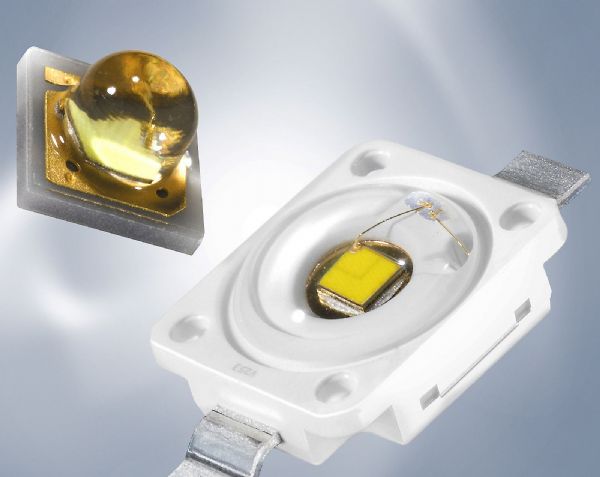
According to the current expectation of Japanese Lighting Association, LED will step into the practical stage in the next few years by realizing the production cost of 1yen per 100lm/W. The average color rendering of LED Panel Light will increase, too. In this part, phosphors played a very important role. Fluorescent powder together with blue-ray LEDs could generate (simulate) white-ray LEDs. However, this type of technology is relatively weak in presenting red and green rays (low CRI). Thus some producers start to develop a new method: UV LED + RGB fluorescent powder, which is rather complicated. Fluorescent powder with different colors cannot be simply mixed together. In order to obtain a white-ray effect with high CRI, fluorescent powder with different colors should be mixed proportionally. It is generally believed that the uniformity of light-emitting characteristic has nothing to do with the production technology of fluorescent powder.

LCD LED backlight technology was expected by the market

In pursuit of a wide color gamut, global LCD TV makers imported LED backlight structure in succession. Of course, this is not a simple matter. In addition to take the production cost into consideration, how to reduce the power consumption is another obstacle that blocks the progress of LCD LED backlight technology.


LCD LED backlight technology was expected by the market


LED backlight module is a new type of technology anticipated by the market. However, the high power consumption is a must-not-be-ignored issue for related manufacturers and makers. For large-sized LCD TV sets, nearly 60% energy is consumed in the backlight modules. But reducing power consumption is not just a matter of LCD LED backlight technology. Improving driver technology, improve light guidance efficiency, reducing thermal effects can also reduce the power consumption effectively.


Depending on different applications, LEDs have different lit modes. Most of LCD TVs applied back lighting mode (all LED light source attached directly at the back of the lighting board), while monitors and other small sized display products applied side lighting mode (all LED Panel Light source attached on the side of the lighting board). Normally, monitors used side lighting mode (RGB 3 primary colors). Some small sized display products, like vehicle navigation, mobile phones, PDAs, would like to apply white-ray side lighting mode.


Theoretically, side lighting mode is more advanced than back lighting mode: having higher luminous efficiency, evenly light distribution. Currently, many laptops began to use white-ray side lighting mode, which provide more creating space for appearance designs: thinner, brighter, more elastic. Although white-ray LEDs is relatively weak in presenting red rays (low Color Rendering Index), since most of time laptops are in the static display state and most of users will not expect them to achieve a real color rendering effect as LCD TVs, CRI is not a big issue for laptops. Of course, there are also some good solutions: adding red LEDs within white-ray LED matrix, etc..


For the development of LCD LED backlight technology based on white-ray LEDs, improving light distribution evenness, increasing color rendering performance, extending service life are as important as improving brightness and luminous efficiency. Thus how to pack LED chips (high current) on materials with high thermal conductivity and high heat capacity becomes new challenges for LED backlight application manufacturers.

Is the overall production process of LED lamps contrary to the energy-saving purpose?

It is well known that LED can maintain a normal working condition by consuming very little energy, emitting similar light (same brightness) as incandescent lamps does. But this is only a small part that known by us. In March of 2011, researchers from Carnegie Mellon University published a LED-related report. In this report, researchers advanced different ideas on the energy-saving feature of LED lamps. Indeed, LED lights can save more energy compared with other traditional lighting sources. But some researchers also pointed out that taken into account of the energy consumed during the production process, LED lights may not be as so energy-saving as our expected. The entire production process of LED lamps actually takes a lot of energy. According to foreign media reports, the production and recycling process of LED lights consumes even more energy than ordinary bulbs, which makes the energy-saving feature of LED lighting products exist in name only.


Is the overall production process of LED lamps contrary to the energy-saving purpose?


In fact, the higher the demand, the more energy wasted during the production process. Assumed that the production process of LED lights consumed much more energy than incandescent lamps or compact fluorescent lamps, the energy-saving function during their service life is thus meaningless.


In addition, LED light source has another two features which will increase the energy and materials consumption during the production process: small size and easy to control. These two features will definitely lead to diversified fixture designs. Unlike incandescent lamps and compact fluorescent tubes, whose appearance is limited by properties of their light sources. In this condition, manufacturers need to use more energy and materials to achieve a diversified design effect. From the view of daily life, indeed, LED Panel Light source could bright more colorful visual experiences to the world in the future. However, whether it is valuable to achieve this effect in the cost of consuming more energy and materials still needs deep considerations.


In summary, the overall production process of LED lamps is contrary to the energy-saving purpose. In order to save more energy during the production process, more studies and researches need to be taken. Manufacturers and research institutions need to enhance the cooperation. After all, LED light source always emphasized the importance of energy saving and environmental protection.

The customization of LED chips makes LED lighting devices more popular among ordinary buyers

The latest market data shows that, the retail price of LED bulbs in America has dropped to 8 USD, and the retail price of LED tubes has dropped to around 5 USD as well. In consideration of the much lower selling prices, consumers are more likely to buy LED lamps. It is estimated in 2015, the global LED lighting market will usher a rapid development.


The customization of LED chips makes LED lighting devices more popular among ordinary buyers


But in the meanwhile, some experts believed that the growth of LED general lighting market will exceed people’s expectation. According to MR. Fang Lezhang from CrpowTech Co., Ltd., with the sharp price dropping of LED lighting products, the household application market is about to take off. The estimated growth rate of it is about 30%. In his point of view, the actual growth will be greater than this. Especially for the mainland LED lighting market, the estimated growth could be more than 50%. The current average ex-work price of LED lights has dropped to $1.38/each. This is no price barriers to keep them away from household furniture market. In 2013, there will be a large number of consumers try to adopt LED lighting products in their home. If LED lighting technology could keep on progressing at such speed, there will be a large number of procurement in 2014.


LED lighting is a large market that should not be ignored by large LED enterprises. In the past, the lacking of fund and design capabilities slowed down the developing rate of domestic LED chip manufacturers. In fact, today, many foreign companies started to shift their attention on customer-made LED chips, which create large design space for LED lighting applications. Unfortunately, the development of Chain’s LED industry is still in a very early stage: standardized products increase the intense of competitions in the market, reduce the gross margin. For customized LED High Bay Light chips used in specially applications, namely the simulated ASic chips, the gross margin is much higher. In 2011, the entire simulated LED chips market output is approximately 40 billion dollars, in which more than 90% is from customized market. Therefore, customer-made chips became a large market target for many international manufacturers of LED chips.


In order to meet the requirements of special LED lighting applications, LED makers need to have long-term sustainable developing strategy and strong design capabilities. They need to improve their service capabilities continuously, providing practical solutions and products for their clients.

LED light source started to be used in medical lighting applications

Environmental friendly: LED is a type of solid-state semiconductor light source (SSL), the working principle of which is based on electroluminescent rather than thermoluminescence. Thus LEDs are also known as a kind of cool light source. Unlike other traditional light sources, LED light source is free from hazard and toxic materials. Normally traditional light sources, like fluorescent lamps, sodium lamps (HID), mercury vapor lamps, xenon lamps, all contain harmful materials, such as mercury, sodium, cadmium and other toxic substances, which will cause huge damages to the soil and pollute the environment. An energy-saving (fluorescent) lamps contains 5mg-10mg mercury, once broken, will seriously contaminate the water and the soil. 1mg mercury can contaminates approximately 5 ton of water. Moreover, the recycling and processing cost of traditional light sources is very high, while LED light source causes nearly zero pollution on the environment.


LED light source started to be used in medical lighting applications


Pure spectrum: III-V semiconductor electric-luminescence light-emitting principle gives LED light source a pure spectrum. The half-wave width is only 20nm-30nm. Red (R), blue (B), yellow (Y), green (G) and other monochromatic light contains no ultraviolet (UV) rays and infrared (IR) rays (except for UVLED and IRLED). Even multicolor mixed light, such as white (R or other wide-spectrum light), is completely free from UV and IR, which may cause huge damages to our eyeballs and skins. Compared with other artificial light sources, like incandescent lamps, halogen lamps, the spectrum of which contains 45%-70% IR rays; fluorescent lights, sodium lights, the spectrum of which contains 15%-25% UV lights. Using such products without any protections will cause pollution and damages to our body.


As a type of semiconductor light source, LED High Bay Light can have an instant response (only several ns), under the driving of tens of kHz or even hundreds of kHz, without any flickers. Thus, LED lighting products can realize digital/intelligent control. It is rather difficult for other artificial light sources to realize a continuous adjustment of color temperature, while LED could. This is rather important in surgical lighting and surgical debridement lighting, helping surgeons in observing different lesions, different tissues, blood color clarity.


LED uses low-voltage drivers, safe and reliable. LED light source drives by low voltage, could instantly convert into the battery-mode in emergency lighting cases. The converting time is only a few tenths, causing no power off accidents.

Advantages of LED medical lighting products

According to the report of “Health Development Statistics Report” published by the Ministry of Health in 2008, China has 278,000 institutions involved into the research and study of medical and health industry, including more than 20,000 hospitals, 60,000 health centers, 170,000 community clinics. All of these places are still using traditional lighting products (incandescent lamps / fluorescent lamps), which is a large market full of potentials. From the side of energy saving, LED medical lighting products based on advanced semiconductor lighting technology will inevitably become the mainstream in this field.


According to the report of “Health Development Statistics Report” published by the Ministry of Health in 2008


Noticeably, as a branch of medical instrument industry, the medical lighting industry must meet the strict requirements of legal regulations and certifications in various aspects: technique, security. Compared with general functional lighting applications, LED medical lighting products have much higher technological risks. Thus, examines and verifies of access licenses should be more stringent.


LED lighting industry is shifting its focus from landscaped lighting area to functional lighting area, from outdoor lighting area to indoor lighting area, from general lighting area to special lighting area. This is an inevitable progress of technology and the society.


LED is the most suitable light source for medical lighting devices, adjustable, controllable, reliable, and long service life, which is the best solid light source that replaces halogen lamps, mercury lamps and xenon lamps. Since 2010, the domestic LED surgical shadowless lamps have been in a number of large hospitals, and exported to Japan, Australia, the Philippines and other countries.


LED light source: energy saving, environmental friendly, low production costs. LED is undoubtedly the most energy-efficient artificial light source presently. Replacing traditional incandescent lamps, fluorescent lamps, sodium lamps (HID), halogen lamps mercury vapor lamps and xenon lamps with LED light source could save 30%-80% energy. Currently, LED has the lowest use-cost among all light sources during their lifetime.


The special technical characteristics of LED High Bay Light sources. High luminous efficiency: up to now, LED has the highest luminous efficiency within all existing lighting sources. Low pressure sodium lamps (LPS) have the lowest photoelectric conversion, which is 140lm/W. In 2011, the lab result luminous efficiency of high-powered LED lighting devices can reach up to 203lm/W.


Intelligently controllable: LED has very fast response, color temperature adjustable, dimmable (optical power) and projected direction adjustable, the most important feature of it is intelligently controllable.

Analysis of the LED medical lighting industry from the aspect of technical characteristics

Our LED medical lighting industry is in the early developing stage. The production process and technology of LED lighting products used in the medical field (except functional lighting devices) are on a relatively low level, less brand concentration. Most hospitals preferred to purchase medical lighting products from abroad, such as Germany Martin, Creator and other large brands. The corresponding market is almost monopolized by foreign manufacturers. In spite that medical lighting market is far smaller than general lighting market (commercial, industrial and residential), plus the over-expensive selling prices, this type of products have rather high market value, which is a market that must not be ignored.


Analysis of the LED medical lighting industry from the aspect of technical characteristics


In China, the medical lighting industry belongs to the medial instrument industry. According to related statistics in 2008, there are approximately 7300 companies engaged in the production and promotion of medical instrument industry. But less than 3% of these manufacturers provide medical lighting devices, and most of them are only produced low-end products, like film viewers. Not until recent years, a few of LED medical lighting applications emerged in the market.


As both the society and people become more concerned, especially for the community healthcare, medical rehabilitation, environmental protection and energy saving, since 2007, our domestic LED medical lighting industry took the first step. But during the very early stage of development, this industry has already met some problems: the entry threshold is too high; high technological risk; most of medical instrument enterprises have little knowledge of LED performances, working principles, application range, plus applications used in the medical lighting area must involve to medical mechanism, optics, electronics, thermotics and other pluridisciplinary. Only a very small number of enterprises had cooperation with large medical institutions to produce such products. In addition, the certification process of medical lighting products is rather complicated. Thus LED medical lighting products are in short supply.


At present, there are nearly 3000 led high bay light enterprise, most of which have strong researching, developing and procuring capabilities in the landscape lighting area and functional lighting area. But since they are not classified as medical device industry, plus lacking of entry ways, it is very difficult for them to enter the LED medical lighting market.

Domestic LED industry: advance in difficulties

Domestic LED industry started in the 1970s. After nearly 40 years development, 7 national semiconductors lighting engineering bases have been set up in seven large cities: Shanghai, Dalian, Nanchang, Xiamen, Shenzhen, Yangzhou and Shijiazhuang. Products are widely used in landscape lighting area and general residential lighting area. Currently, China has become the world’s largest producer and the second largest exporter of LED lighting applications. By the end of 2011, there are more than 3000 LED companies, among which, only 140 companies have annual output value of more than 100 million yuan. However, among these 140 companies, no one has an annual sales of more than 1 billion yuan.


Domestic LED industry started in the 1970s. After nearly 40 years development,


What is the real reason for domestic LED industry advancing in difficulties? Lacking of core technologies. Large LED enterprise mainly concentrated on downstream application area. Researches and developments for upstream (LED chip technologies), mid-stream (packing technologies) are much less. Almost all core LED technologies are in the hands of foreign LED giants or large enterprises from Taiwan. Companies from the mainland had no choice but paid more attention on downstream application area.


There is no doubt, domestic LED industry lacked competitiveness in core technologies. A great number of LED patents are created by all kinds of research institutes. In the field of epitaxy, the top three research institutes with the most patents are the Semiconductor Department of Chinese Academy of Sciences, the Institute of Physics and Beijing University of Technology. In the field of chip, the top three institutes with the most patents are the Semiconductor Department of Chinese Academy of Sciences, Beijing University of Technology and Beijing University. Compared with research institutions, domestic enterprises are more likely to apply for application patents.


Strengthening the cooperation among production and researching is the most effective way to speed up the development of LED High Bay Light industry in China. Some domestic research institutes have independent research abilities, while some LED enterprises have strong manufacturing capabilities. Sense of cooperation between enterprises and research institutes should be strengthened, transmitting research results from research institutes to manufacturers.


Overall, China’s LED companies much attach importance to the early accumulation of intellectual properties, arm themselves by suing science and technology, exploit overseas market via patents, change every “trap” into good market prospect.

LED industry under an international perspective

As the world’s most famous new generation light source, LED is known as the most promising green light source in the 21st century, because of its high brightness, low heat generation, long lifetime, non-toxic, recyclable utilization. With the further increase of global LED market, our domestic LED industry is facing great opportunities. But there are also many unprecedented challenges waiting in the front. Currently, LED core technologies and patents are basically controlled in the foreign companies’ hands. It can be said that China’s LED enterprises are just OSAT of the world. They are slowly and painfully moving forward.


As the world’s most famous new generation light source, LED is known as the most promising green light source in the 21st century


After 20 years development, the general global industrial pattern has been formed: Asia, North America, Europe are the three major market center of global LED industry. And most core technologies have also controlled by Nichia Chemical, Toyoda Gosei, Corey, Puri and OSRAM. Several large international manufacturers from Japan, the U.S. and Europe represent today’s LED upstream industrial level, which has significant influences on industrial development, especially in the aspect of price monopoly and technology monopoly. More than 50% core patents are in the hands of large LED enterprise. Relatively, our domestic LED industry is still in the immature stage. 80% applications are from outdoor landscape lighting area, traffic lighting area and other outdoor led high bay light application market. General residential lighting market is still on the way of promoting.


With the rapid development of domestic LED lighting market, more and more foreign companies shifted their attention to China. In recent years, the number of patent applications in our country has showed a significant increasing trend. According to the report “Risks Analysis of Semiconductor Lighting Patents” published by the Development Research Center of the State Intellectual Property Office, there are 22 countries and regions around the world have applied for patents in China. The top five countries are Japan, South Korea, the United States, Germany and the Netherlands. Among them, Japan holds a safe lead by 1306 patents, accounting for 24%. In the aspect of valid patents, the ratio of domestic patent applications and foreign patent applications (in China) is around 4:5. However, among these domestic patent applications, companies from Taiwan occupied the most proportion: 53%. Seen from the distribution of industry chain, overseas companies have more patents in LED chip industry and packing industry. More than half of the LED core invention patent applications happened in our county.

Analysis of LED hotel lighting applications

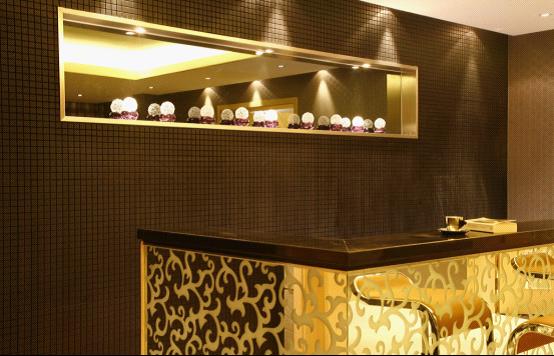
In hotel lighting environment, good lighting applications can make customers feel safety and comfortable, highlighting the quality and taste of the hotel and bringing about multiplier effects. Thus among all service industries, it is hotel and restaurant that have more strict requirements on lighting decoration.


In hotel lighting environment, good lighting applications can make customers feel safety and comfortable, highlighting the quality and taste of the hotel and bringing about multiplier effects.


Hotel lighting designs should be achieve different lighting effects, rendering different atmosphere via different lighting schemes in different areas. Mr. Zhen Zihao is an owner of a four-star hotel in the mainland. He shared his invaluable experience with us in the respect of hotel lighting design and decoration. In his point of view, different parts of the hotel should adopt different lighting decorative concepts to achieve different lighting effects. For example, the purpose of external wall lighting is to highlight the entire outline of the building during the night, reveal high taste styles, make it stand out from the surrounding environment. Of course, the final goal of this is to attract more customers, improving the occupancy rate. The three main areas of the hotel lobby should also present different features: the reception should show an atmosphere of welcome, elegant, expressive and infection. The major functions of the Services Desk are to meet the guest registration, checkout, and other operations, thus the lighting design in this area should be brighter. The guest lounge area should create a comfortable, casual, intimate atmosphere. There are no natural led high bay light in the hallway and elevator waiting area, thus a 24-hour lighting effect should be maintained within these areas. Lighting products used in these areas should be functional, comfort, secure, and also energy-saving, with long service life, etc..


Taken energy-saving and user-friendly into account, more and more hotels tended to use green lighting products. LED lighting technology is undoubtedly the most “well-known” green light sources. LED hotel lighting applications also became a hot topic in recent years. Driven by the need of energy saving, the development trend of hotel lighting industry will go direct to low-power applications and small size. LED hotel lighting applications provided such possibilities. Good-quality light sources gave designers more creating space. In the meanwhile, due to the development of LED technology, the future LED hotel lighting applications could also realize intelligent control.