The America Government decided to installed LED road lighting applications to reduce urban crime rate

The American Austin City Police Department and Austin Energy Board cooperated recently to provide more protections to their residents. Since 2011, the crime rate of Austin was significant increased. In order to control this phenomenon, these two institutions planned to installed LED road lighting applications at three most dangerous places in Austin.


The America Government decided to installed LED road lighting applications to reduce urban crime rate


Austin Energy spokesman Carlos Cordova announced that “criminals do not like to commit offenses in broad daylight and also in well-lit places. They do not want to be seen when they do bad things.”


According to the requirements of local Police Department, Austin Energy erected 25 pieces LED street lights in three “most dangerous places”. “LED lights are more energy efficient. That is the reason why at the same power consuming level, LED lights send out more light than other traditional lamps.” It has also been proved that, places that installed LED road lighting applications are much brighter than before. Cordova also said that “in good lighting environment, people can enjoy their recreational activities, need not to worry about security issues.”


The test results of the 8th and the 9th Avenue were really satisfactory. It seems that urban lighting projects also became one of a series of policies against urban crime. From 2011 to the early of 2012, the violent crime rate of Austin grew by 15%. But by July, 5 months after LED street lights have been installed, the violent crime rate only grew by 7.8%. The local government indicated that they were planning an even larger LED-technology involved city lighting project, in which around 70,000 pieces LED lamps will be updated. This project will still be conducted by Austin Energy and supported by the local government.


This new LED lighting products can reduce the crime rate effectively. Japan is the first country that applied this technology to reduce the exaggerated urban crime rate. At first, these lamps have been named as LED guard lights, gradually replaced traditional fluorescent lamps and were installed in narrow streets. Besides, it has been proved that blue-rays can make people calm down. Some LED guard lights would be made in blue light.


In the mean time, City of Pontiac, Michigan, USA also replaced some of their traditional road lamps with LED street lights. Totally 112 pieces LED street lamps (approximated $68,3800) were used.

Analysis of LED resin luminous words

Resin luminous words have several requirements for lighting sources:

1)       The complex constructions and various specifications of LED resin luminous words requested that the lighting source should have versatility.

2)       Since the maintenance of fully installed LED resin luminous words is extremely inconvenient, in order to reduce the maintenance cost, lighting sources should have longer service life than other lighting sources.

3)       LED resin luminous words should have sufficient brightness to be readable.


Resin luminous words have several requirements for lighting sources


Resin luminous words are mostly used in super-tine light-emitting advertising boards. Similar to other applications used for commercial purposes, resin luminous words usually need to maintain normal working conditions for a long time. In order to reduce the electrical cost, merchants were looking for lighting sources with longer service life and higher energy efficiency. LED resin luminous words emerged at this moment.


There are several things need to be noticed for using LED technology making resin luminous words in addition to the stability: setting beam angle according to the specific requirements; brightness and wavelength should within the allowed range. Only choosing right LED products in different specifications can guarantee the final effect and minimize the production cost at the same time.


Outdoor landscape LED lighting systems is a hot topic in the current society, which may impact the sustainable development of human. For the power-relied lighting industry, energy-saving green lighting technologies were always the followed direction. The birth of semiconductor green lighting sources has been considered as a great revolution in the lighting history. Gradually, semiconductor light emitting diodes (LED and order led ) transmitted from the special lighting market to the general lighting market, known by more and more people. They have good future. Among them white-ray LED lighting products have demonstrated huge performance advantages, strong momentum of development and rapid growth in market demand. LED lamps may probable become the mainstream in the lighting market in the next five years.


As one of the latest LED lighting sources, compared with other traditional lighting sources, white-ray LEDs can save more than 20% energy than the former and have much longer lifetime (100,000 hours, nearly 10 times longer than incandescent lights). In addition, they are more reliable, saving more costs in maintenance. Working under low DC voltage (no more than 5V) makes them portable. Therefore most emergency lights choose to use white-ray LEDs as lighting source.

Three development steps of LED ceiling panels

With the continuous innovation in LED lighting technology, LED gradually took place of some traditional lighting products both in the commercial area and in the industrial area. In many developed countries, LED has been treated as main lighting applications. LED ceiling panels, LED track lights, photonic crystal led ,LED bulbs, LED tubes and other LED indoor lighting applications have been widely used in some commercial places in where the over-expensive electrical bills were always a big trouble for managers. In this article, we will discuss about the three development steps of LED ceiling panels.


With the continuous innovation in LED lighting technology, LED gradually took place of some traditional lighting products both in the commercial area and in the industrial area.


First step: in the very early stage of development, LED was praised for features of high lighting efficiency (low power consuming) and long service life. But the over-expensive selling prices (high production costs) drove them apart from the residential market. Most of people still could not afford them. But during this period, LED ceiling panels began to attract the attention of commercial users. Compared with traditional lighting sources, LED lamps are more energy effective and more durable. Thus they are more popular among commercial applications.


In the second stage, LED lighting applications has been recognized and accepted by the lighting market, especially for LED ceiling panels. More features of LED lamps have been gradually prominent, like environmental protection, small size, high reliability, etc. LED manufacturers developed a series of products that completely different from traditional lighting sources, extending the developing space for the lighting industry. It was in this period that LED started to be recognized as the 4th generation lighting source. It made people realize that lighting sources did not only play the role of lighting tools any more, they were also a part of decorations of your house.


With the development of new technology (internet of things), as a semiconductor industry, LED will also catch a tour of such high-speed train and present the characteristic of high controllability. Form household decoration to office construction, from streets to tunnels, from assisted lighting tools to major lighting tools, LED ceiling lamps with intelligent control systems will bring more sophisticated services to us. Other LED lamps will complete the transformation from making products to design products, providing more comprehensive and more advanced solutions for us.

Brightness controlling design for LED street lighting products

At present, in the area of high-brightness LED street lighting drivers, there are two major solutions that widely used in the world: “special power chip” and “switching power supply with discrete electrical components”. In order to meet the needs of intelligentization, single chip microcomputers (SCM) are usually embedded into devices as the CPU. Thus both of these two solutions can be classified as “system supervisory + power controlled traditional multi-chip technology program”. However, this sort of sophisticated solution has a lot of disadvantages: multiple chips and complex constructions. When using on LED street lighting products that need to drive multiple LED strings with high brightness, this shortcoming is particularly prominent.


Brightness controlling design for LED street lighting products


The new Piccolo TMS320F2802x/3x MCU adapted the latest architecture technology and enhanced peripherals. The minimum package size is 38 pins, providing 32-bit real-time control functions for low cost LED street lighting products. The real-time control are usually embedded with intelligent devices, like solar micro-inverters, LED lighting applications light solution , large household appliances, hybrid board battery industry, automotive applications, etc. to realize the implementation of advanced algorithms, higher system efficiency and accuracy.


The Buck-type switching power supply is one of the most widely used power solutions. This type of power supply can make the entire system work in the continuous inductor current mode by choosing correct output inductor and switching frequency. LED lighting Demo based on TMS320F28027 fully adapted working principles of Buck-type switching power supplies, combined with multi-PWM channels (8 channels tops) and ADC modules (16 channels tops) to realize the closed-loop control of current.


This single-chip solution for high-brightness LED street lighting products combined system management and power supply control, dramatically reducing the complexity of hardware constructions and meanwhile improving the flexibility of driver circuit designs. LED street lighting products applied this solution can automatically control multiple parameters, like current amplitude, on-off period, on-off mode, ambient brightness and system temperature by changing the memory of CPUs. They have basic properties as below:


1)       Low cost – single-chip realize multiple constant current control, eliminating the need for a dedicated constant current chip, which effectively reduces the production cost.

2)       High efficiency – non-insolated power supplies, without any magnetic flux leakage loss causing by transformers. The overall efficiency can reach up to 95% at fully loaded.

3)       Strong driving ability – 8-channel non-isolated current driver output can drive 8 strings (not less than 14 chips per string). The total output power is not less than 100W.

Power consumption and costs control of multi-LED applications

In this article we will introduce to you an effective method to control the brightness and consequently the power consumption and costs of multi-LED applications. Providing each LED a PWM controller and converting input voltage to LED current via this controller is a traditional brightness control method for multi-LED applications. This application applied voltage-controlled PWM controllers. Usually, led pn junction  will be cascade with a current-sensing resistor, which will send feedback voltage signals to controllers. Basically, this type of controllers operated in the voltage mode and maintained the feedback voltage signal at a fixed value, stabilizing the internal current.


Power consumption and costs control of multi-LED applications


Using multiple RGB LEDs to generate white rays is a common application. In addition to red rays, green rays and blue rays, there will be 1-2 more LED chips that used to swift LED white rays into a certain tone. In order to simulate the proportion of red rays, green rays and blue rays in the white ray spectrum, working current for these three different types of LED chips will be fixed at a certain ratio by three controllers. Normally, the output green rays occupy 50-64% of total, 25-40% for red rays, and blue rays only account for 5-15%. In this way, at least three PWM controllers are needed, which increases the production costs virtually. Each controller provides power for each colored LED. In addition, the control system also needs to change the brightness of LED lamps by adjusting the load cycle of PWM controllers.


Another approach is applying single-current driver onto theses cascaded LED chips. The brightness of each LED chip is controlled by FET switches, which is connected with these chips in parallel. When FET is turned on, current will pass through it, stopping the parallel connected LED chip. On the contrary, switching off FETs will drive the current to pass through LED chips. Another system is responsible for the control of on-time ratio of LEDs in each clock cycle, including the three cascaded single-current controlled LEDs. The brightness of each LED will be adjusted by each FET. Compared with the three individual PWM controllers mentioned above, multi-LEDs with one PWM controller but multiple FETs will costs much less and save more power consumption. Removing each PWM controller will reduce the load dramatically and reduce the power consuming accordingly.

Nine tips for high quality LED bulb drivers

1)       High efficiency and less heat;

LED bulbs drivers are usually embedded within the lamp body, connected with LED chips. Thus the heat generated by LED chips and drivers will add up together, which make the cooling designs more difficult. In normally conditions, the heat generation and dissipation will be in a balance, which will be the working temperature of LED bulb. In the meanwhile, the working temperature of LED bulbs also determined the service life of them.


LED bulbs drivers are usually embedded within the lamp body, connected with LED chips.


2)       Power suppliers and long service life;

According to the bucket theory, the shortest plank decided how much water can this bucket hold. Power supplier is the shortest plank of LED lamps when judging its service life. Thus for many LED manufacturers, designing or choosing a right power supplier is significant for LED lights.


3)       Small current pulse amplitude;

Current pulse amplitude is another important parameter when judging the quality of LED bulb drivers. Normally, small current pulse amplitude can not only improve the quality of the illumination but also prolong the lifetime of this device, thus extending the life time of LED bulbs.


4)       Internal current with high frequency;

Current ripple with high frequency can reduce or even eliminate flickers, which will be captured by human eyes and cause damages. Certainly, high quality LED bulbs should not have substantial current ripple.


5)       High power factor;

Improving the power factor of LED bulb drivers can increase the energy efficiency of power grid, reducing invalid loss. At present, many countries have their own regulations for the power factor of electrical appliances, including LED lighting products. For example, according to the related standard of Germany, every electrical devices that imported into Germany should have a power factor larger than 90.


6)       Electrical isolation;

LED drivers are usually powered by the power grid, directly working under high voltage AC. While LED work under DC. Electrical isolation is necessary between them. Normally, designers will design isolated circuits between the input end and the output end of LED drivers.


7)       Protection;

Generally, LED derivers should have protection measures for over-temperature and over-current.


8)       Small size;

Generally LED bulb drivers are small sized, since only small drivers can be integrated built into LED bulbs.


9)       Low production costs;

Low costs will have good market performances, which is the universal law of the Chinese market and cannot be varied in the short term. LED companies must adapt this.

LED lighting source will change the style of indoor decoration

Lighting is always one of the key points in the residential decoration, a crowning touch at which housewives are hard working. Lighting sources are definitely the most important part of LED lamps. For example, most people would like to use crystal lights, thus energy-saving lamps are definitely not suitable for them. Because of the narrow spectrum and weak penetration of energy-saving lamps, it is very hard for them to present the glittering and translucent of crystal lamps. Thus housewives that loyal to crystal lights have to choose incandescent lighting sources, since the refraction of crystal can make incandescent light more bright and colorful. However, the exaggerated power consumption of incandescent lighting sources is also heartbreaking. In order to avoid expensive electrical bills, many housewives choose to shut off these lamps until guests’ visits. Spending a lot but obtaining a little, it is really an unspeakable feeling. These embarrassing situations have not been improved until the invitation of the LED lighting source.


LED lighting source will change the style of indoor decoration


LED lighting source have many advantages: long service life, good light penetration, high energy efficiency and environmental friendly. Most residential LED lights such as outdoor led spotlights are small sized. They brought new concepts to lighting designs.


In the past, lighting designers needed to consider of many factors during the designing process, like the translucent effect of lampshades, the artistry of lamps, the strength structure. In addition, they had to take into account of the spatial position of lighting sources and visual influences. Among these, it is the visual influences caused by lighting sources that drove designers crazy mostly. The light-emitting part of LED lamps is LED chips. Compared with the large sized lamp body, their size can be ignored (cooling maybe the only problem needs to be considered). That means the whole lamp body is equivalent to the lamp. Neither chips nor wires will bring no visual influences. Using LED lighting source, designers can only focus on the design of lamp bodies. The final results are much better than using energy-saving lighting sources or even incandescent lighting sources. In addition, designers also can choose to use multiple LEDs as lighting source, which provide more imagination space for them.


LED lighting source will change the style of indoor decoration and also the LED lighting market. Far-sighted LED producers should foresee this and prepare in advance.

Southeast Asia and Africa: emerging markets for LED lighting applications

In 2012, the gross market size of Thailand lighting market is approximate 250 million USD. The LED penetration rate is around 10%. It is estimated that by 2015, the penetration rate of LED lighting applications in Thailand market will increase to more than 45%. Currently, the Thailand Government is actively planning a series of city lighting projects by using LED lighting applications. A lot of local LED makers and LED manufacturers from other regions, especially from China and Taiwan have engaged into these projects. China’s LED companies mains led lighting with local certificate of origin can enjoy a zero tariffs when exported their products into Thailand. But lighting sources that exported to Thailand still need to provide the local certification.


Southeast Asia and Africa: emerging markets for LED lighting applications


Since most regions of Thailand have a tropical monsoon climate, hot and rainy, LED lighting applications that exported into this country should strengthen the protection of heat and moisture. LED manufacturers need also take into account of exporting LED emergency lights, LED flashlights and other portable LED devices to Thailand.


The Vietnam Government has recently announced a draft of “2011-2020 plan for the national urban development”, hoping to realize a 38% urbanization in the whole country in 2015. Thank to this draft, Vietnam has been considered as another emerging market for LED lighting applications in Southeast Asia. A large number of LED producers from the mainland and Taiwan region have entered into this market, promoting public lighting concepts and industrial lighting products.


In Africa, about 90% rural population is lacking of electricity supply. Small streets or country road are illuminated by nothing. Basic lighting market and municipal lighting market are the two most potential markets in Africa, waiting for development. For a long time, the lighting market of Africa has been in a low-level stage. They do not have many strict requirements in product performances and functions. Products with low production costs, basic lighting functions, longer service life and simple operation can fully meet the need of local markets. United Nations have launched a series of development lighting programs in Africa, supplying more energy efficient LED lighting applications to users from Africa. Off-grid solar LED lighting products, indoor and portable LED lamps, 1W-5W solar LED bulbs and LED emergency lights are very popular in African market.

Russia and India became the new export markets of LED lighting products

In 2012, the international LED lighting market was affected by the debt crisis in Europe. The global economy sustained a constantly sluggish state for a long time. Some large brand, like Philips, OSRAM, Toshiba poured into the European and American markets, directly leading to the death of many small and media sized LED factories there. For this part, the demand of the domestic market did not achieve a qualitative leap. Relatively, domestic LED manufacturers that are able to compete for key bids and special projects are much less than that of Europe and America. Export can only be treated as an emerging market for LED lighting products such as Mains led lights . The LED research department of the international research institution TrendForce indicated that many counties and regions except Europe and America has shown a clear upward trend in the demand for LED lighting products, including Russia, Thailand, Vietnam, India, Africa, etc, which provided more development opportunities for LED industry both in the mainland and Taiwan region.


Russia and India became the new export markets of LED lighting products


For a long time, Russia has enjoyed a rapid increasing penetration rate in the LED lighting market. It is estimated that the proportion of Russian LED lighting market will be 1% – 5% by the year of 2015. Energy efficiency and optimization of electricity consumption are two main reasons for the stable and rapid development of LED lighting industry in Russia. By 2014, the entire Russian lighting market size will reach up to about 600 million euros, more than half of which will be in commercial area. Other parts are from public lighting applications and outdoor lighting applications. Russia has joined into the WTO, the declination of import tariffs will inevitably lead to the large amount importation of LED lighting products from other countries and regions, and consequently, expanding the profit margin of LED corporate in Russia.


More than 80% lighting products used in India are from the mainland, including traditional lighting products and LED lighting products. The India Government is planning to improve the proportion of LED lighting systems in public lighting projects and other outdoor lighting applications. It is estimated that until 2015, the compound annual growth rate of the LED lighting market in India will reach 41%.

Cheap LED Lights: How cheap on earth can make customers satisfied?

At present, LED manufacturers should meet the demand of LCD panel producers and LCD TV manufacturers, and meanwhile, the demand of LED backlighting producers. In order to deal with these situations, LED manufacturers speeded up the pace of cutting off costs and improving performances. In addition, they were also committed to increase productivity. They have the same goal: produce Cheap LED Lights to attract more consumers.


Cheap LED Lights: How cheap on earth can make customers satisfied?


In Japan’s LED lighting industry market, the cost-cutting target in 2014 of LED lighting applications was 0.5 yen/lm. The current cost is around 1-1.5 yen/lm. Originally, the government and Japan’s LED manufacturers planned to realize this target within 3 years, now reduced to 2 years. Thus, prices of LEDs will gradually be consistent with the LCD panel industry. In the aspect of performance, the government and related manufacturers planned to realize 200lm/W in 2014. At the current rate of development, this target can very likely be realized in advance.


Some experts expressed their support to the promotion of cheap LED lights. In their opinion, thank to the increasingly intense competitions among established LED makers and new-born LED producers, the trend of production costs dropping and performance improving “pushed” the entire LED lighting market into a larger virtuous circle.


For example, the current average price of LED bulbs is less than 4000 yen. If this price can keep pace with the dropping speed of LED chips, it is estimated that in about 2 years, the average price of LED bulbs will drop by half, which will definitely make LED bulbs completely take place of traditional filament bulbs and other energy-saving bulbs and become the dominate products in the residential lighting market.


In order to further occupy the lighting market, many LED makers began to invest in new technologies. Chips, phosphor and packaging, a lot of technologies that used on LED lighting applications has been improved at different levels.


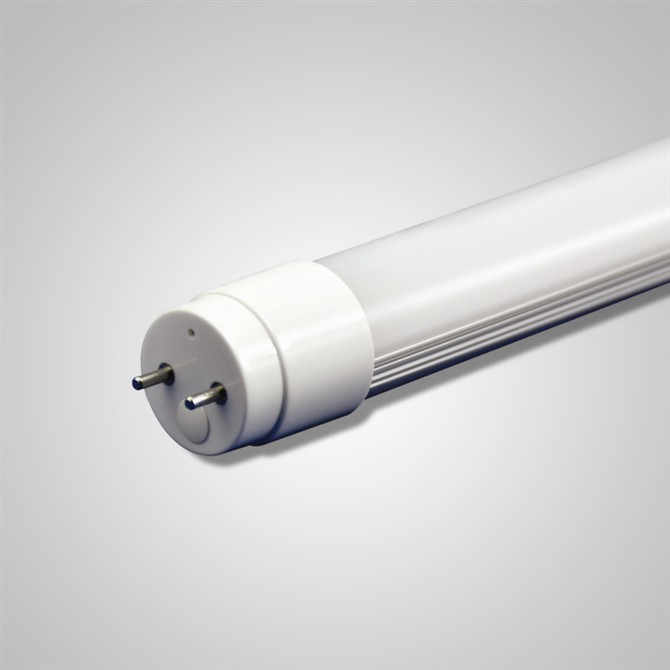
However, in the aspect of economy, fluorescent LED (straight) tubes are far less valuable than traditional fluorescent lights. But this condition may probably be changed due to the estimated outburst of LED lights (costs reduction and improving performances) in 2014. Although the initial production costs of LED tubes are much higher than traditional fluorescent tubes, in consideration of the other aspects, like service life, power consumption and environmental production factor, customers may probably choose the former rather than the later.