Advantages of LED car lighting applications

In spite of various problems, such like expensive costs, heat dissipation problems, technical difficulties, automotive manufacturers still strived to introduce LED car lighting applications. The main reason is this new lighting source can unprecedentedly make vehicle lighting design more flexible. It is even possible for consumers to customize their automotive style. In addition, the light efficiency of LED lights has already been able to match with HID lamps. Therefore, it is highly hopeful that LED can surpass other existing lighting technology and dominate car lighting market.


In spite of various problems, such like expensive costs, heat dissipation problems, technical difficulties, automotive manufacturers still strived to introduce LED car lighting applications.


According to the product manager of Cadillac Escalade Platinum, the light distribution spectrum of LED is closed to natural light, making the reflecting efficiency from objects (such as road traffic instruction signage / line) be much higher than other lighting sources. Thus drivers can observe from a far distance and we take an early respond.


The temperature color of LED car lighting applications is around 5500K-6000K, whiter than other car lamps (HIP lamps that send out light blue rays have temperature colors around 4000K and halogen lamps send out yellow rays have temperature colors around 3000K). Therefore, in the optical design of HID lamps, scientists usually shifted the blue rays in the spectrum to the edge of emission spot, which places drivers rarely took notice of, in order to reduce the uncomfortable interference caused by colored rays.


But for oncoming drivers, still will be interfered by Blue-rays in the marginal area, causing dazzling and consequently increasing the risk of accidents. In the anti-glare aspect, high-power LED lamps (large LED lamps) have big advantages: not only provide sufficient comfort for the owner, but also keep nearby drivers from visual interference. Since Toyota Lexus applied different lighting sources on dipped headlights (LED lighting technology) and high beam lights (halogen lighting technology), owners of LS600h may interfered by color difference during the switching.


In a word, according to Mr. Asif Anwar from the marketing research and consulting department of Strategy Analytics: although LED car lighting applications are in the very early stage of development, the market has huge potentials. It is expected that, by 2012, the market of LED car lamps will reach up to 80 million dollars. LED will become the new darling of the automotive lighting industry due to its advancing in security, reliability, energy efficiency and ease of aesthetic design.

Cooling problems is a large challenge of LED car lights

Normally, the light efficiency (photoelectric conversion rate) LED lights is no less than 80lm/W, but the light efficiency of HID lamps can reach up to 90lm/W, halogen lights have even higher light efficiency 201lm/W. According to a recent report, the latest LED technology can increase the light efficiency into a higher level of 161lm/W, which was treated as a breakthrough of LED lighting technology. It is also estimated that in the next 3-5 years, LED light efficiency can be improved by 50% within the same power consuming range. This will not only means that LED lamps will be brighter, but also consumed much less power.


It is also estimated that in the next 3-5 years, LED light efficiency can be improved by 50% within the same power consuming range.


However, lamps with higher light intensity will generate more heat. And the compact arrangement of LED car lights will exacerbate this problem. Even as semiconductor, LEDs produce much less heat than halogen lamps and HID lamps do. But the problem is, heat generated by halogen lamps and HID lamps is usually in the outside of lamps while the tiny heat generated by LED devices is concentrated within chips. Special cooling sections need to be used to conduct all these heat outwards.


Even ignorable heat concentrating onto the small-sized chips still dramatically increases the LED chip temperature due to the limited thermal capacity. The working temperature of LED should keep under 150℃. One solution for this problem is: using multiple LED chips within on lamp, reducing the thermal generation of single chip. Then arrange them in a relatively large space to help dissipating heat. It is an approach that adopted by Koito on Toyota Lexus LS600h series.


According to one manager of Hella, thermal dissipation is one of the most difficult parts of virtual design of LED car lights. The usual process is evaluation and optimization through related simulation software. The selection of simulation package must base on a large amount of experiment results. Challenges from thermal dissipation not only from heat conduction (transfer all heat outwards through “hot pool”), but also ventilation problems. Obviously, natural ventilation is far less enough, so designers from Hella decided to use built-in fans.


Valeo applied another set of thermal management strategy: they set a safe working mode for LED car lights. When the temperature raise to a predetermined value (alert), the control system will automatically turned into the safe mode by cutting the power by 20%. This will cause tiny influence to the brightness of LED lamps, but can effectively maintain the working temperature in a normal level.

The main LED providers for famous auto brands

Audi R8 received widely note due to the LED lighting products in the entire car. Lumileds and Osram are two major LED providers for them. Cadillac EscaladePlatinum is the first SUV that used LED as headlights. After the initial development stage, like technology validation, concept car show, etc. vehicle LED lighting products have stepped into the final stage before getting into the market. The landmark event: Toyota Lexus LS600h is the world’s first listed automobile that applied LED lamps, but only for dipped headlights, high beam lights still used halogen lamps.


Audi R8 received widely note due to the LED lighting products in the entire car. Lumileds and Osram are two major LED providers for them.


Exporters denied the possibility that LED head lamps will become the dominate vehicle innovative technology immediately. They believed that even if the cost of LED lights would drop continuously in accordance with Moore’s Law, it still will cost them a long time to get to the same price level with HID lamps. Not to mention halogen lights.


In Mr. Fischer’s (CEO of Hella) words, vehicle LED lighting applications shared only a few percent lighting source market. Many LED providers have indicated interest in large quantity modes, such as GM/Chevrolet Ministry Malibu models. However, LED still needs to overcome a series of technical and cost problems to become high-volume suppliers to large quantity modes, like Malibu.


The market pace of LED was indeed slower than originally expected in 2004. It is predicted in 2004 that LED automobile lights would rush into market quite near. Obviously, the current situation is not the case. Experts believed that it is the expensive costs that keep LED from market. The technical performance is always the biggest challenging problem which needs to be overcome. In terms of current technology, the light intensity of single LED source is insufficient. This the main reason for the souring costs of vehicle LED lamps. Reduction of lighting sources of LED car lamps will contribute to enlarging space of automobile and making the design and arrangement more flexible, simplifying the installation and reducing production costs.


At present, there are several major LED providers for vehicle LED lighting applications: LED light sources equipped on Cadillac Escalade modes were produced by Osram, while Koito’s LED lamps were from Nichia, these lamps were mostly installed in Toyota’s LS600h models; LED lamps used on Audi R8 came from Lumileds.

The route of China’s LED lighting industry: from vehicle lighting to residential lighting

The development of the industry benefited from the market, an invisible hand promoted them into the currently large market. According to the plan of the Ministry of Science and Technology, among “125” major scientific and technological projects, two are related with LED lights technology.


The route of China’s LED lighting industry: from vehicle lighting to residential lighting


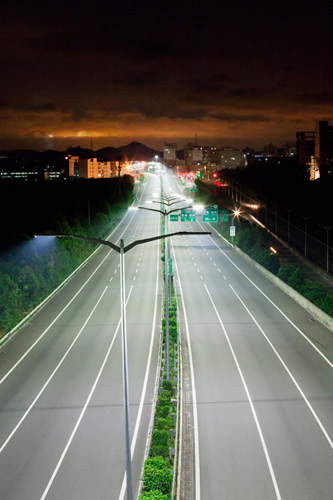
The market demand drove the development of LED. However, in the promotion of scientific and technological applications, the Ministry of Science and Technology has played an important role. The best known “ten cities and thousands lamps” project was implemented in 2009. In this project, more than 1.12 million pieces LED street lamps have been installed in 21 pilot cities, including Tianjin, Xi’an, Xiamen, etc.


China’s LED lighting industry is a rapid growth. After 7 major semiconductor lighting industrial bases established in Dalian, Yangzhou, Shanghai, Nanchang, Shenzhen, Xiamen, Shijiazhuang, the China Government set up another six bases in Tianjin, Hangzhou, Wuhan, Dongguan, Xi’an and Ningbo in succession. In the mean time, many local governments have also laid down a series of regulations to help fostering local LED industry. Currently, there are four basic LED industrial area in China: the Bohai Sea region, the Pearl River Delta region, the Yangtze River Delta region, Jiangxi and Fujian region.


Mr. Ren Zhang, secretary-general of China Building Decoration Association indicated that the market size of the LED industry in China will reach up to 500 billion yuan in the next five years. LED lighting products have been widely used in many areas, from vehicle lighting to residential lighting, from urban landscape lighting to decoration lighting. The entire market has huge potentials.


In the recent held economic seminar of China’s green lighting industry, Mr. Jinshou Xu (the executive vice president of Chinese Semiconductor Industry Association) indicated that: according to the published research report from Lighting Industry Alliance in 2010, the total output value of China’s LED lighting industry is around 120 billion yuan, in which 90 billion yuan came from LED applications, 25 billion yuan were from LED chip packaging industry. 5 billion yuan were from epitaxial silicon industry. He also pointed that the current LED industrial bases have not formed the mode of industrial cooperation, without a completed industry chain. Different provinces or regions have different standards. Competitions have the entire market be in a state of chaos.

The feasibility and advancement of LED car lighting applications

As the 4th generation lighting source, LED car lighting applications are feasible and advanced than other traditional car lights. In this article, we will discuss about the current situation of LED lights applied in automobile industry.


As the 4th generation lighting source, LED car lighting applications are feasible and advanced than other traditional car lights.


Vehicle lighting industry was emerged in the early of 20 centuries. Kerosene lamps and acetylene lamps were two oldest lamps that used in cars. After the invention of electricity in 1910, incandescent lamps, halogen lamps and high-intensity discharge lamps (HID) became the main vehicle lighting products in succession. Since 1985, LED lighting technology started to emerge in a verity of vehicle lighting applications and meanwhile the LED used Adaptive Front Lighting System (AFS).


Currently, LED has been made used of by many vehicle manufacturers: BWM, Ford, Honda, Toyota, Mercedes-Benz, Audi, etc.. In order to improve the overall competitiveness, they have launched new cars with applications of vehicle LED lights.


LED car lighting applications have many advantages: 1) longer service life, better anti-vibration capability. In theory, LED can maintain a normal work for more than 50,000 hours, the practical working time is no less than 20,000 hours (still longer than the that of traditional halogen bulbs, which can continue to work about 150 to 500 hours). That means, LED lights have longer service lives even than cars themselves. Besides, there are no moveable compartments within the entire structure of LED car lighting applications, giving them a much better anti-vibration capability. 2) Environmental friendly. LED can obtain sufficient luminous flux under low voltage and low current, consuming only 10%-20% energy of other traditional lamps, no health-hazard mercury, there is no environmental pollution during production and recycling. 3) Fast respond. Unlike incandescent lamps, the respond time of LED lamps has reached tens of nanoseconds. Thus LEDs are more competent in vehicle tail lighting applications, which can speed up the respond of the follow-up driver. 4) Small size. Compact LED can diversify the automotive-style design, and consequently make the model more stylish. Compared with traditional lamps, the installation depth of LED signal lighting system can decline by 80mm, which is rather significant for the layouts of internal compartments.


At present, the automotive industry is still the pillar industry in the global economy, and in the phase of rapid development. There is no doubt that all this will drive the development of vehicle compartments, including LED car lighting applications.

LED industrial Park will be built in Russia

Recently, Shanghai Cooperation Organization Entrepreneur Committee (SCOEC) announced a large plan on the energy-saving project meeting held in Moscow, in Russia. China will build a “LED industrial Park” in Russia. The initial estimated cost of this project is 500 million US dollars. And the estimated output value after completion is over 1.5 billion yuan. This industrial park was planned by Shenzhen Semiconductor Lighting CO., Ltd.. Other domestic LED lights companies treated this plan as one of typical projects for exploiting LED lighting market in foreign countries.


Recently, Shanghai Cooperation Organization Entrepreneur Committee (SCOEC) announced a large plan on the energy-saving project meeting held in Moscow, in Russia.


It is understand that in the first phase of this project about 10 manufactures from Shenzhen will take part into. After the industrial park, they planned to establish production bases for LED products, directly facing Russia market and markets of other Shanghai Cooperation Organization member states. It is estimated that the entire project will cover an area of 50-100 hectares, with plants, research laboratories, supporting residential and basic infrastructures. Companies in the LED industrial Park includes LED packaging, indoor/outdoor lighting applications, LED displays and other application areas.


Compared with other overseas market, companies from Shenzhen are more like to invest their money into Russia market, as a result of the closed economic and trade relations between Shenzhen and Russia. In accordance with statistics, Shenzhen is the 11th largest trading partner and the 10th largest export market. In 2011, the import and export volume between Shenzhen and Russia is around 2.91 billion US dollars, with an annual growth rate of 12.3%, in which, exports volume is 2.66 billion US dollars, with an annual growth rate of 30.9%.


In the mean time, Russian State Duma adopted “Law of Energy Conservation and Efficiency Improvement” also made Shenzhen LED companies keen on Russia lighting market. According to this law, since 1st January of 2013, incandescent lamps with power consumptions larger than 75W (75W included) will be banned in Russia. Since 2014, incandescent lamps with power consumptions larger than 25W (25W included) will be banned in Russia. This means Russia will become a large market of LED lighting facilities in near future.


Currently, there than more than 700 companies in Shenzhen are engaged in semiconductor lighting technology and product development, occupying nearly 50% of the country industry. LED industrial Park will become a big step for them to enter foreign markets.

Installation notes of LED underwater lights

LED underwater lights are based on LED lighting technology. Compared with traditional underwater lamps, LED underwater lights can save more energy, have longer service life, more environmental friendly, have more color modes and more powerful in decoration. These lamps have been widely used in all kinds of underwater landscape lighting systems. Different from other LED lights lamps, since LED underwater lights have to be used underwater, there are some installation notes need to be taken noticed.


LED underwater lights are based on LED lighting technology. Compared with traditional underwater lamps, LED underwater lights can save more energy, have longer service life, more environmental friendly, have more color modes and more powerful in decoration.


1)       LED underwater lamps should work under DC (constant-current power suppliers). Under the control of constant-currently power suppliers, the forward potential of LED wall washer lights, LED flood lights, LED underwater lights, LED buried lights will be declined with growth of working temperatures. In fact, this situation exerts very tiny impact on underwater lamps. However, using constant-voltage drivers will lead to an opposite condition: the chip temperature will increase with the rise of current, even destroy the lamps in some series cases. Therefore, LED underwater lamps should use constant-current power suppliers. Besides, the working voltage (input voltage) should reach the rated voltage given by user manuals. Too high will cause damages while too low cannot get the wanted lighting effect.

2)       Anti-static measures are necessary. Anti-static measures need to be taken in the process of LED underwater lights’ installation, such like operation table should be connected with ground; workers should wear anti-static suits during the operation (anti-static rings, anti-static gloves); install anti-static ion fans in the operation room (if necessary); and meanwhile maintain the air humidity of installation around 65% to avoid the static electricity caused by the dry air. Besides, different LED components have different anti-static capability. Good-quality LEDs are more powerful in the anti-static aspect.

3)       Notice the tightness of LED products. No matter what LED lamps are used, outdoor lights should have a certain level of water-proof and dust-proof functions. Same for LED underwater lights. There is no doubt that these lamps need the best water-proof capability (with an IP level of 67 at least). According to the IP standards, the water-proof capacity of lamps can be divided into 8 levels: level 6—splashing level; level 7—watertight level; level 8—inflating watertight level. A poor sealing will directly impact the performances of these lights. A underwater lamp used in deep water must meet the requirements of level 8 of water-proof standards.

The Korea Government planned to develop domestic LED lighting industry

The South Korea Government planned to increase the penetration rate of LED lighting applications to 60% in two stages. This plan was announced in “2060 LED lighting plan” in June of 2011. This is another developing plan for LED lighting industry after “LED lighting 15/30 universal plans”, the initial object of which is 30% penetration rate in 2015. In accordance with the research report of Ministry of Knowledge Economy (MKE), the penetration rate of LED lighting products in Korea is only 2.5%.


The Korea Government planned to develop domestic LED lighting industry


In order to accelerate the popularization of LED lights lamps domestically, the Korea Government not only published the explicit process of popularization of LED lighting industry, but also established the public market to stimulate the demand of LED lamps. They did a lot of work in this area, especially in the promotion of policies and mechanisms. The Korea Government had a great deal of experience in this part: Firstly, they stimulated the demand; Then they focused on the application ability of enterprises; Finally, they laid stress on sustainable development and set up four centers to integrate industrial development, such like agriculture, automobile industry, etc.. In addition, the Korea Government continued to promote the “industrial giant” strategy, providing sufficient fund to competitive enterprises in LED lighting industry through the co-operation with banks. This made large enterprise groups become not only the main body of production and operation, the backbone of foreign trade, but also the core strength of capital introduction, information collection and technology development. The Korea Government mostly would concentrate on drive the market through applications. In the early stage of high-tech industry, the Korea Government usually took the domestic market as the test field. It is an essential point for domestic high-tech products to enter the international market.


In “2060 LED lighting plan”, South Korea put forward the object of “been one of the top three market of LED lighting industry” and become the top one market by 2020. In one hand, the government and competitive enterprises are co-operating to promote LED products domestically. On the other hand, it is actually the medium and small sized companies that constituted the main force of their lighting industry. Under the circumstance of lacking of competitive technologies, these companies planned to pay more attention on the research and development of LED core technologies and applications. Currently, there are more than 890 companies that undertake LED lighting business in Korea.

LED backlighting TVs are more popular in the USA

According to the preference research report published by ISH iSuppli, in America, the purchased rate of LED backlighting TVs surpassed that of CCFL backlighting TVs for the first time in the TV set market.


According to the preference research report published by ISH iSuppli, in America, the purchased rate of LED backlighting TVs surpassed that of CCFL backlighting TVs for the first time in the TV set market.


In the 4th quarter of 2011, the proportion of LED backlighting TVs is reach up to 54%, far exceeded the 22% of 3rd quarter. And consequently, the proportion of CCFL backlighting TVs’ selling ratio dropped from 56% (3rd quarter) to 25% (4th quarter).


LED backlighting and CCFL backlighting are two major backlighting LCD TV technologies. Compared with CCFL, LED is a new-developed technology, less power consumption, longer service life, more environmental friendly, without mercury or lead. Meanwhile, LED backlighting can generate brighter white rays and have wider range of contrast.


The latest survey results showed that American buyers are more familiar with TV technology. Researchers would randomly select 45,000 subjects from more than 2 million American families, and kept record for these families. For many years, LCD has been dominant in the field of television. Even after the wide publicity of LED technology, buyers were not even aware of LED lights market information in a very long time.


By 2011, prices of LED backlighting TVs dropped sharply. Exhibitions facing to terminal buyers (retail channels) had an obvious sign of transformation. In the 4th quarter of 2011, the average price of 42 inch (1080p, 120Hz) LED TVs is $ 862, while the average price of CCFL LCD TVs with same specification is around $ 755. But in 2010, the prices are $ 1049 and $ 800 relatively.


LED backlighting TVs and CCFL backlighting LCD TVs shared approximately 90% of the entire TV market, the rest 10% was occupied by plasma TV without any backlighting technology. The continuous declination of LCD TV set prices, plus the unsatisfactory specifications of plasma TVs making the exit of plasma TVs a foregone conclusion.


For those who prefer LCD TVs, the price is still the major consideration, picture quality and screen size also became an increasingly important factor that impacts the purchasing decisions. According to related reports, among various retailers, Amazon and Costco achieved the highest score among all LCD TV retailers. It is also reported that consumers are tending to turn to online retailers to purchase high-quality and large-sized TV sets.

NASA intended to develop LED space lights

NthDegree Technologies Worldwide Inc. is a new-built company located in Arizona which is specialized in lighting applications, solar energy and soft semiconductor. Recently, this company announced a contract signed with the National Aeronautics and Space Administration (NASA) to be responsible of developing “low mass, low power” lighting sources. NthDegree decided to apply their new-developed innovative semiconducting ink into this lighting technology and named it as Nth Light. Currently, NASA is conducting a series tests to Nth Light to assess the safety of this technology. See if it can meet the security requirements of space navigation.


NthDegree Technologies Worldwide Inc. is a new-built company located in Arizona which is specialized in lighting applications, solar energy and soft semiconductor.


NthDegree proclaimed that they have just invested a new technique which can transfer semiconducting ink onto bases. According to the disclosed information, this semiconducting ink includes functional components, like diodes and transistors made by traditional wafer.


NthDegree also reported the solid-state lighting (SSL) devices in the SID conference held in June this year. This device can produce and disperse micro LED lights within adhesives on the edge of standard InGaN.


It is also proclaimed that this technical method can form economies of scale. According to one researcher of NthDegree, a flexographic press with a width of 60cm, if this machine can print 75m per one minute and can work 20 hours each day, after a continuous work of 300 days, the consumed energy is equivalent to 250 million A-19 bulbs. Since costs by using this new technique are really low, the company indicated that the retail price should be similar to the existing CFL bulbs. It is said that some functional electronic devices can be manufactured by this printing technology without considering the packaging process of electrical components. Components printed directly onto substrates can also enable manufacturers to design more powerful lighting devices. They are planning to create LED space lights by using this printing technology.


NthDegree has attached related information of panel lights (60cm x 120cm) on its website. The average luminous flux is around 5,000lm, equipped with 100W power suppliers. This type of panels (used semiconducting ink technology) was developed to replace traditional fluorescent lamps, which have higher lighting efficiency and have a wider range of color temperatures. The average service life is larger than 50,000 hours. It is announced that in the next 10 years, this company will concentrate on the research and development of LED space lights.