The Korea Government planned to develop domestic LED lighting industry

The South Korea Government planned to increase the penetration rate of LED lighting applications to 60% in two stages. This plan was announced in “2060 LED lighting plan” in June of 2011. This is another developing plan for LED lighting industry after “LED lighting 15/30 universal plans”, the initial object of which is 30% penetration rate in 2015. In accordance with the research report of Ministry of Knowledge Economy (MKE), the penetration rate of LED lighting products in Korea is only 2.5%.


The Korea Government planned to develop domestic LED lighting industry


In order to accelerate the popularization of LED lights lamps domestically, the Korea Government not only published the explicit process of popularization of LED lighting industry, but also established the public market to stimulate the demand of LED lamps. They did a lot of work in this area, especially in the promotion of policies and mechanisms. The Korea Government had a great deal of experience in this part: Firstly, they stimulated the demand; Then they focused on the application ability of enterprises; Finally, they laid stress on sustainable development and set up four centers to integrate industrial development, such like agriculture, automobile industry, etc.. In addition, the Korea Government continued to promote the “industrial giant” strategy, providing sufficient fund to competitive enterprises in LED lighting industry through the co-operation with banks. This made large enterprise groups become not only the main body of production and operation, the backbone of foreign trade, but also the core strength of capital introduction, information collection and technology development. The Korea Government mostly would concentrate on drive the market through applications. In the early stage of high-tech industry, the Korea Government usually took the domestic market as the test field. It is an essential point for domestic high-tech products to enter the international market.


In “2060 LED lighting plan”, South Korea put forward the object of “been one of the top three market of LED lighting industry” and become the top one market by 2020. In one hand, the government and competitive enterprises are co-operating to promote LED products domestically. On the other hand, it is actually the medium and small sized companies that constituted the main force of their lighting industry. Under the circumstance of lacking of competitive technologies, these companies planned to pay more attention on the research and development of LED core technologies and applications. Currently, there are more than 890 companies that undertake LED lighting business in Korea.

LED backlighting TVs are more popular in the USA

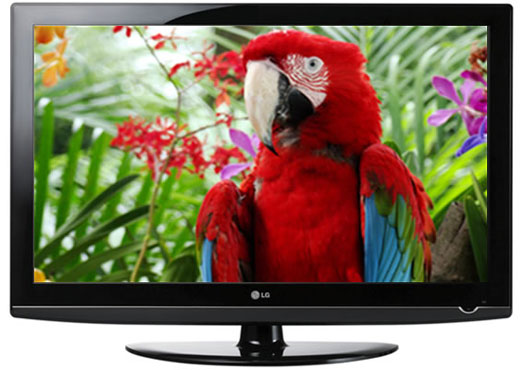
According to the preference research report published by ISH iSuppli, in America, the purchased rate of LED backlighting TVs surpassed that of CCFL backlighting TVs for the first time in the TV set market.


According to the preference research report published by ISH iSuppli, in America, the purchased rate of LED backlighting TVs surpassed that of CCFL backlighting TVs for the first time in the TV set market.


In the 4th quarter of 2011, the proportion of LED backlighting TVs is reach up to 54%, far exceeded the 22% of 3rd quarter. And consequently, the proportion of CCFL backlighting TVs’ selling ratio dropped from 56% (3rd quarter) to 25% (4th quarter).


LED backlighting and CCFL backlighting are two major backlighting LCD TV technologies. Compared with CCFL, LED is a new-developed technology, less power consumption, longer service life, more environmental friendly, without mercury or lead. Meanwhile, LED backlighting can generate brighter white rays and have wider range of contrast.


The latest survey results showed that American buyers are more familiar with TV technology. Researchers would randomly select 45,000 subjects from more than 2 million American families, and kept record for these families. For many years, LCD has been dominant in the field of television. Even after the wide publicity of LED technology, buyers were not even aware of LED lights market information in a very long time.


By 2011, prices of LED backlighting TVs dropped sharply. Exhibitions facing to terminal buyers (retail channels) had an obvious sign of transformation. In the 4th quarter of 2011, the average price of 42 inch (1080p, 120Hz) LED TVs is $ 862, while the average price of CCFL LCD TVs with same specification is around $ 755. But in 2010, the prices are $ 1049 and $ 800 relatively.


LED backlighting TVs and CCFL backlighting LCD TVs shared approximately 90% of the entire TV market, the rest 10% was occupied by plasma TV without any backlighting technology. The continuous declination of LCD TV set prices, plus the unsatisfactory specifications of plasma TVs making the exit of plasma TVs a foregone conclusion.


For those who prefer LCD TVs, the price is still the major consideration, picture quality and screen size also became an increasingly important factor that impacts the purchasing decisions. According to related reports, among various retailers, Amazon and Costco achieved the highest score among all LCD TV retailers. It is also reported that consumers are tending to turn to online retailers to purchase high-quality and large-sized TV sets.

NASA intended to develop LED space lights

NthDegree Technologies Worldwide Inc. is a new-built company located in Arizona which is specialized in lighting applications, solar energy and soft semiconductor. Recently, this company announced a contract signed with the National Aeronautics and Space Administration (NASA) to be responsible of developing “low mass, low power” lighting sources. NthDegree decided to apply their new-developed innovative semiconducting ink into this lighting technology and named it as Nth Light. Currently, NASA is conducting a series tests to Nth Light to assess the safety of this technology. See if it can meet the security requirements of space navigation.


NthDegree Technologies Worldwide Inc. is a new-built company located in Arizona which is specialized in lighting applications, solar energy and soft semiconductor.


NthDegree proclaimed that they have just invested a new technique which can transfer semiconducting ink onto bases. According to the disclosed information, this semiconducting ink includes functional components, like diodes and transistors made by traditional wafer.


NthDegree also reported the solid-state lighting (SSL) devices in the SID conference held in June this year. This device can produce and disperse micro LED lights within adhesives on the edge of standard InGaN.


It is also proclaimed that this technical method can form economies of scale. According to one researcher of NthDegree, a flexographic press with a width of 60cm, if this machine can print 75m per one minute and can work 20 hours each day, after a continuous work of 300 days, the consumed energy is equivalent to 250 million A-19 bulbs. Since costs by using this new technique are really low, the company indicated that the retail price should be similar to the existing CFL bulbs. It is said that some functional electronic devices can be manufactured by this printing technology without considering the packaging process of electrical components. Components printed directly onto substrates can also enable manufacturers to design more powerful lighting devices. They are planning to create LED space lights by using this printing technology.


NthDegree has attached related information of panel lights (60cm x 120cm) on its website. The average luminous flux is around 5,000lm, equipped with 100W power suppliers. This type of panels (used semiconducting ink technology) was developed to replace traditional fluorescent lamps, which have higher lighting efficiency and have a wider range of color temperatures. The average service life is larger than 50,000 hours. It is announced that in the next 10 years, this company will concentrate on the research and development of LED space lights.

Introduction of LED underwater lamps

As the name implies, LED underwater lamps are a type of lamp that used in the water. Most of them are delicate and cabinet, beautiful but simple design. Much similar with buried lamps, but LED underwater lamps have additional chassis which are usually fixed by screws on the bottom. Since this type of lamps are used underwater, they are generally made of stainless steel, 8-10mm tempered glass, waterproof connectors, silicone rubber seals, multi-angle refraction tempered glass, having following features: water-proof, dust-proof, insulated, anti-corrosive.


As the name implies, LED underwater lamps are a type of lamp that used in the water.


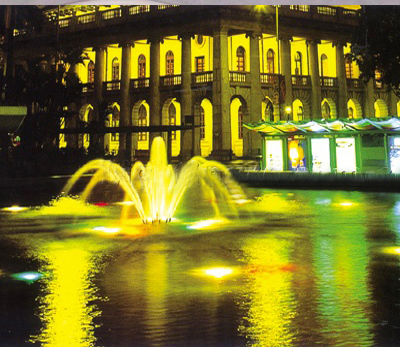
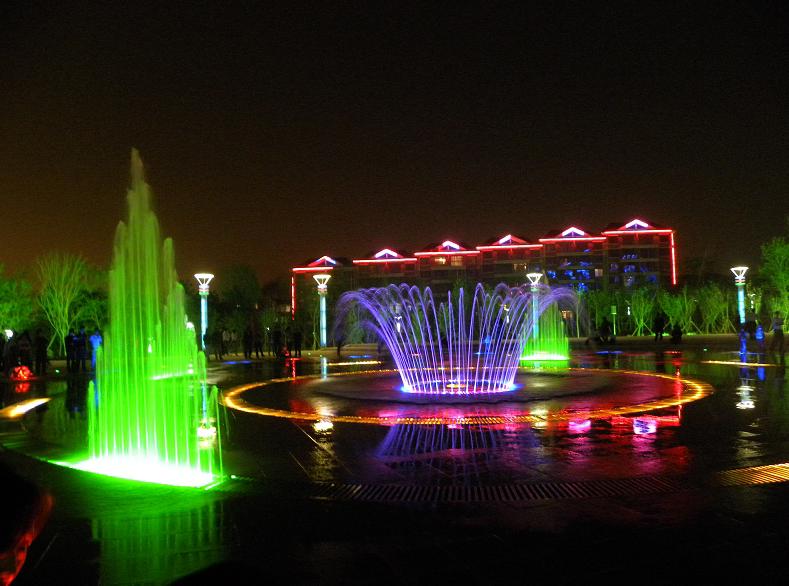
LED has been named as the 4th generation lighting source or green lighting source, save more energy, more environmental friendly, longer service life, smaller size. After turning on the power, LED underwater lamps can emit multi-color rays (combinations of red/blue/green rays). In most cases, they will be installed in theme parks, fountains and exhibitions as decoration lights. There is no doubt that LED underwater lamps are perfect choices for commercial and artistic lighting. in order to have the cooling section work in the normal conditions, they had better be completely used underwater.


In order to achieve a good waterproof effect, generally LED underwater lamps have an IP level no less than 67, can maintain a normal work after being placed 5 meters from the surface of the water. The best beam angle is 25DEG. Synchronized controllers will be connected to the DMX console. Every single unit will set an independent address which will be read by the directly connected decoder. Red, green, blue light is composed of 3 relevant DMX channels. There are two control methods: internal control and external control. Internal control (without any outward connected controllers) can have multiple embedded modes (maximum six), while external control needed to connect external controllers to change the color of light. Most of currently used control method is external control.


LED lighting sources of LED underwater lamps have an average service life of 100,000 hours. Every lamp consists of 366 pieces of LED lights chips (120 pieces emit red rays, 120 pieces emit blue rays and 120 pieces emit green rays). Good source materials can extend the service life of lamps and obtain the best lighting effect.


A piece of five-core wire connects each lamp with the control system. The entire control system includes one DMX console, one distribution box and underwater lamps.

LED industry development should be technologically innovated

The disadvantage of the current semiconductor lighting listed as follows:

1, the light efficiency of the high-power LED industry applications is low.
the emitting efficiency for the commercialization of more than 3 watts power light emitting diode light is low, which is lower than the high intensity discharge lamps with the luminous efficiency of more than 100 lumen’s per watt, also lower than the rare earth tricolor fluorescent in more than 60 lumen’s per watt. Semiconductor lighting is energy-saving just setting up within the small power range. When the semiconductor light being the high-power lighting with the current technology does not save much power,but the initial investment cost will be high.

LED industry development should be technologically innovated
2, The price of high-power LED panel is very high. At present, the market price of the 1watt power white LED is about ten times compared with the price of the traditional light sources.
3, Because the luminous efficiency is low, the input energy shift into heat energy. LED cold light source is just the light itself, but the resistance heat generated by the large current in a semiconductor material will still make the LED to produce a higher temperature. Light emitting diodes produced by the semiconductor materials cannot bear high temperature and overheating will make the life decreases substantially. Using the radiator will  increase the volume of the lamps, so that the semiconductor light source, small size, light weight advantages disappear.
4, Spot, due to the white LED down light manufacturing defects in workmanship and the errors of the reflector or lens, is very likely to cause a yellow circle.

In recent years, the development of LED industry is growing rapidly. But according to the above analysis, we can see that the semiconductor light source in the short term real is not easy to enter the field of general lighting instead of conventional light sources in terms of luminous efficiency and the price level. Solving these problems requires LED luminous efficiency greatly improved and production costs reduced significantly. In short, the deep development of any industry can not do without the power of technology advancement, LED lights technology innovation has become the inevitable development of LED industry.

LED industry development still needs strengthening

At present, the scale of the Zhongshan LED industry is very small, but the general equipment is still relatively backward. A large majority of the enterprises are difficult to create the products which will meet high-end scientific research. The scale of the enterprises is generally small and the leading enterprises are less. Most of LED tube enterprises produce mainly decorative lamps. There
is some discrepancy on the pursuit of high-power, high light efficiency for lighting technology.

On 20th, many domestic experts and scholars gathered inXiaolanTown, find advice and ideas for the development of the Zhongshan LED industry. Enterprises today should focus on scientific research and support the construction, in order to avoid blind expansion of production. The vice director Ren Yuan of China illumination Engineering Society, the lighting of Standards and Technology Committee said that high-end technology is what we should master at present.

LED industry development still needs strengthening02 LED industry development still needs strengthening

District Bingwen of Zhongshan City Lighting Electric Association, said that Zhongshan is to apply the advantages of the LED industry and packaging, rather than research and development, so the focus is on the former two, and there is no need to put too much effort in research and development . Another expert believes that the introduction of high-tech talent is the key to this new light industry whether progress has been made. These technical person are a light background or a better understanding of the source material.

The largest LED lights market is bulit in Xiao Lan

With more and more lighting filed is replaced by LED, Many towns are planning to move into this new energy market. Xiao lan have invested a great deal of money in the LED field last year and”3.28″ during this year it will launch a set of transactions, display, design which is one of the intensive Trade City Project—LED Jiuzhou City, China. Zhongshan Jiuzhou Optical Valley Business Development Co., Ltd., general manager, Zhang Liqiang said: the LED China Jiuzhou which is planning to work on will become the largest LED market.

The design tips of photonic crystal LED

There are some key points in designing of photonic crystal LED street lights, one of which is period. Period is related with the diffraction distance. The smaller the period, the longer the diffraction distance. Therefore, it is needed for designers to find a suitable period.

There are some key points in designing of photonic crystal LED, one of which is period. Period is related with the diffraction distance.


Another key point is height. Height has closed relation with diffraction efficiency. As a matter of fact, not all light will be impacted by diffraction. Light affected related with the generation of diffraction efficiency. During the process of creating photonic crystal LED, scientists need to take some highly accurate calculation to find out the final G value (optimal value).


How to calculate the total light usage on the surface of LEDs? FDTD is a typically used mathematical method to do this job for photonic crystals. Non-photonic crystal LED flood light has relatively smooth surfaces. After sending out light, rays generated by lighting sources in contact with the air will be totally reflected back by the surface.


However, photonic crystal LED can keep light from totally reflection and “reflect” light outwards. From the distribution curve (in a certain height) we can find that when period get to 1.5um, the light efficiency can reach up to its crest value. However, the maximum value of light efficiency is around 2.5um. Thus we can deduce that this space have a very long period but a very low height. It is suggest that the producing of photonic crystals is rather simple: finding out the most suitable period 1.5um, longer than wavelength. Most existing photonic crystal LED lights can meet this period and consequently have a high efficiency. This kind of photonic crystal is also named period photonic crystals.


There are several technical methods to create photonic crystals. The current temporary used is EB. In the mass production and commercialization, designers usually chose to use another method which costs much less. Theoretically, the calculated light efficiency of photonic crystal LED should be 3 times higher than normal LED. But in practices, this value is only 50% higher. These errors mainly generated during the process of structure design: inappropriate period setting. Besides, the tiny cracks in chips may also reduce the light efficiency of photonic crystal LEDs. Every steps in the production process is rather important.

LED indoor lighting is difficult to spread in the short term

After the incandescent lamp, fluorescent lamp, lighting of the third generation revolution will be led by whom?Was held in Shenzhen “2009 LED industry investment and marketing strategy Forum” on the LED tube industry technical experts, business people agree that future LED indoor lighting was no doubt market leader, but because current technologies are not yet mature, short term difficulty to normal household lighting fields.

LED indoor lighting is difficult to spread in the short term

Nearly two years LED hot industries benefit from energy-saving emission reduction and new energy concepts deeply rooted, and its well known to ordinary people, because LED indoor lighting at the opening ceremony of the Beijing Olympics and this year’s 60 anniversary of national day of a perfect debut.Current LED backlighting of the lamps are mainly used in mobile phones, computers, LED flat-screen TVs, as well as landscape, flags, lights, outdoor lighting, indoor family lighting is not yet common.

LED senior expert Dr Zhong Qun thinks, LED interior lighting widely used the biggest obstacle is technology.As an emerging industry, LED lighting in a number of technical indicators have not reached the level of universal application.Luminous life, for example, theoretically LED lamp life up to 100,000 hours, but only LED indoor lighting technology up to 230,000 hours, a big gap between.

In addition to the technology gap, expensive and are also major factors affecting marketing LED lights.According to senior engineer LED network CEO Xiaofei Zhang introduction, as core components-LED lights-high cost of chip, thus selling prices of end products are more expensive than ordinary incandescent lamps, energy-saving lamps by several times.A case study of an LED lamp, cost up to eight hundred or nine hundred, imported brands are being sold in the thousands of dollars, nearly 10 times higher than the normal table lamps.

But to LED home lighting applications, the industry is optimistic.Production enterprise representatives expressed the view that, as the worldwide increase of the LED industry research and development efforts, technology will become increasingly mature, 1-3, LED home lighting promotion will be very big improvement.

Determining the local LED lighting industry standards of the first batch in Guangdong

Guangdong Provincial Quality Supervision Bureau in conjunction with the Office of Science and Technology recently organized experts group to conduct a careful assessment of 464 LED panel lighting declare the project.The first batch of LED lighting industry project local standards project 87 in Guangdong Province.Totally have 93 enterprises and institutions take the lead and 486 units participate.The standard development cycle of 6-12 months. Standard items include light Bio-safety, light comfort, rapid detection of the product lifespan and mainstream product performance requirements for safety, quality and detection methods standards.

Determining the local LED lighting industry standards of the first batch in Guangdong

Guangdong Province is the large province manufacturing of LED lighting products.In 2011 LED output value reached 150 billion yuan, accounting for about 70% of the country, 50% of the world. However, because LED lighting is a new industry. the technical stage of rapid development, lack of a unified product quality evaluation criteria and a unified specification for product manufacturing, product application results, product safety so that result in  the large quality difference of LED lighting product .Finally the marketing application is seriously constrained.

In order to breakthrough the Bottleneck of LED lighting industry development of in Guangdong Province,  the Guangdong Provincial Bureau of Quality Supervision Organization conducted the LED lighting industry standard system planning and road map developed in Guangdong Province in early 2011.Starting from the strengthening of industry-standard top-level design ,proposed the 130 pre-project  local standards to support the development of LED lighting industry by using comprehensive standardized concept in Guangdong Province.January of this year, the Provincial Quality Supervision Bureau combine Provinces of the Office of Science and Technology held a news conference to public “Guangdong LED lighting industry standard system planning and road map” and levy openly the work commitment of LED lighting industry for local pre-project  standards development to society.

Collection activity has been a positive response from the Guangdong Province, universities, research institutions, and  related LED lights enterprises. Since May of this year, a total of 662 enterprises in Guangdong Province has submitted 464 projects bear the declaration, declare the project in addition to standard system planning 130 pre-project project, also apply for 19  new project. With the continuous creation and perfection of local LED lighting industry standards in Guangdong Province, will greatly promote the scientific and healthy development of LED tube lighting industry.

LED industry enlarge the scale and integration is the future trends

Analysts said with the core technology breakthrough in the field of light-emitting efficiency, domestic LED scale is rapidly expanding, industry chain is gradually open up. LED is expected to appear larger development in the next two years.

The applications broaden changed the industry structure

“Time is value, the sooner you put into operation, the more favorable it is for the development of the company.” The BDO Randa Deputy General Manager Wang Donging some hurry. December 16, he attended the Ends 30 billion LED projects in Wuhu ground breaking. and 20th, he went to participate in the unveiling of Yangzhou. It only passed two months.

LED industry enlarge the scale and integration is the future trends

Wang Dongming, introduced the company to enter the LED industry. He took a fancy to the prospects of the industry huge market and higher gross margin. He said that, taking into account the huge market share in applications, LED industry applications into the enterprise is gradually increasing.

Shenyin appliance industry analyst Mao Ping said,  “leading packaging and application of corporate average gross margin of 40% -50%, net profit margin of 20% -30%.”

With the LED luminous efficiency breakthrough product range of applications has also been expanded. “A mobile phone screen is about 10 LED devices, but a 42-inch LCD TV will take 1000 LED Xiangcai Chen Gang LED With its excellent performance, in addition to be applied in the field of lighting, but also continuously improve the penetration rate in the field of TV back-light.

Industrial Securities, said Liu Liang, “2010, global LED backlight expected rapid growth in expected TV demand 30 billion, the demand for laptop 6 million, 7 billion handset demand. “This figure, more than 2008 applications in LCD.

It is to see the industry’s prospects, various funds have flocked to the LED. San-an Optoelectronic has LED upstream core equipment MOCVD from six to ten, and epitaxial wafer production capacity to expand doubled; BDO Runda plans to purchase about 30 sets of MOCVD future.

At present, the domestic LED epitaxy and chip more than 60 enterprises, more than 1000 LED lights packaging companies, nearly 2000 LED industry class enterprise. However, the real achieved downstream companies are rare. In the context of the industry, foreign manufacturers actively layout, the domestic industry is in urgent need of a reshuffle.