The developing prospect of LED display industry

1)       The deepening and diversification of products. Chengdu in Sichuan Province of China has a relatively sophisticated LED display industry. LED display manufacturers there have advanced LED lights display products and core technologies with international levels. However, they are weaker in product processes compared with overseas competitors, having obvious disparities in product standardization, the complete system design, reliability, manufacturing processes and tests. The constant improvement of LED display technology and LED displays’ performances provided a good foundation for the deepening and improving of Chengdu LED display industry. In the mean time, LED display applications have been widely used in various areas of social life. The development of semiconductor lighting industry offered more opportunities to this area. Thus most people expected that LED display industry have a positive developing prospect in China.


he deepening and diversification of products. Chengdu in Sichuan Province of China has a relatively sophisticated LED display industry.


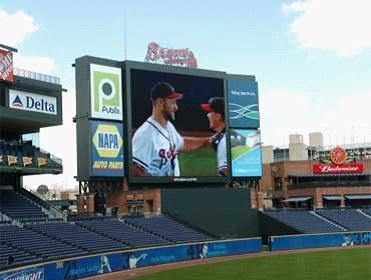
2)       Standardization of the conventional products and specialization of specific applications in professional fields. The implementation and promotion of relevant standards will stimulate the standardization of LED display products. Among conventional LED display products, standardized displays and control systems will receive more rapid developments. It is expected that in next ten years, integrated LED display products will share most part of the market. The standardization of LED displays and the specialization of labor division of marketing services will become more obvious in next several years. In professional applications, in order to meet the requirements of professional applications, the level of specialization will continue to increase, combined with specific application requirements to form new LED display technology, such like large-sized LED displays used for city lighting engineering, the stadium’s LED displays and LED displays for transportation area. It is expected that LED display industry may usher in its peak in near future.

3)       Rational division of labor within the industry and the formation of new industrial patterns. In the entire industry chain, the establishing of leading enterprises of LED display products will redefine the labor diversion of upstream and downstream industry, highlighting specialized labor diversion and collaboration. Perhaps, in the early stage of semiconductor lighting industry, manufacturers of LED components and display products may present vague boundaries between specialized labor diversion and collaboration. But with the continuous development of market and technology, these boundaries will become clear.

Analysis of LED photonic crystal technology

In order to avoid the Blue-ray LED lights and phosphor technology patent of Nichia, many LED manufacturers involved into researches of other White-ray emitting LED technologies. Currently, UV LED is the most anticipated technology among all. But it has two fatal defects: light leakage and low brightness, which will be hard to overcome in the short-term. Scientists was striving to solve these problems and meanwhile looking for other effective solutions to send out White-rays.


In order to avoid the Blue-ray LED and phosphor technology patent of Nichia, many LED manufacturers involved into researches of other White-ray emitting LED technologies.


In 1987, two scientists from different country Eli Yablonovith and Sajeev John find the breakthrough almost at the same time. Theoretically, they found out that the periodical propagation state of electromagnetic waves in dielectric materials had band structures. They used two or more materials (with different refraction coefficients/dielectric constants) to compose the substance that contained photonic bands. The Photonic Crystal technology has been exiting for 20 years. Nowadays, it is the one of the most important core technologies which is highly concerned. This technology can be used in many other industries beside the LED lighting industry. Using second order photonic crystals to achieve White-rays was proved feasible. LED photonic crystal technology has become the focus of public attention and expected to be an effective method to get rid of the Nichia’s patent problem.


In following sections, we will discuss about the general construction of photonic crystals. Photonic crystals may have different periodic structures with different wavelengths, can be developed into first order crystals, second order crystals and third order crystals. Among these structures it is third order photonic crystals that have the most useful functions and can be used in various areas. But the manufacturing and commercialization of third order photonic crystals are almost impossible according to the current technology. Thus, instead of third order photonic crystals, it is second order crystals that are widely used in many industries, including LED lighting industry. The current LED photonic crystal technology is actually based on second order crystals working principles.


Generally, normal materials have fixed constructions, so these materials have a certain level of refractive coefficients. When electromagnetic waves travelled through these media, the wave number and frequency of these waves will impact the original refractive coefficients. Since photonic crystals have periodic structures, thus when light went through them, there must be multiple refractions.

Requirements of LED spot lighting technology

Current LED spot lights are mainly used to replace traditional halogen lamps. Among LED lighting products, LED spot lighting technology has a relatively long developing history. A series of comprehensive standards all referred to the traditional lighting requirements and also be in accordance with the properties of LED lamps. At present, the two major authorized Certification of LED spot lamps are CE Certification from Europe and UL Certification from America.


Current LED spot lights are mainly used to replace traditional halogen lamps. Among LED lighting products, LED spot lighting technology has a relatively long developing history.


CE Certification includes two parts: LVD(EN60968) and EMC(EN55015, EN61547, EN61000-3-2 and EN61000-3-3). Besides LED lights usually need to satisfy IEC 62471 standard and conducted photobiological tests. In north America, UL Certification and FCC electromagnetic compatibility Certification are necessary.


In addition, LED spot lighting technology have many standards in performances. America has ENERGY STAR requirements and China has energy-saving requirements. These standards had strict limitations on color temperature, CRI, initial luminous flux, lighting efficiency, central light intensity, standard working power, power factor and so on.


The service life of many electrical appliances was judged by “broken time”. LED is an advanced lighting source that may work for a long time without any failure. But its light intensity will be receded with time. We named this phenomenon as “light attenuation”. Normally, in LED lighting industry, technicians will define the service life of LED as the working period until light attenuate to 50% of the original light intensity. With the development of LED technology, light attenuation has been dramatically slowed down. However, giving out a specific time of LEDs’ service life is infeasible. Currently, scientists can only estimate this value by a set of tests. Basically, this process begin with a series of short-term aging tests, taking average value of light attenuation, then estimate the general time of light attenuating to 50% through exponential functions.


Usually, take measurement of Lumen Maintains (LM) after a 6000-hour aging test. In accordance with the exponential law, if LM>91.8% after the 6000-hour aging test, then the estimated service life of tested LED will be 25,000 hours. If LM>94.1%, then the estimated service life will reach up to 35,000 hours. The estimated time should no more than 6 times of the aging test time. Therefore, 36,000 hours will be the maximum estimated service life for a 6000-hour aging test. If you obtain a final LM result larger than 95%. That means you have to extend your aging test’s time.

LED bridge lighting used on the new bay bridge in San Francisco

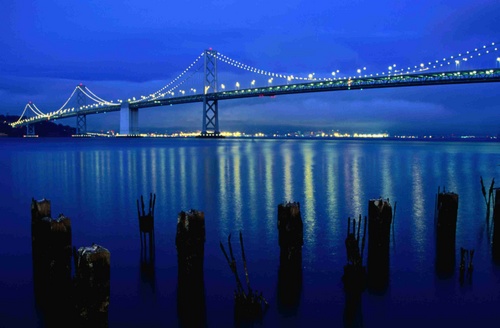
The new bay bridge in San Francisco is under construction, and expected to be open to traffic before the end of 2013. Last Thursday night, the new bay bridge bathed in radiant white light, attracting a lot of travelers and passengers stopped to watch from afar. The soft and bright light was provided by the thousands of LED lamps installed on the bridge. “Since LED is a kind of one-direction lighting source, the light generated by them is more soft, without any infrared and ultraviolet rays or flickers. ” Said Mr. Shelly, one member of the design group, “Another reason for using LED bridge lighting is that they can effectively reduce the traffic accident rate because of lacking of glares.”  Electrical contractor Bleyco is responsible for the lighting part of this $7 billion project. They joint up with famous lighting producer Musco and applied the most advanced bridge lighting system in history.


LED bridge lighting used on the new bay bridge in San Francisco


The initial design concept was to use advanced directional lighting technology to provide carriageway solid white rays for drivers. In this way, glares on zebra crossings and windshields can be eliminated to a large extent. In 2008, it was the first time that Bleyco had contacted with Musco. But, unfortunately, such lighting technology has not been developed at that moment. Not until the end of 2009, Musco put forwards a LED lighting plan, which was proved feasible and received positive responds from Bleyco. But in 2009, Musco was still lack of core technology to control multiple LED lamps by one chip. They conducted a series of experiments on 25-50 pieces Cree XM-L LED street lights built on one country road in Ohio. The LED bridge lighting system of new bay bridge is very special: each lamp pointed to different directions, with different “cap” and different lens, equipped with several layers of metal plates at the top, sandwiched between nylon to suppress the vibration. The pentagonal shape design matched up with the central tower of the bridge, seven fixtures on each pole represented the seven pillars on the central tower. Not only that the entire lighting system has long service life but also it is safer and more beautiful.

London Olympics: outdoor LED display industry had special performance

During the London Olympics, outdoor LED display technology has been widely used, that left a deep impression to people all around the world. Since 2009, large-sized outdoor LED displays have emerged in the market in many countries and gradually became a main force of the display industry. Outdoor LED display industry was always the target of being propped up and have become the important constitutes of large entertainment, sporting events and Square Theme Shows. With the continuous applying of new technologies, the new-formed outdoor advertising continued to emerge, full-colored LED tubes display media resulted from this trend. In this article, we will give a small talk about the market prospect of outdoor LED display industry.

 London Olympics: outdoor LED display industry had special performance

Outdoor LED displays as a type of high-tech products and also the trend of the next generation of LED display applications. They have two obvious merits: longer service life, lower power consumption, higher lighting efficiency, etc.. These properties much more sophisticated than other traditional display products. As an emerging industry, LED has come into an integrity and maturity chain of the industry. The layout of the outdoor LED display industry supply chain mainly performed in five aspects:

1)       Currently, there are no biddings in upstream business (raw LED lights materials like sapphire, MO sources). Industry experts paid more attention on some upcoming enterprises.

2)       Midstream: the fierce competitions in chip industry cause overcapacity of the market. Attention was more focused on high-power, White-Ray LED companies.

3)       Downstream: packaging industry still focused on White-Ray, COB factories.

4)       Too many LED lighting application manufacturers, those who had transporting channel advantages or benefit from the government support policies may have a more smooth development.

5)       LED equipment and instrument industry. Less biddings. Similar to upstream industry, upcoming companies with more advanced production line and product process received more attention.

In the view of global point, most core technology of LED panel display techniques are still controlled in the hands of giant international companies. In the backdrop of the global energy conservation, many counties have issued filament-forbidden plans and started to promote LED technology. Thank you to current support from the government, outdoor LED display industry will enjoy a rapid development in the future.

Japan introduced railway LED lighting and new semiconductor technology

Japan’s railway enterprises have applied themselves to energy-saving area for many years. Compared with other transportations, transportation energy consumption per capita of railways is the lowest one. For instance, transportation energy consumption per capita of the Shinkansen is only 1/25 of that of aircrafts. In order to achieve a more environment friendly effect, the Japan Government decided to replace all traditional railway lighting systems with railway LED lighting technology.


Japan introduced railway LED lighting and new semiconductor technology


Take Ginza Line “1000” for example. In order to improve the ride comfort, designers increased the output power of air conditions within compartments. Meanwhile installed 17-inch widescreen LCDs to improve the audience effect. After strengthening these functions, the total power consumption of the entire trains grew up numerously. Thus, Ginza Line “1000” adapted a series of technologies with more powerful energy-saving functions. One of them is railway LED lighting technology. Tokyo Metro explained that it is the first time that LED lighting technology was employed in railways in the human history. They also indicated that LED lights would be continued to applied in other public transportations, such like subways, buses, and even some taxies.


The new installed LED head lights for trains are only 32W each with two other assisted lamps, which are 16W each. But they provided equivalent brightness to previously used 150W high pressure sodium head lamps. Compartment lights also guaranteed the brightness that equal to or larger than the previously used fluorescent tubes but consumed only 40% of them. The average service life of compartment lamps is around 40000 hours, which is 3.5 times of traditional fluorescent tubes.


Beyond that, designers from Tokyo Metro also needed to take railway stations and other ancillary facilities into account. How to effectively reduce the power consumption is as important as that for trains.


Presently, in order to cope with the income reduction caused by the low birth rate and the aging problem, Japan’s railway operators engaged in transportation business and meanwhile strived to expand non-transportation business. The ongoing activities included additional shops and other commercial facilities in stations, enlarged the digital signage and improved the high-speed communication network. The power consumption of these facilities occupied an increasing proportion of the total power consuming. Station power consuming accounted for approximately 20% of the commercial power arrangement of rail operators. In order to prevent this trend, rail operators started to apply photovoltaic system and railway LED lighting technology on stations.

MIT is developing automatic LED lighting system

Researchers from Responsive Environments Group of MIT is developing an automatic LED lighting system which can self-judge the surrounding light intensity and continuously adjust the lumen output (by controlling the voltage input) of indoor lamps.


Researchers from Responsive Environments Group of MIT is developing an automatic LED lighting system which can self-judge the surrounding light intensity and continuously adjust the lumen output (by controlling the voltage input) of indoor lamps.


In this research, scientists decided to use LED lamps which are more easily controlled than other traditional lamps. This intelligent lighting system can detect the real lighting environment through embedded sensors. And adjust the light intensity and color balance through a small card-sized controller. With the help of the automatic LED lighting system, users can self-adjust the light according to their preferences.


In addition, central controllers can automatically calculate the penetration light from windows and nearby working areas. If surrounding light is sufficient for users’ daily life or work, LED lamps will lower the output light intensity to a suitable level or even shut off. Vise visa.


Is was proved by some experiments results, compared with traditional filament lamps and fluorescent lamps, this automatic LED lighting system can save approximately 65%-90% energy.


It has been proved by a research report (released by the U.S. Department of Energy in2009) that about 22% national electricity was used in lighting system in the past five years. Obviously, this energy-saving intelligent lighting system has great developing potentials. Researches from MIT hope that one day this system can also be applied on filament lamps and fluorescent lamps.


However, there are still some defects of this system: when the lamps in a state of motion, the embedded sensors need to be recalibrated, generating a series of scattered and various-brightness light. Mr. Aldrich, one of the researchers is designing a new automatic LED lighting system based on infrared LED lights and built-in infrared sensors, in order to solve this problem. “It is really a big challenges to us. Sensors for infrared light have no need of recalibration, but it is very hard to realize. We need to create more accurate and advanced circuits. ” Said Mr. Aldrich.


Meanwhile the research group is measuring the lighting reflecting rays in lighting areas, looking for a control method which can realize a brightness control through gestures. Researchers believed that lighting control without and switches will not be just a dream in the near future.

Structure and circuit design for high-power LED tunnel lights

Using lightweight aluminum casing can keep the weight of the entire lamp body under 10kg. LED lighting chamber and electrical cavity can be designed in the IP level of 65 and IP 23 design for the cooling sections. Lighting chambers and cooling sections should utilize reasonable isolations, preventing the interference between these two parts. Due to the poor ventilation inside the tunnel, air composition is relatively complex, abundant vehicle exhaust, waste gases and other toxic chemical gases mixed up within it. It is necessary for high-power LED tunnel lights to be more reliable and corrosion-resisted. Normally, before leaving factories, anticorrosion treatments should be carried out on these LED tunnel lights.


Using lightweight aluminum casing can keep the weight of the entire lamp body under 10kg.


Circuit design:

LEDs’ voltage-current characteristics are similar to ordinary diodes. The tiny vibrations of external forwards bias voltage will cause huge changes on input current, increasing the internal working temperature dramatically and consequently reduce the service life of LED lighting products. In order to prevent this from happening, high-power LED lights must be supplied by constant current (including high-power LED tunnel lights). On other hand, in order to increase the efficiency of power suppliers, the input voltage should be under strict controls, limiting the peak value of input voltage to match up with LEDs after a certain potential drop.


Generally, LED tunnel lighting fixtures consumed more power than other lamps. In order to reduce the power grid pollution, many countries have strict regulations for the power factor (PF) and harmonic content of high-power LED tunnel lights.

1)       Use high conversion, reliable power suppliers. Normally, only power suppliers with a converting efficiency larger than 87% and a PF lager than 95% (powerful in resisting external fluctuations from the power grid) are competent for these high-power LED lighting appliances. These power suppliers are usually equipped with constant-current circuit design, using constant-current to drive LED lighting sources.

2)       Adopt suitable control circuits for tunnel lighting, arranging different lighting modes for different sections. Experienced designers should choose different LED tunnels lights (different power consumption) for different sections. For example, in order to effectively reduce the glare, tunnel lights that used in entering/leaving sections should have a lower brightness (power consumption). Therefore, lamps in different sections should be powered by different drives, make them as close to the tunnel lighting curve requirements to achieve the best lighting effects. Timing adjustment on the tunnel entrance and outlet is suggested. Adjust output current through PWM or use double power supplies. Use single power supply during the night, reducing the power consumption by 50% compared with daytime.

Application requirements of LED area lighting

The main function of LED drives is current-restriction in many conditions to keep LED lights chips from current surges and other operation faults. Most LED drives can guarantee a certain level of safety to effectively prevent electrical fires and mechanical friction fires. In the field of LED area lighting, outdoor temperature will bright greatest challenges to LED drives. Some drives even have to work under high voltages, such like 277VAC, 347VAC, 480VAC.


The main function of LED drives is current-restriction in many conditions to keep LED chips from current surges and other operation faults.


LED drives used in area lighting should satisfy a certain level of power factor (PF) or standards of harmonic contents. Such like IEC61000-3-2 standard issued by IEC has clearly restricted the harmonic contents of lighting equipments (C type) that have power consumptions larger than 25W. In fact, based on general IEC standard, many countries have their own certifications. A LED lamp with a PF of 0.9 can completely meet the requirements of IEC61000 standard but still incompetent in America’s lighting market. In order to protect domestic LED industry, the American standard for high-power LED lighting products (larger than 25W) has an additional requirement: THD must be lower than 20%.


Most LED are lighting applications were used outdoors, which will suffer all kinds of serious environments. It requires LED products with longer working life. It is said that the entire system design has significant influence on service life of LED components. Using LED drives that generate less heat, consume less power and have higher efficiency is rather important. Besides, the improvement of cooling sections and protection circuits is also a key point to increase the reliability of the entire system.


LED lighting applications can be intellectualized. Generally, traditional LED street lighting realized intelligent control through timing devices or other light intensity sensors. While LED area lighting have more accurate intelligent control based on power line communication (PLC) or wireless control technology, such like the concentrated control based on time output and light output; brightness level control based on vehicle density sensors; Through intelligent controls, LED lamps can be turned on and turned off or self-adjust brightness level depending on the nearby conditions. Provide full lumen output when activities or objects are detected, while only provide only 20%-40% lumen output in the dormancy state.

Problems for LED area lighting

With the enhancement of people’s awareness of environmental protection, the lighting industry paid more and more attention on energy consuming problems. In accordance with related statistics, in the process of energy consuming, more than 20% electricity is used for lighting. Improving the lighting efficiency to furthermore reduce the energy consumption became an impending issue. Therefore, high-efficiency LED area lighting has been put forward as a hot topic.


With the enhancement of people’s awareness of environmental protection, the lighting industry paid more and more attention on energy consuming problems.


In the view of application areas, lighting include residential lighting, industrial lighting, street lighting, restaurant and hotel lighting, retails and service lighting. In the view of power consuming, lighting also can be divided as low-power lighting high-power lighting. Typical high-power LED area lighting applications include LED bollard lamps, LED wall washer lamps, LED tunnel lights, LED street lights, LED public security lamps, LED high bay lights and so on. All these are outdoor area lighting applications. Indoor LED area lighting applications include low ceiling lights, high ceiling lights, LED garage lighting, etc.


High-power LED area lighting products have many challenges: continuous working in high temperatures aggravates the light attenuation; Safety problems caused by the failure of lighting sources; design challenges in hostile environments, etc. The exiting lighting sources for high-power area lighting applications are metal halide lamps, high pressure sodium lamps, linear fluorescent lamps and compact fluorescent lamps. It is noticed that all of these lighting sources have their defects. High pressure sodium lamps have very poor CRI (only 22). Metal halide lamps have much lower lighting efficiency (only 40%). Linear fluorescent lamps have poor cold temperature performance and compact fluorescent lamps have long staring time.


On the other hand, with the continuous improvement of performance and production costs of high-brightness White Ray LED technology, it started to be widely used in the LED area lighting industry. Compared with traditional lighting sources, White Ray LED lights have higher light efficiency (can emit more light per Watt), have higher CRI, have better direction control capability, more environmental friendly and can be easily handled in the starting/shutting process. Intelligent technique also can be utilized in LED area lighting area. Brightness can be controlled automatically by central computers embedded within LED lamps through external mounted sensors.


In addition, LEDs are more reliable, which will help reduce operation and maintenance costs.