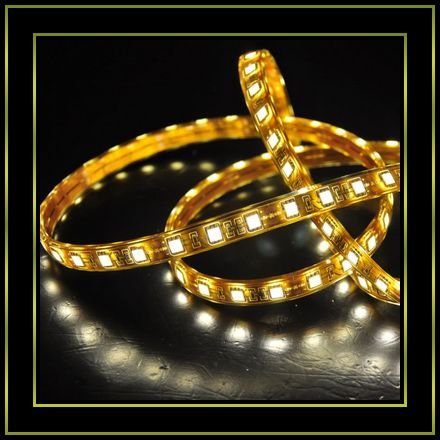
High-powered LED area lighting applications for street and parking lots

With the enhancement of energy saving and environmental protection awareness, people are increasingly concerned about the energy consuming effects on the environment. According to statistics, among all electricity consumptions, around 20%-22% electricity was consumed by lighting applications. Improving energy efficiency of lighting products can contribute to the reduction of carbon dioxide emissions. Therefore, energy-efficient lighting is becoming a focal point.


High-powered LED area lighting applications for street and parking lots


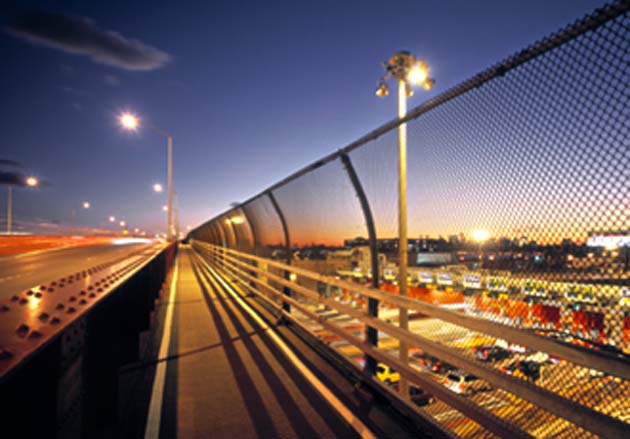
From the view of application field, lighting includes multiple areas, house lighting, road lighting, residential lighting, industrial lighting, etc.. Sorted by power, LED lighting applications can be divided into low-powered indoor lighting applications and high-powered LED area lighting applications, such like LED wall wash lights, LED tunnel lights, LED street lights, LED parking lights, LED flood lights, etc..


High-powered LED area lighting applications have many challenges: lighting fixtures are not easily accessible, risks brought about by the fault of light sources, harsh outdoor climates and so on. Existing light sources used in high-powered area lighting applications are metal halide, high pressure sodium lamps (HPS), linear fluorescent and compact fluorescent lamps. There are a lot of limitations. For example, the CRI of HPS is very low (only 22). Objects under such light will completely loss their original color, which we also called color distortion. Traditional metal halide lamps have high energy loss (about 40%). Furthermore, the run-up time (from start to full brightness) is as long as 10 minute. Linear fluorescent lights have very weak cold temperature performances. Compact fluorescent lamps also have a long start time.


On the other hand, with the constant improvement of high-brightness white-ray LEDs in performance and cost, this kind of G24 LED chips have been widely used in high-powered LED area lighting applications and provide advantages that traditional technologies do not have. For example, consuming less power per lumen light, which is also known as luminous efficiency; better direction control; better color and quality, environmental protection, intelligent control on switching on/off, automatically adjust brightness according to the ambient light. In addition, LEDs are more reliable, reducing product cost and maintenance cost.


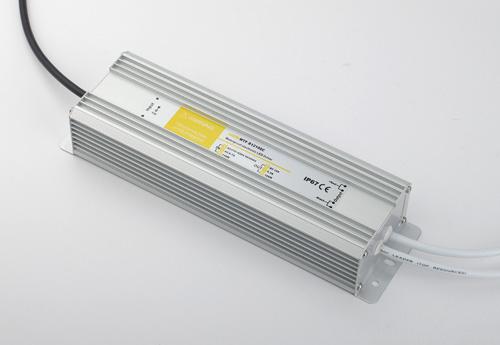
The main function of LED drivers is limiting the current flow in a variety of conditions, keeping LEDs away from current surges and other fault conditions. LED drivers also provide a certain level of protection, avoiding fire caused by electrical or mechanical shocks. For area lighting applications, the harsh climate brings temperature controlling difficulties to LED drivers. Also, drivers used in area lighting applications need to withstand 277VAC, 347VAC or even 480VAC in some conditions.

Shortage of high voltage MOS caused the promotion surge of integrated LED drivers

The semiconductor industry is racing to develop highly integrated divers for LED lighting applications. In the condition of capacity reduction in high voltage MOSFET (metal oxide semiconductor field effect transistor), LED application firms are facing problems of shipping delays. Thus chip manufacturers are speeding up the development of integrated LED drivers to relieve the pressure.


Shortage of high voltage MOS caused the promotion surge of integrated LED drivers


Many sections in LED lighting fixtures need MOSFET, such as dimmable LED drivers, non-dimmable G24 LED drivers and resonant controllers. To avoid negative influences on the progress of market expansion due to the lack of high voltage MOSFET, a number of manufacturers promoted plans for integrated LED drivers, such like NXP, STMicoelectronics semiconductor (ST), Bourgh Intel (BI), etc.


Mr. Zhang Chao, the marketing manager of NXP lighting (China and Asia area) indicated that production lines equipped with high-voltage process devices can make integrated driver circuits for LED lighting applications. But, since the threshold of this technology is too high, many small and medium sized companies were blocked outside of this area. Lacking of capabilities and funds made them vulnerable in the intensely competitive market, hard to survive. It is expected that in the wave of this shortage, the state of LED lighting driver suppliers will have growths and declines. According to Mr. Zhang Chao, NXP has replaced the old SOI-HV high voltage manufacturing process with ABCD3 manufacturing process which is more suitable for LED lighting applications. This plan will be realize in the summer of 2013. ABCD3 manufacturing process is not only suitable for integrating high-voltage MOSFET, but also can reduce the leakage current, improving power efficiency of LED lamps. Integrated LED drivers is no doubt a more advanced technology that with higher cost-effective.


Despite that the enhanced high-voltage manufacturing technology was created, currently, only a few large high-voltage MOSFET makers provide related products, like STMicroelectronics, Toshiba and Infineon. The demand for such products has far exceeded supply in the market. LED lighting application producers may have good lamp fixture designs but cannot be realized, since it is very hard for them to purchase critical electronic components: high-voltage MOSFETs.


NXP is expected to expand their market size in the second half of 2012. As preparations, they placed large quantity orders in advance to high-voltage MOSFET manufacturers, making sure that all stocks can maintain at least 4-6 weeks.

Domestic LED SMEs: explore the road of growing

As one of new industries, LED lighting business received a lot of attention worldwide, both from investors and customers. Capital swarmed into this area crazily. In 2010, domestic LED lighting industry investment was up to 217.9 billion yuan, far excess people’s expectations. Due to some characteristics of this area, many investors actually chose to start from LED downstream applications: low upfront investment, small size. That is the main reason why domestic LED SMEs dominated the LED downstream business in our country.


As one of new industries, LED lighting business received a lot of attention worldwide, both from investors and customers.


Presently, SMEs faced tremendous pressure, and even predicament. Compared with large G24 LED enterprises, who were continuously under support of government (subsidies and large lighting projects), most of domestic LED SMEs were kept out of government tenders and biddings. They also had to face up the matter of lacking technologies and capitals. How domestic LED SMEs to explore the road of growing?


In fact, the development of things has two sides. The current developing stage is a good time for distinguishing performance diversity, improving management and controlling costs. To some extent, small businesses usually have more adaptability than large companies in the face of new economic environments. They are more likely to survive. If entrepreneurs with self-motivation and crisis awareness can find right positions and directions during industry consolidations or shuffles, they could seize opportunities even with limited resources.


Because of lacking of market resources, SMEs should invest attentively and professionally. Blind investment to some unfamiliar area is really dangerous for them. Large enterprises have enough confidence and capital to involve into multiple areas. Emerging markets with full potentials were usually their targets. But SMEs should at first keep their core technologies or core economic strategies. How to survive is more important for them. They must minimize the risk at each step.


Meanwhile, they should take the path of specialization and diversification, including increasing product cost-effective, improving product qualities, increase added-values, developing new products to meet the demand of market. Diversification or differentiation is another import factor. In order to survive, small companies need to form their own characteristics in a particular area, developing their own products or technologies: companies concentrate on green-ray LED chips, companies focus on special lighting applications, like plants and agricultural lighting, freezer lighting and so on.

Domestic LED patent environment need of purification

Under strong government supports, the intellectual property environment of LED industry has been greatly improved. The number of patent applications was growing sharply, as well as the quality of patents. However, due to a late start, the domestic LED patent environment is far behind Europe, North America and Japan, even worse than Taiwan. In America and Japan, the LED industry chain started to take shape as early as 1980s. During that period, fundamental technologies of GaN-based LED epitaxial chips on sapphire and Sic substrates were basically completed. However, China’s research institutes and manufacturers started related studies quite recently.


Under strong government supports, the intellectual property environment of LED industry has been greatly improved.


The harsh domestic LED patent environment manifested chiefly by the frequent infringement, the cost of plagiarism is too low, leading to the fact that companies had great investment on technological innovations will not get benefits and advantages at last. Placing a higher value on innovations and intellectual property rights became a formality. Firms committing infringement survived finally. “Copy” is the most common thing in the domestic LED lighting industry. It is very hard for technological innovation seeding thrive under such harsh circumstance.


The marketing promotion of LED lighting applications, like G24 LED bulbs, LED flood lights is carrying out comprehensively. Earlier companies, like Nichia, Cree, Philips has been fully prepared. They intended to get profits from products and market, and also from the patent net that set up earlier. From the more than 100 LED patent related lawsuits and their project progress in the LED lighting industry, we can see that these large enterprises all aimed at the international LED market. Since 2008, Philips started the advancing in LED applications, especially in LED bulbs and LED flood lights, obtaining smooth progress. According to related reports, there are more than 230 companies signed license agreements with them. These companies could use technologies from Philips, and in the meanwhile, paid Philips about 3%-5% of their sales value. This is a very handsome income in the long term.


How about the domestic LED patent environment? It seems that after nearly 20 years development, infringement rarely happened in China. The possible reasons for this situation are: a. China is indeed a special case. Relevant market laws are far from perfect compared with developed countries. b. domestic LED companies are too small to squeeze. c. products from these companies were not a significant danger to international giants.

Analysis of LED lighting export in 2012 (January to August)

Along with Russia’s accession to the WTO, import tariffs will further decline, plus that LED products exported to Thailand can enjoy a zero tariffs, plus a series of other LED lighting export preferential policies, our domestic LED industry face up opportunities as well as challenges.


Along with Russia’s accession to the WTO, import tariffs will further decline, plus that LED products exported to Thailand can enjoy a zero tariffs, plus a series of other LED lighting export preferential policies, our domestic LED industry face up opportunities as well as challenges.


In February this year, the Ministry of Finance and other ministries jointly issued a notice “Financial Subsidies for Semiconductor Lighting Products and Related Lighting Projects in 2012”. This notice was officially launched on 11th of July. Local governments positively responded this LED promoting plan. There has been news came out in September of this year, the China Government planned to phase out incandescent lamps in 5 steps. Since 1st of October, incandescent bulbs with power consumption higher than 100W were forbidden to produce, import/export and use. 60W and 15W incandescent bulbs will be banned in China in the next year. In addition, the European Commission also set rules that incandescent lights should be completely banned before the end of 2012 in member states. The United States planned to phase out 100W incandescent lights before the end of 2013, and 40W incandescent bulbs before 2014.


Obviously, 2012 is the crucial year for other lighting technologies that could take place of incandescent lamps, especially for LED lighting products. High-end demands may directly be replaced by LED bulbs, LED down lights. With the birth of a series of LED lighting export preferential policies, LED lighting market has huge potentials. Followed is the Analysis of LED lighting export of China in 2012 (January to August):


From January to August of 2012, the total export amount of LED lighting products is approximately 2.335 billion USDs, around 192,700 tons, dropped by 65.2% compared with 2011. G24 LED lamp exports showed a downward trend in the past 8 months, the situation is not optimistic. Within this period of time, remove the Spring Festival in February, LED lighting export value was lowest in January (about 239 million USDs), declined 49.56% from a year earlier. This value reached its peak in August 388 million USDs, declined 33.18% from a year earlier.


From January to August, the top 10 LED production bases in China are concentrated in the Guangdong Province: Shenzhen, Dongguan, Shanghai, Guangzhou, Hangzhou, Zhongshan, Xiamen, Kunshan, Foshan and Quanzhou. Among them Shenzhen is the largest regions for LED lighting export in China, with a ratio of 24.75%.

Five major trends of LED industry in 2013(2)

2, LED device price stabilization in power header

The mainland LED devices price encounter market rapid decline in 2012, with the market gets warmer and inventory gradually return to normal water levels stabilized, down about 6% quarterly decline, the price of LED devices at a lower water level 2013 LED devices prices on a quarterly basis, taking into account the price of LED chip space due to price war also fell, but other raw material prices are relatively stable, and labor and operating costs, there is an upward trend, Topology estimated decline further in 3 % or less.

Five major trends of LED industry in 2013(2)

In the case of space has become more and more small decline in the price of LED devices, LED Flood Light manufacturers tend to gradually replace the traditional low-power devices (0.06 ~ 0.1W), power devices (0.2 to 0.5 W), which used in indoor lighting.

For example, a 16W LED lamp in the LED industry, if it adopted 0.06W 3528 white devices, it needs 270 pieces, the total cost will be 32.9 yuan (about NT $ 158 yuan), and Luminous flux only 7lm. If it instead to use 0.4W 5050 white devices, it needs only 40, with a total cost of 14.3 yuan (about NT $ 69 yuan), and the luminous flux will be up to 38lm; the visible power chip encapsulation will be the future development trend.

3, 4-inch substrate and then speed up graphical substrate layout

Although the mainland sapphire substrate prices rose slightly in 2012 compared with the minimum of USD8 in 2011. Yet the overall market have an adequate supply, the price is always hovering within $ 9.5. In order to improve the product performance and gross margin, Sintek, East Jing Bo Lanter Suzhou sea platinum, crystal, Hefei Crystal Bridge, Ke Ruisi photoelectric, overweight invested graphical substrate (Pattern Sapphire Substrate; PSS) development, large-scale procurement lithography (Lithography) etching machine (Etching), and to improve the graphical capacity of the substrate. It is estimated that 2012 Continental graphical substrate penetration will exceed 30% in LED industry. And in 2013, it is expected to reach nearly 50%, and then pull the average selling price of the continent sapphire substrate market to inject new sapphire substrate industry vitality. Topology forecast 2013 average selling price of the sapphire substrate will fall about $ 15.

Five major trends of LED industry in 2013(1)

Looking ahead to 2013, the government of mainland development of LED remains firm attitude. To sift out incandescent road map will full implement, coupled with the positive promotion of the industry in the path end, all will contribute to the mainland LED industry stable growth; but on the growth behind, it is inevitably competed for the market between vendors, to expand more intense price path and the war for talent.

LED industry has bid farewell to high profit era on the mainland manufacturers, how to maintain and expand its own profit is a manufacturer of immediate problems. Overall, “competition and cooperation, price and enhance corporate profits will be the thematic in 2013 mainland LED industry; industry chain trend, it will surround the epitaxial wafer, power devices, graphical substrate, pathway, LED back light applications such as the five major issues to develop.

Five major trends of LED industry in 2013

1, epitaxial wafer increasing, price war detonate

The riders pick up in the first half of 2012 bring confidence in the mainland LED epitaxial wafer fab equipment purchase orders to be shelved, which led to re-put on the agenda. Those un-installed equipment have also entered the operation. As of the end of October 2012, the number of mainland MOCVD machine is 823 units. On capacity, the total capacity of the mainland LED wafer production line 2-inch epitaxial wafers, has reached 4,022 ten thousand / year. Capacity utilization in the part of the equipment is not yet complete assembly. But it is still lack of talent with weak market demand and other factors, the average remained at 65%.

Although each district launched LED epitaxial wafer project has resulted in the mainland chip pile up in excess of requirement, but optimistic about the future of the size of the market, still have the manufacturers continue in 2012 in mainland investment LED Factory epitaxial wafer project. The larger Guangzhou Jingxin ( plans to introduce 60 MOCVD ), Foshan Qili photoelectric ( plans to introduce 20 MOCVD production lines and supporting the wafer production equipment ) and Foshan country star photoelectric LED epitaxial wafer project ( plans to introduce 50 MOCVD ).

It is not difficult to predict the 2013 mainland manufacturers in the market release more LED chip, coupled with the mainland manufacturers chips are mostly concentrated in the low-level, so for mainland firms specializing in price war is bound to set off a new competition.

Why solar roof performance lighting systems are difficult to promote(4)?

There are technical difficulties to be overcome

Let the sun gives us room direct “lighting” , how difficulty it is? Reporters learned, first of all, most of the buildings did not take into account the demand of solar panels installed that must make solar panels and building integrated ” in order to promote solar roof performance lighting system.

Why solar roof performance lighting systems are difficult to promote(4)

Shenzhen Yanion associated Chairman Zhou Min told reporters that, under the current conditions of the conversion efficiency of solar panels, building solar rooftop power station is low efficiency, the need take up a lot of building roofs resources, while the city’s buildings roof is very expensive and scarce, it is difficult to provide the construction of power stations to the laying of the space required by the solar panels; economic benefits low roof power station payback period is 40 years or more, while the average of the solar photovoltaic light is only 20 years, so the investment and return are not match.

Zhou take an example, for ordinary residents, most are living in high-rise buildings. With the restrictions of living space. So it is not easy for suitable place to place solar panels. Therefore, lost the place and opportunities in the installation of solar water heaters on the roof to install solar panels; Second, the 10 square meters of panels cost at least $ 56 million, the amount of electricity produced is not enough to meet the whole family needs. Future photovoltaic power generation combined with the building of the “photoelectric building” is the trend of the times, but in the current conditions, city residents use solar performance lighting system, the majority are pushing promotion in the public space.

Hope to further reduce the final cost

“Solar thermal is a strong industry policy,” Liu Xu said, many countries give subsidies for the introduction of solar energy industry, incentives. The reporter was informed that since March 2009, the Chinese government decided to allocate 100 billion yuan a year from the financial subsidies for solar photovoltaic roof and building construction, in order to promote the formation of domestic solar power market.

Solar companies can not rely on the financial support of the Government, and need to explore new business models to meet the user’s needs at the same time does not increase the burden on users, and to guide the led tunnel light market with innovative technology and product demand.

The plastic bulbs is expected to replace the LED lighting bulbs and become new light source?

According to foreign media reports, U.S. scientists have invented a plastic bulb that can issue very close to natural light, and very good stretch, no worry to fall. It is expected that the first batch of plastic bulb will enter the market in 2013.

Wake Forest University scientists recently developed a new plastic bulb. The product has LED lights all the advantages, even more surprising is that this LED plastic bulb do not have any shortcomings. It has been reported that this plastic LED lighting bulbs are expected to replace a new light source. When current passes through the special plastic layer of this new type light bulb, it will emit light, this plastic layer is developed by using nanotechnology.

The plastic bulbs is expected to replace the LED lighting bulbs and become new light source?

The R & D team said this new type of plastic bulb has a very good stretch. It can be designed into various shapes, such as the present commonly used lamp rod-shaped. Users do not have to worry about this bulb that will shatter, and when  use it, it does not produce any noise.

This new lamp is temporarily referred to as “FIPEL”. The inventor David (David Carroll) Dr. Carroll said. It can win this new type of light bulb LED lights, but plastic is not particularly perfect bulb, the plastic may melt when the current is too high, which means the brightness of the plastic or restricted.

The emitted light of “FIPEL” is very close to natural light, but it vary greatly with the blue light emitted by LED street lights. Some people may worry about the plastic bulb life issues. Dr. Carroll said that his laboratory inside plastic bulb model has been used for nearly 10 years.

When asked about this plastic bulb that when to enter the market? Dr. Carroll said that a company is very interested in this product, and ready for mass production, it is expected to enter the market in 2013 the first batch of plastic lighting bulbs.

Solutions for LED chip display industry

Lighting, display, light source is three major applications for LED. Among them, LED display industry is the most mature one in terms of technology, product and market applications. Under the push of development law: technology progress and cost reduction. LED display industry chain can operate independently. In the past two years, as fund swarmed into LED upstream industry-LED chip display industry, manufacturers and makers began their crazy competitions for limited marketing resources. Below-cost sales occurred frequently. In the LED display market, despite that a few companies (display as their main business) are ready for listing, but there are also some LED display manufactures closed down. The economic crisis may be a factor, but the main reason is the limited resources but too intense competitions.


Lighting, display, light source is three major applications for LED.


In the LED display chain, LED chip display industry is the most important link. Chip manufacture should pay more attention on how to improve the quality of their products and how to use these chips correctly. The process features of LEDs determine the importance of testing. Testing should run through the entire LED industry chain.


The processing and packaging of LED chips should be divided into several levels in accordance with wavelength (light color), brightness, reverse voltage, leakage current and other related parameters. Electronic parameter detections are the same as detections for LED (light-emitting diodes). Detection for wavelength and brightness are relatively hard than other parameters, need professional sorters. Luminance colorimeter is typically used in display factories, testing the wavelength and evenness of brightness of LED Panel Light chips. However, this kind of equipment has problems in accuracy and calibration. Normally used luminance colorimeters, like BM-7, CL-100, can reach a precision of three digitals after decimal point, which is not sufficient for wavelength measurement. Thus LED chips from different production processes will be hard to mix-use.


For commonly used LED screens, brightness variations less than 10% can hardly detected by human eyes, and color variations less than 4nm can hardly detected, neither. So that, the general classification standard for normal LED chips is brightness variations less than 20% and color variations less than 5nm. Brightness/color changes within this range will provide relatively ideal effects. For LED modules, brightness variations less than 3% and color variations less than 2nm can hardly detected by human eyes. Thus modules’ mix-usage has much strict requirements than LED chips’ mix-usage. Normally, producers need to take chrominance and luminance calibrations.