Literacy of 3528 SMD LED soft strips

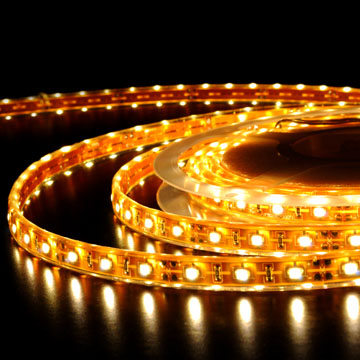
3528 SMD LED soft strips are a type of commonly used decorative lighting application that use LED as light source, FPC circuit board as carrier, series connected with current limiting resistors. They have following advantages: high brightness, soft and bendable, can be cut into length that wanted.


3528 SMD LED soft strips are a type of commonly used decorative lighting application that use LED as light source, FPC circuit board as carrier, series connected with current limiting resistors.


The light source of 3528 SMD LED soft strips is 3528 LED chips, using soft FPC board as carrier, namely flexible printed circuit board. The general width of this board is 8mm, thickness is no more than 1mm. Two or several FPC boards can be weldingly connected together. Finished 3528 LED soft strips with length of 5M (per roll), carried by anti-static discs and anti-static bags , easy to transport.


3528 SMD LED soft strips can be divided from the following aspects:

  1. Color: colors for FPC board are yellow, white and black; colors for LED lamps are white, warm white, red, yellow, blue, green and purple.
  2. Waterproof grade: LED strips can be used in different positions. Thus the waterproof grade can be divided into non-waterproof, epoxy waterproof and casing waterproof.
  3. Lamp beads: FPC can be attached with many 3528 LED Tunnel Light  chips. There are three regular specifications: 30 units per meter; 60 units per meter; 120 units per meter, applying to places with different brightness requirements.


3528 SMD LED soft strips can be used in widely places, product showcase, storefront decoration, super-thin light boxes backlight, hotel/KTV decoration, outdoor lighting applications, home ceiling lights, ceiling entrance decoration.


By using 3528 SMD LED chips, 3528 LED strips have high brightness, low power, long service life, easy to install, flexible in customization, easy to transport, energy-saving, environmental friendly.


The input voltage of 3528 SMD LED strips is 12VDC, must be equipped with 12VDC switching power supplies. After calculating the connection length and output power of each strip, engineers need to equip a power supply (20% higher than rated power). The best suggestion is: the length of each LED strip is 4 meters, a group of DC output lines from the switching power supply. 3528 SMD LED soft strips will generate heat automatically at work. So they cannot be installed in places with temperature. Normally should less than 50 centigrade.

Japan has developed a new type of OLED chip with 100% internal quantum efficiency

Recently, Japan’s largest organic Optoelectronics Research Center (OPERA) from Kyushu University announced the development of a new type of OLED chip with 100% internal quantum efficiency. Previous materials with high internal quantum efficiency are limited to those phosphorescent materials using rare metals. OPERA named this material as “Hyper-fluorescence”.


Japan has developed a new type of OLED chip with 100% internal quantum efficiency


OLED light-emitting materials can be divided into fluorescent material and phosphorescent material based on different light-emitting principles. Fluorescent material can combine (emit light) when excitons in a doublet spin state. In addition to a doublet spin state, phosphorescent material can realize light emitting also through a triplet spin state. Normally, the double spin state and triplet spin state occurs in the ratio of 1:3. Thus, the maximum quantum efficiency of fluorescent materials is about 25% and the maximum phosphorescent materials can reach up to 100%. In the fluorescent materials, the energy of triplet excitons generally cannot be converted to optical energy (light emitting) but lost as heat.


This phenomenon is obvious in OLED components with different luminous efficiencies. Thus in the development of OLED display and latterly LED Tunnel Light lighting applications, the utilization of phosphorescent materials increased continuously. OLED chip with a luminous efficiency of 50% can be achieved by using phosphorescent materials, as well as blue light-emitting materials. But phosphorescent materials still have a number of issues need to be solved: a. phosphorescent materials contain rare metals, which are very expensive; b. Universal Display technology (UDC) controls most of related patents; c. blue phosphorescent materials have relatively short service life, not practical.


In recent years, scientists found several materials with internal quantum efficiency of more than 25%, in spite that they all belong to fluorescent materials. Andaman Research Office of OPERA is very concerned about this phenomenon, launching a series of studies to materials that can help to improve the luminous efficiency and naming one of the light-emitting principles as “thermal activity delayed fluorescence” (TADF).


TADF can send out light only when excitons in the doublet spin state. Based on this feature, they belong to fluorescent materials. But after heating, the triplet excitons will transform into doublet state. Thus it is possible for all excitons in this kind of materials emit light during the combination. Andaman Research Office has strengthened the study effort of OLED chip with 100% internal quantum efficiency.

ERG launches new LED driver board

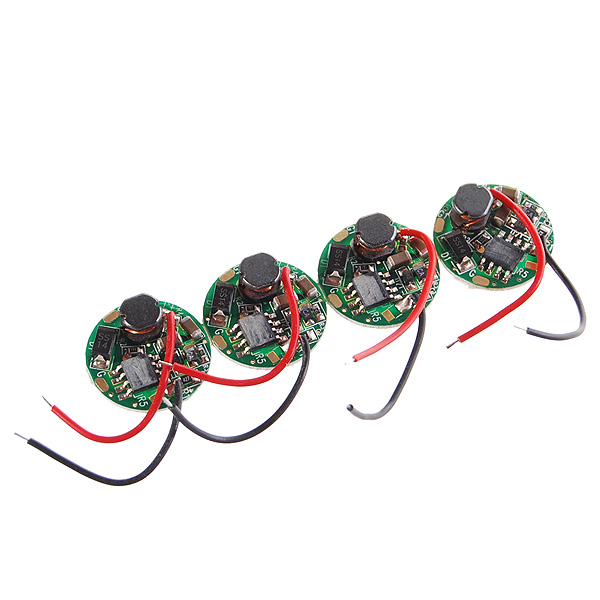
New SFDK series are a type of highly efficient dual-output LED driver board, with connectors on both sides of PCB. They applied cost-effective plug-and-play program, which can supply electricity to 22-inch LCD TV sets using LED backlight technology. SFDK also provide FPC (the tablet compatible) plug. Interface between driver and panel can be achieved by single-core 0.5 mm flat cable (FFC). Different displays use different core cables (6/8/10/12). The maximum output current is 320mA, can drive up to eight LED strings, four on each side.


New SFDK series are a type of highly efficient dual-output LED driver board, with connectors on both sides of PCB.


As new LED driver board, SFDK is very compact, with height of just 8mm, length and width of 4.59 inches (116.5mm) and 1.15 inches (29.2mm) respectively. Compatible with a variety of OEM LED backlit panels over a wide input voltage (10-20V, 5V version) range, having stable light output, external PWM dimming can achieve 500:1.


SFD2E LED driver produced by ERG is a new version of compact SFDE driver (E presents economic type), realizing high power output through compact circuits. This driver is suitable for LCDs (10.4 inches to 24 inches) with high power high brightness LED backlight technology. 480mA maximum current output can drive up to eight LED strings. SFD2E LED Tunnel Light driver has following features: wide input voltage (8-20V), external PWM can achieve 500:1 dimming, and 255:1 dimming on the board. The general dimension of SFD2E is: 1.115 inches (28.32mm) wide, 4.585 inches (116.5mm) long, and with height less than 10mm. The J12 output connector (FFC/FPC compatible) makes SFD2E compatible with many OEM LCD panels.


Both SFDK and SFD2E LED driver board are designed and produced in the United States, technically supported by the United States, also, with one year warranty. The selling price of SFDK and SFD2E is 20USD.


In the condition of increasingly imbalanced electricity demand and electricity production, the most effective way is to improve the light efficiency, providing more brightness by consuming less energy. Energy utilization involves many areas. Take common home and building electricity consuming for example: according to related statistics, about 30% home and building electricity consuming is from lighting applications in the United States, about 11%-12% in China. It can be seen that saving energy in the lighting area can bring huge benefits.

LED packaging technology still needs to be improved

Technically, the luminous efficiency of LED chips is a key factor to improve the development of LED applications. According to Mr. Mantie Lee, the general manager of Shenzhen Ledman Optoelectronic Technology Co., Ltd., the luminous efficiency of LED chips was continuously increasing recently. The light efficiency of 1W high-power LED chips available in the market has reached up to 100lm/W.


Technically, the luminous efficiency of LED chips is a key factor to improve the development of LED applications.


The LED packaging technology is another important factor. Although their effects on improving luminous efficiency are not obvious, they have closed relations with the reliability of LEDs. Differences in LED packaging technology have direct impacts on the LED quality. Good packaging and cooling design enable LED chips work under 60 centigrade, the lifetime of which can be more than 50,000 hours. On the contrary, weak packaging will cut the lifetime of LEDs by half or more. 90% luminous efficiency of LED lamps is determined by the luminous efficiency of LED Tunnel Light chips. Another 10% is determined by packaging structure and phosphor excitation efficiency. 30% of the reliability of LED lighting fixtures depends on LED chips and another 70% depends on packaging materials, packaging structures and packaging management. 50% cooling effects of LED lamps is determined by package heat dissipation structure and materials.


Packaging technology is especially important to LED lighting industry. Currently, the luminous efficiency of some highly efficient LED road lamps has been more than 80lm/W, contributed by the improvement of LED chips’ luminous efficiency. These road lighting devices have obvious advantages in energy-saving, the reliability and service life of which still rely on the further improvement of packaging technology. The current bottleneck of LED street lighting technology is light attenuation and reliability rather than luminous efficiency. Using high-powered LED packaging technology can significantly improve the light attenuation and reliability of LED road lamps.


For road lamps, packaging has very limited effects on improving their luminous efficiency. They rely more on the improvement of LED chip technology, while stability, reliability and consistency more rely on production process. All LED street lighting applications are volume applications. Series-parallel technology is needed regardless of the scale of programs. There are hundreds of components used in one LED street lamp. Any failures of these units will put an impact on the original design of the current and voltage threshold, and consequently the working condition of the whole lamp.

TSMC: the driving voltage of LED drivers can reach up to 60V

TSMC promoted new BCD (Bipolar, CMOS DMOS) module on 15th this month, which can be embedded into integrated LED drivers.


TSMC: the driving voltage of LED drivers can reach up to 60V


This new BCD technology used in LED drivers can provide a voltage range from 12V to 60V, supporting a variety of LED applications, including backlight of LCD display, LED screens, general lighting applications and vehicle lighting applications. There are several core digital module options, from 0.18 micrometer to 0.6 micrometer. Besides, CyberShuttle also provided TM carpool trial services, which support modules from 0.18 micrometer to 0.25 micrometer.


Draw support from multiple integrated features provided by the new technology, system BOM can be reduced. High voltage DMOS not only provides MOSFET switch integration to reduce the number of components, and integrates other electronic components, like high voltage bipolar transistors, high voltage / high precision capacitors, high resistance polysilicon Zener diode (Zenerdiode), etc., but also reduces the number of external component and significantly reduce the area of the circuit board.


DMOS supports the advanced drain-to-source-to-resistance (Rdson) effect in IC manufacturing. A specific 60V NLDMOS component, when VB>80V, the Rdson will be 72mohm-mm2, plus the extremely strong current driving capability, engineers can simply increase power efficiency via optimizing the component size. The reliable safe operation area (SOA) can also optimize power switches and driver circuits, making them better. Certainly, there are more detailed characteristics of analysis can also be used as result reference of IC design to achieve optimum chip size and reduce design budget of LED drivers.


In the aspect of COMS, 5V voltage is enough to support the Pulse Width Modulation Controller. 2.5V and 1.8V logic cores are common to higher levels of digital integration. In addition, compatible to logic circuits, memory options available for single writing and multiple writing, can also enhance the use of digital programming.


According to Mr. Xinsheng Liu, manager of electronic and industrial research and development department of TSMC, in terms of the integration of driver components, the new BCD manufacturing process of LED drivers is a highly sophisticated technology. Related process design kits (PDKs) emphasis on SPICE models with high accuracy, providing more convenient to single-chip design. In addition, MismatchingModEL can help improve the precision in multi-channel LED Tunnel Light driver designs.

The cost of RGB-LED TV technology is expected to drop significantly

“Technically speaking, RGB-LED TV technology is, can be said, perfect. However, the over-expensive production cost is always a big problem that difficult to overcome. After comparing all sort of costs, we decided to put our focus on white LED light sources. ” said Mr. Pyorong, manager of Electronics Digital Imaging Research and Development of Samsung.


The cost of RGB-LED TV technology is expected to drop significantly


RGB-LED has excellent performances in color gamut but very high production cost relatively. Selling prices of TV sets are hardly accepted by ordinary buyers. White LED light sources are a bit of worse than RGB-LEDs in color presentation, but their relatively high contrast and affordable selling prices (low costs) is incomparable (by RGB-LED TV technology).


Since the end of last year, LCD TV sets using white-ray LED backlight technology continued to swarm into the market. According to statistics, Samsung 8000 series all used white-ray side-lighting LED backlight technology. Hisense Blue Media applied white-ray direct-lighting LED backlight technology. Skyworth introduced before the National Day the white-ray direct-lighting super-thin LED TV sets, covering all range from 26 inches to 47 inches. Other manufacturers, including Sony, Sharp, Konka, Changhong, Tongfang all promoted corresponding white-ray LED LCD Televisions.


Statistics from DisplaySearch shows that the price of white-ray LED light sources dropped more than 20% every year. Within white-ray LED LCD TVs, the production cost of white-ray LED source occupies more than 1/3, which will inevitably lead to huge price cut and popularization of LED TVs in the future. At present selling prices of TV sets using white-ray LED backlight technology is 1.5 times of ordinary CCFL backlight LCD TV sets. It is expected that this difference will fell to about 1.2 times next year, and achieve a comprehensive replacement to CCFL.


Not only application makers are optimistic about the white-ray LED Tunnel Light  sources, even mid-stream packaging companies pay high attention on this part. In the next few years, the cost of white-ray LED backlight technology would certainly be lower than CCFL.


In addition, terminal application enterprises increased investment, which helped to keep the cost down. Recently, Tsinghua Tongfang is planning to build the largest LED industry base in China. It is reported that the initial investment of this plan is nearly 10 billion yuan, and the annual output value will reach up to 100 billion yuan.

The high cost of RGB LED backlight technology hard to drop in short term

Earlier of this year, SAMSUNG promoted full-color LED LCD TV sets desperately. Many people felt surprised. Six months later, when the LED TV business rapidly popularized in the global market, competitions can only admired the predict and clever marketing of SAMSUNG. SAMSUNG’s endeavor contributed to the fast popularization of LED LCD TVs in the international market, since a new technological solution has been promoted during this time – white side-lighting LED TV.


The high cost of RGB LED backlight technology hard to drop in short term


As an upgraded version of CCFL (cold cathode fluorescent tube) backlight, LED backlight technology received high attention from Sony, Sharp and we Samsung since been promoted. In the meanwhile, the large enterprises invested heavily in research and development of technology to reduce costs. When Sony, Sharp concentrated on reducing production costs of RGB LED backlight technology, Samsung shifted their attention to develop white LED light sources, and meanwhile used side-lighting mode to take place of direct-lighting mode. Not perfect, but boosted the popularity of LED Tunnel Light LCD TV technology.


The high cost of RGB LED backlight technology hard to drop in short term. Any good technologies want to widely used, production cost reduction is the premise. Currently, LED became the most popular word in the TV market.


There are three major LED backlight technologies: direct-lighting RGB-LED source, direct-lighting white LED source, side-lighting white LED source. RGB LED backlight technology is the oldest one.


Compared with traditional CCFL backlight technology, RGB-LED TVs have more advanced capabilities in color performance and contrast. As a result of the independent RGB light-emitting components, the color gamut of RGB-LED TV sets can reach more than 120% of the NTSC. Some well-tuned models can even reach up to 150% of the color gamut, completely exceeds the level of plasma TVs.


In addition, RGB-LED TV sets can also support technical adjustment and brightness adjustment in the backlight area. Thus in the aspect of contrast, they are able to realize ten million dynamic contrast ratio, which plays a crucial role to enhance the image quality of televisions.


RGB LED backlight technology has obvious advantages, making Sony, Sharp and Samsung all spent a lot of money and energy on this part. These three TV giants promoted several related products based on RGB-LED technology, but with ridiculously high selling prices as a result of immature development. From the very beginning to now, after several years of development, RGB-LED did not realize an essential price dropping in production cost. Gradually, these companies reduced investment in the research and development of RGB-LED technology.

White SMD LED investment presents a small climax

After being a distressed industry for a long time, LED lighting has recently become the cash cow again. Xishan Coal and Electricity Power announced their entry to the LED industry, which is very weird, since this enterprise has nothing to do with LED even lighting business. Followed by the Sun Lighting, which has placed a new investment project: “Industrialization project of micro mercury energy-saving lamps”. Sections of this project transformed into “Industrialization project of white SMD LED lighting products with an annual output of 20 million (sets).” Furi Electronics also indicated that the funds will be sought to focus on the development of LED industry.


After being a distressed industry for a long time, LED lighting has recently become the cash cow again.


The movements of these three companies triggered buzz. The downturn of LED industry has maintained for a very long time. Does this new investment climax in the LED industry mean the new opportunities for LED manufacturers?


70% domestic LED companies suggested that in 2012, their sales fell down. A recent report of debt crisis of Horizons Photoelectric caused panic in the LED industry, making the entire white SMD LED industry uptight and sensitive. Early this month, Haobo Photoelectric occurred crisis, causing huge anxieties about whether LED lighting industry will follow steps of PV industry.


From the situation of listed companies, in the year to the third quarter, more than 70% LED companies dropped in sales. Potentials exist under the quick success of white SMD LED industry. Overcapacity, vicious competition frequently occurred. Various enterprises produced products with different qualities. It seems that everyone insisted on seizing limited marketing resources even in the condition of long-term loss. LED Tunnel Light industry reshuffle caused by overcapacity is inevitable.


Given such distressed background, some enterprises outside the industry tried hard to swarm into it. On 29th of November, Xishan Coal and Electricity collaborated with Guangzhou LEDWAY to established a new companies in Taiyuan – Xishan LEDWAY Co., Ltd. The initial registered capital is 10 million yuan. Products include explosion-proof lighting devices used in mining, white LED sources, road lighting products and other lighting products for commercial purpose. The estimated annual sales is around 30 million yuan. The funder plans to establish the largest high-power LED lighting production base in Shanxi Province in five years.


How to improve the luminous efficiency of white-ray SMD LEDs

In the past, in order to improve the luminous efficiency of white-ray SMD LEDs, engineers tried to develop large sized LED chips to achieve their goals. However, in fact, if white-ray LED chips continue to work under power supply higher than 1W, their luminous efficiency will reduce by 20%-30% on the contrary. In other words, if white-ray LEDs intend to have brightness several times larger than traditional LED chips and better voltage-current characteristic than fluorescent tubes, they need to overcome following shortages: temperature control, ensure the lifetime of LED chips, improve luminous efficiency and equalize luminescent characteristics.


How to improve the luminous efficiency of white-ray SMD LEDs


The most effective method to control temperature rising is reducing the thermal resistance of LED chips during the package process. The commonly used method to extend the lifetime of white-ray SMD LEDs is applying small sized LED chips. For the equalization of luminescent characteristics, the most effective way is still optimize the package of white-ray LEDs. More specific methods are still in developing now.


The core solution is improving the cooling problem of package. Increasing power will result in drastically reduction of thermal resistance of LED chips to less than 10K/W. In order to solve this problem, many foreign G24 LED makers developed white-ray SMD LEDs with high heat-durability. In fact, high-powered LEDs will generate much more heat (more than 10 times) than low-powered LED chips. High working temperature will speed up the process of light attenuation. But the junction temperature of LED chips can exceed the allowable value and exert very limited influence on the light attenuation. After all, LED engineers started to notice that and spent more energy and money on the package cooling.


Using suitable materials can improve the service life of LED chips. For example, siliceous and ceramic packaging materials can increase the service life of LEDs by 10%. The spectrum of white-ray LED chips contains light with wavelength below 450nm, which is also known as short wavelength light. Traditional epoxy encapsulation materials will be easily destroyed by this kind of rays. Plus that the large amount of luminance of high-powered LED chips will also accelerate the deterioration of packaging materials. According to related testing reports, after 10,000-hour constant lighting, the brightness of high-powered white-ray LEDs is reduced by more than 50%, cannot meet the basic requirement of long lifetime of light sources.

Influences of SMD LED beads to LED screens

For full color LED screens, SMD LED beads can be said the most important part. The quality of LED chips plays a key role in determining the quality of LED displays.


For full color LED screens, SMD LED beads can be said the most important part. The quality of LED chips plays a key role in determining the quality of LED displays.


LED beads are the mostly used components in full color LED screens, there are probably thousands or even tens of thousands of SMD LED beads on every square meter of the lighting board used in LED displays. In addition, SMD LEDs also directly determine the performance, color saturation and sharpness of LED screens.


The main performance figure of SMD LED beads mainly determines:

1)       The brightness of LED screens: the brighter the LED chips/the greater the margin of current, the better the quality of LED screens. This type of screens has higher reliability and can save more electricity. LED chips have different angles. With the same brightness, the narrow the angle, the brighter the LED beads, but the visual angle will become narrow all together. Normally, manufacturers choose LED beads with beam angle of 100 degrees to 110 degrees to meet the requirements of visual angle and brightness of LED screens.


2)       The failure rate of LED full-color display: G24 LED display is composed by tens/hundreds of thousands of red/green/blue SMD LED beads. The failure rate of LED beads with good quality will be no more than the ten-thousandth after a 72-hour ageing test.


3)       The attenuation characteristics of LED full-color display: definitely, the brightness of LED beads will reduce over time, which is also known as light attenuation. The speed of light attenuation is mainly determined by the quality of LED chips, assisted materials and packaging process. Normally, under 20mA driving current, at room temperature, after 1000-hour aging test, the light attenuation of red chips should be less than 7%, and the light attenuation of greed/blue chips should be less than 10%. The attenuation rate of red/green/blue chips has great influence on the white balance of full-color LED screens, and consequently their fidelity.


4)       Anti-static ability of LED display: since SMD LED chips are semiconductor devices, they are very sensitive to static electricity, easily leading to static electricity failures. So the anti-static ability is critical to the life of LED displays. Generally speaking, the threshold voltage of body static mode tests of LED beads should not be less than 2000V.