
How to choose right LED divers for your LED lighting applications

The load of LEDs impacts the reliability of drivers. The voltage-current characteristic of LEDs determines that within a certain region, with the increase of voltage, current will be exponentially raised. Therefore, many LED lamps driven by switching power suppliers worked in an unstable state. Since the output of switching power suppliers is a complex multiple harmonic waves rather than a constant value, leading to the inevitable fluctuation of the output signal.
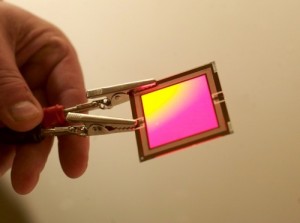
 The load of LEDs impacts the reliability of drivers. The voltage-current characteristic of LEDs determines that within a certain region, with the increase of voltage, current will be exponentially raised.

As we all known, LED is very sensitive to voltage variations. Working under normal current, the voltage should be within the range of 0.3V-0.6V (different power consumptions may have slightly differences in voltages). Once working under unstable voltage, tiny changes can cause huge vibrations in current, and consequently the output power. Excess current may cause irrecoverable damages to LED Lights.


Facts proved that adding voltage-limited elements (like TVR, TVS) have little effect on reducing the current fluctuations. It seems that LED drivers were never as competent as other drivers. Reliability and efficiency are restricted with each other. Divers with higher efficiency must have a lower reliability, vise versa. The increase of reliability is at the cost of efficiency. In order to reduce the impact of input voltage to output voltage, energy must be converted through multiple levels.


In fact, all these problems were caused by LED loads. Recent years, experts put forward another proposal: to improve the internal connection of LED products to reduce the load. The simplest way is connecting resistors between LED chips. The larger the resistance, the more stable the load. Definitely, this method is still at the cost of efficiency. It is the simplest but not the best way. After this, some people introduced another resolution: adding linear barostats, using transistors as auto-adjusting elements. In this way, transistors are treated as changeable resistors. By doing so, the final circuit will be more stable and meanwhile efficiency can be guaranteed as well. This kind of LED drivers, to a large extent, is more advanced than that just simply insert resistors between LED chips. At present, the most commonly used method is constant-voltage sources combined with linear galvanostats. This method still provides very limited efficiency to the entire device.


Differences among LED, LED backlighting, OLED

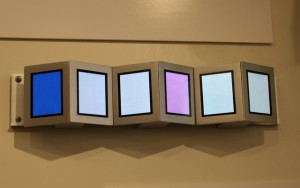
At present, many companies played trick with concept of LED backlighting displays and LED displays. As a matter of fact, they are completely different applications. Another confusable LED technology is OLED. How to distinguish these three types of LED technologies?

 At present, many companies played trick with concept of LED backlighting displays and LED displays.

LED displays directly use LED Lights as pixel components. These LEDs will be arranged in matrix, sending out red/green/blue rays to comprise color screens. Thank to the “oversized” LED, the distance between pixels (known as dot pitches) of the same color is also oversized. In another word, LED displays are only suitable for large screens.


LED display is a combination of micro-electronic technology, computer technology and information processing, having many advantages: colorful, wide dynamic range, high light intensity, long service life, stable working condition, etc. Due to these advantages LED panel displays quickly became the most popular public media. Currently, LED displays have been widely used in many places: large plazas, commercial advertisements, stadiums, press releases, stock exchanges, etc.


LED backlighting displays just replace traditional CCFL backlighting source of LCDs with LEDs. LCDs working principles can be simplified as: liquid crystal molecules deflect under external voltage as small gate for lighting sources, changing the transmittance of rays. These rays then project on the different color filters to form a complete picture.


Backlighting module’s transformation from CCFL to LED brought a lot merits to LCDs: more evenly distributed light, less power consumptions, more fashioned appearance. However, the majority of LED backlighting displays on the market used White LEDs. These are no other changes except for lighting sources. The display effect of this kind of devices is much worse than that of RBG-LED displays. The later failed to widely spread in the market due to its high cost. Thus these White LED backlighting displays and LED Street Lights are essentially different from normal LED displays and cannot be considered as one thing. Nowadays, there are more than 100 research institutions and enterprises has involved into this area, including SAMSUNG, LG, Philips, Sony, etc.


OLED is the abbreviation of Organic Light-Emitting Diode. As a matter of fact, the principle has been discovered in 1936. But until 1987, Kodak introduced a new OLED double-layer device. Since then, OLED has generally comes into our sight. OLED is a brand new flat panel display technology which can be commercialized.


LED exported to Japan needs circular PSE Certificate

Japan has become one of our most important overseas markets. However, Japanese market is not as good as our expected. LEDs(LED Lights) exported to Japan need circular PSE Certificate, which is the second doorsill after LED patents. According to the new policy proclaimed on 1st July 2011, every LED lighting product sold in Japanese market should have circular PSE Certificate. This article will give a small talk about the application scope of regulated LED lamps, test basis, main point of the standard and of course, coping strategies.

Japan has become one of our most important overseas markets. However, Japanese market is not as good as our expected.

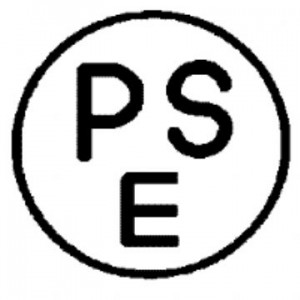
PSE is the short term for Product Safety of Electrical Appliance & Materials Law (PSEAM Law), which is the compulsory standard for electrical appliances on the market. According to Electrical Appliance and Material Safety Law of Japan, electrical appliances can be dived into two parts: specified products and non-specified products. Specified products on Japanese market must go through an independent third-party certification body authorized by the Japanese government and mark diamond PSE labels. Non-specified products must provide legitimate self-testing reports and self-declarations and mark rounded PSE labels before promoted in the market.


There are totally 457 types of products been included in the scope of PSEAM Law. LED lamps have been classified as non-specified products and should have rounded PSE labels. LED Bulbs with one mental head, 100V-300V, 50Hz/60Hz, with a power consumption larger than or equal to 1W. Other LED lamps with one mental head, 100V-300V, 50Hz/60Hz, with a power consumption larger than or equal to 1W (except for LED Explosion Proof Lights).


In order to help the majority of LED lighting manufacturers and exporters to crack the technical barrier, a special PSE working group has been set up in 2011. After one year of study, this working group has basically digested the PSE standard and can provide professional tests for LED bulbs and LED lamps which are destined for the Japanese market. In accordance with the government regulation, products exported to Japan should pass the relevant technique standard of CQC and accept a series of tests prepared for PSE Certificate, even obtain the final certification before export. It made a large and active contribution to the Sino-Japanese trade.


ESD: a cannot-be-ignored factor for LED lighting manufacturers

ESD (Electro-Static discharge) is a common damage for electronic components. Although circuits for LED lighting technique is relatively simple than more advanced intelligent electrical apparatus, there are still many electronic components used in LED Lights circuit PCBs, which are rather vulnerable to ESD. Most of time, these damages are irretrievable, leading to the failure and worse scrap. ESD problem is gaining extensive attention from LED lighting manufacturers.

ESD (Electro-Static discharge) is a common damage for electronic components.

ESD leads to an instant current/voltage surge, which is the instant release of the pre-stored electronic energy by energy storing elements. There are two different energy releases: 1. Predictable energy release through controlled switching effect; 2. Unpredictable energy release through random export.


As we mentioned before, ESD can bring huge damages to electronic circuits. ESD is generally caused by friction between two different substances (charges accumulate on the surface). ESD larger than 15000V can be sensed by our bodies, normally in the form of pricking. Thousands of ESD happened in our daily lives, almost every of them can cause damages to our LED lighting products. How can LED lighting manufacturers block these external killers became a primary consideration.


Understanding the transmission of ESD can help us solve this problem. ESD can be transmitted though the air (induction discharge) and conduction. Technicians usually use shielding to prevent air induction discharge ESD and use absorbing to prevent conducting ESD.


The most effective method to keep LED lighting applications from ESD is restricting ESD trigger voltage, making it in the safe range of LED Panel working voltage. SPA can avoid the shock brought by ESD. Firstly, using diodes to absorb the instant current; secondly, current induction; in the last step, Zener diodes will be used to restrict the current level.


Intelligent LED lighting products need to realize sensitive human-machine interactions, including short-term control and information feedback. All these relays on chip set and interfaces, which are typically vulnerable to ESD and needs more effective ESD protective measurers.


The maximum capacitance and ESD level need special attention during the process. LED lighting manufacturers should provide anti-static workbenches for their workers, letting them accept specialized training in ESD aspect.


From a market point of view to observe the status of China’s led lighting supply industry

The only LED Lights packaging enterprises in the Chinese market has been very few. Most of the companies have to do packaging development and production of LED lighting products. LED application areas of business boundaries are increasingly blurred, and the enterprise led lighting supply product line becomes longer.

From a market point of view to observe the status of China's led lighting supply industry

From a market perspective, China LED companies have the following characteristics:

From the development status of today’s brand lamps, a very few of the current LED lamps are well-known to consumes. The lighting industry brand building is still in a lag. How to make  ‘well-known brands in the industry’ into ‘the public well-known brands, and how to develop our ‘ big but not strong brand ‘into a’ well-known lighting brands’ and how to make ‘brand’ developed ‘fine brand’. All are placed in front of our lighting business. And also it is in urgent need of resolving.

LED lighting industry is developing rapidly. 2010 led lighting supply starts to ferment, market demand for greatly increased compared with 2009, do the LED packaging. LED display enterprises also have to enter the field of LED lighting. Although the technological level of the LED products has been greatly improved compared to previous years. But most companies dominate the market price at the expense of the quality of the product. And also led to gradual decline in product margins. But a lot of companies began to increase R & D investment, high value-added, the product of intelligent direction. In the package and the application side, some of the products of individual enterprises and international led lighting supply manufacturers competing against. Even so, the profit of LED chip company is low. So the Led chip companies put a whole investment. The LED chip industry sales in 2009 of just over 20 billion yuan. and most of the LED chip companies with negative profit or no profit. LED chip companies amounted to 62 by the end of 2009. With the introduction of the technology of large-scale input of the LED chip companies and Taiwan,  it is expected that the LED chips in the next few years, China will have a very large development. Currently on the market there is little between the led lighting supply business merger situation, the basic expand the scale on its own.

Shanghai part of the subway platform first use of LED tubes

According to the Labor newspaper reported, Shanghai now has 380,000 street lights which are expected to gradually change the “core”. Reporter yesterday learned from the 2011, China International LED Industrial Technology Exhibition and Forum, Shanghai is making great efforts to build a “green light”, and gradually promote led tubes. Yan’an East Road Tunnel, Road Tunnel and part of the subway platform will be the first use.

Shanghai part of the subway platform first use of LED tubes

“Energy conservation is the greatest benefit of street lights upgraded and Li Shu-Chi, comprehensive assessment of manager of the Shanghai Semiconductor Lighting Engineering Research Center, said a high-pressure sodium lamp power of about 400W, and the same LED lights need only 150W, the city is currently 30 more than one million street lamp to statistics, the annual electricity savings are considerable. In addition, compared to traditional lights, led tubes lights have the advantages of energy saving, controlled, long life. “Traditional street lights suddenly bright flickered and very easy to reduce the lamp, LED lights without this concern. In addition, the traditional street lights, road surveillance cameras shoot may be a mass of black, once fitted with LED street lamp, the camera becomes very clear to the police for future investigation and convenient for evidence collection.

At present, Shanghai led tubes are still in a small scale pilot, the Yangtse River Tunnel Bridge Road and Wuning Road, and the road sections have been in use. Li Shuzhi says frankly, in practical use, researchers found, LED street lamp has light emitting efficiency needs to be improved, difficult to overcome the high temperature, dust pollution and other harsh environment, high cost.In addition, there is no standard interface leading to major manufacturers of all kinds of LED lighting products, hard to unify.

Li Shu-Chi said the 3 m of low-bar led tubes technology is approaching maturity, but the LED lights installed in an elevated have not found a “suitable targets”. Last year, Shanghai rail transit vehicles and platform height lighting system development and its large-scale applications”. Viaduct lighting research and development and application of “research projects, including R & D of LED tunnel lighting and street lamps, can achieve a light source. The average life expectancy of 50,000 hours.

Three development stages of decomposition of the replacement led lamps market

With the gradual development of LED lighting, lighting engineering auxiliary lighting and other public places, LED gradually replaced some of the traditional light source products. In 2009, the popularity of LED has entered the main lighting in the developed world. LED initially dominated by monochromatic light. Although the power is small, and price is high, yet it has the high reliability, strong control, small size, so the first emerging market electronic device indicator. The market for LED lighting products has been recognized and accepted. Other features of environmental protection, small size, high reliability of the LED lamps are increasingly prominent.

Three development stages of decomposition of the replacement led lamps market

In the high electricity commercial applications, replacement led lamps are rapidly becoming the new darling of the market. As the use of LED lighting, LED market development is divided into the following stage.

First, LED lamps replace the acceptance stage.

This phase is the early stages of development mainly luminous efficiency(energy consumption). Because the price was high, so at the stage, the main market is commercial lighting. The customer has an acceptable process, the first transition is habit and then appearance. The consistent use of traditional light sources, LED lighting reflects the energy saving, longevity and other features make the market easier to accept the relatively high prices. Especially in commercial situations. The fight by the various manufacturers is the quality and price advantage.

Secondly, LED lamps, utility model stage

On the basis of the previous stage, the market for replacement led lamps products has been recognized and accepted. Other features of environmental protection, small size, high reliability of the LED lamps are increasingly prominent. Thus developed a series of products which are completely different from the traditional light source and become very popular. The lighting industry will be a more open space for development. Light source is no longer only play a role in lighting, its changing bit by bit in making more appropriate for people’s working and living. The fight by the various manufacturers is to design application advantage.

Then, LED lighting intelligent control stage

LED lights industry will also be doing product design, providing total solutions to the course. With the development of things such as new technology, replacement led lamps, as the semiconductor industry, will also catch this tour high-speed train to play out its high control ability.

LED rgb rope light had become the mainstream trend of LED applications

Lighting will gradually become the mainstream application of LED. Lighting applications demand increase is the LED Lights market which has strong growth driving force. The supplier also aware of this tendency, and plans to increase capacity, the agency forecast 2011 global LED production capacity will reach 18 million, 2013 will reach 22.7 million.

LED rgb rope light had become the mainstream trend of LED applications

LED market demand continued to increase, but LED backlight demand gradually decreased, and began to transfer LED lighting applications. Since the fourth quarter of 2010, the first quarter of 2011 and early second, led rgb rope light back light market demand reduced, but we estimate the LED back light demand in the third quarter pick up and reached the highest level.

The overall LED market demand continues to increase, but the demand for LED   back lighting gradually reduced, and began to transfer towards LED lighting applications. The fourth quarter of 2010, early quarter and second, the LED back light TV inventory level was high and sales slow, LED back light market demand, thereby reducing, but we estimate the demand for led rgb rope light back lighting in the third quarter to rebound and reach the highest level.

At present, LED back light applications in all medium and small size LCD products, portable personal computer penetration of nearly 100%, LCD display and LCD TV’s permeability also continued to improve, but each required to reduce the number of LED package. In 2011 LED back light total demand is 4.59 million. Since 2010, LED back light LCD TV became the main application, the total demand of 50%, and they estimate in 2012, reached the highest;But as each LED package to reduce the number of required, expected 2013 TV LED back light demand will be slightly down.

On the Lighting applications, led rgb rope light average penetration in 2010 was 1.4 percent, which expected to reach 9.3% by 2014; They can replace the halogen lamp, LED spotlight applications with high penetration, government policies are also expected to accelerate the LED street light application. In the second quarter of 2011, LED lighting, the total revenue of  $ 3.2 billion is expected that in the third quarter will grow rapidly to $ 3.4 billion.

On the perspective of regional, Japan in 2011 is the world’s largest LED bulb market, the market share as high as 63%, but in 2014 will be reduced to  40%. As the awareness of power resources and energy-saving consciousness raising in Japan, LED lighting system of the high permeability, until 2014, it will be the largest lighting market.

LED production process issues should attach great importance

Currently, LED Lights used as garden lights, tunnel lights, and indoor places used in commercial lighting, office lighting, etc. They are highly desirable. With the advances in LED technology, lower prices at the same time, the phosphor price increases and cost pressures on the traditional lighting. These provide a good opportunity for the led production process to enter the field of interior lighting.

LED production process issues should attach great importance

However, few people concerned that the amount of radiation generated by the LED of each light point is not large, which is far less than the HID (high intensity discharge) light source, but it can make a very small energy concentrated in a certain direction. This also means that, although the LED unlike the laser that the light are strong, yet the local light intensity hazard should also be given special attention.

Insider pointed out that the LED Products are mostly on the sample stage, mainstream or traditional lighting products in the market, but the LED stage of the product will soon be  full arrival. Once the led production process enter into the product stage,  IEC / EN 62471 must be the mandatory implementation. The relevant testing laboratories should have the ability to match, otherwise photo biological safety hazards may occur.

Comment:

Indeed, Once LED enter into the interior lighting, security issues will become more prominent. If LED made of spotlights, table lamps, flashlights, laser lecture pen will cause the child’s interests. Its security has become more important. For example, a small laser lecture pen if exposed directly to the child’s eyes, it will damage the retina of the eye of the child. LED illumination radiation intensity of the harm is an objective reality, and is the most protective part.

Of course, the correct detection LED Flood lighting evaluation of the radiation intensity is very important and difficult. Even if the led production process module to achieve the
requirements of the lighting does not necessarily meet the requirements; lighting should also consider the light distribution, maximum intensity direction than the human eye is very easy to identify, we must seriously look for. These are not just domestic issues, but also the international detection in the field bottleneck.

LED is about to enter the home lighting on the occasion. I hope that the entire industry can be developed as soon as the correct means of detection, and specify a qualified laboratory testing, so in order to minimize the harm from the potential to radically.

Two elements that determine the direction of technological development of LED ligh bulbs

LED lights are the most energy-efficiency green power light source, natural lighting energy saving options, along with the gradual reduction of costs and prices of LED lights, its popularity is also accelerating. In 2020, the market share of LED ligh bulbs is over 50%. What is the influence and determination of led lamp technology development direction?

Two elements that determine the direction of technological development of LED ligh bulbs

Low down the cost of LED light

LED chip occupies the main part of the cost of LED lights, thereby reducing the cost of the LED is to reduce the cost of the LED chip.

The key for LED chip technology development lies in the base material and epitaxial growth techniques. Base material is by the traditional materials of sapphire, silicon and silicon carbide, the development of zinc oxide, gallium nitride and other materials. In a few short years, by means of a series of technical improvements, including chip architecture, surface roughening treatment and multiple quantum structure design, LED light bulbs achieved a great breakthrough on the Light effect.

Low cost silicon substrate technology continue to progress, but the luminous efficiency are still not satisfied, to maintain this pace of development, once they reach a higher level, the silicon substrate as the main technical program has become an inevitable choice. Businesses will also be huge economic returns.

Improving the luminous efficiency of LED lights

Improve the light efficiency can also improve the proportion of the effective light to start. Light thin-film chip technology can reduce the light output of each side of the loss, with the bottom of the reflecting surface of more than 97% of the light from the front output power conversion be mostly light, not only significantly improve the LED light bulbs luminous efficiency, a favorable conditions for the lens design. The thin-film chip technology is the core technology of super bright LED chip production.

Improving the color of the LED Tunnel lights

In the high-brightness white LED, a small portion of blue stokes shift of the longer wavelengths. This is a good thing, because it makes the LED light manufacturers that can use many different colors of the phosphor layer to extend the emission spectrum, effectively enhances LED color rendering index (CRI).